This post may contain affiliate links.
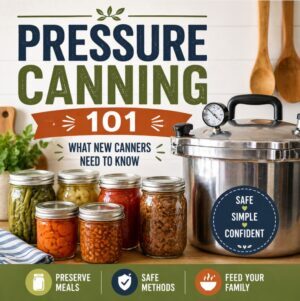
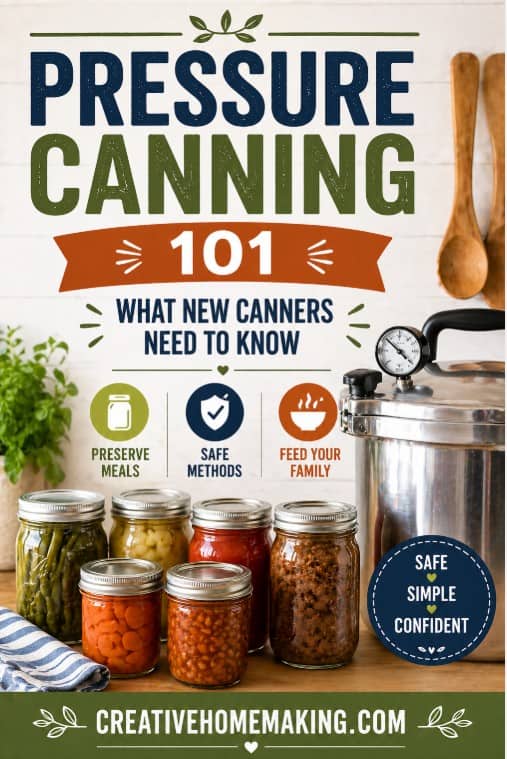
If you want to preserve vegetables, soups, meats, beans, and hearty homemade meals, learning pressure canning is one of the best kitchen skills you can develop.
Pressure canning allows you to safely preserve low-acid foods that cannot be processed in a regular water bath canner.
Once you understand the basics, it becomes a practical way to stock your pantry with ready-to-use homemade meals and ingredients.
This beginner guide covers the essentials of Pressure Canning 101 so you can start with confidence.
What Is Pressure Canning?
Pressure canning uses high heat created under pressure to safely preserve low-acid foods.
Want to try making your own jelly at home?
Get my free guide with 8 easy, beginner-friendly jelly recipes you can confidently make.
Because vegetables, meats, soups, and beans can contain harmful bacteria if not processed correctly, they require temperatures hotter than boiling water to become shelf stable.
That higher heat is achieved only in a pressure canner.
What Foods Need Pressure Canning?
Low-acid foods should be pressure canned using tested recipes.
Common examples include:
- Green beans
- Potatoes
- Mixed vegetables
- Mushrooms
- Dry beans
- Garbanzo beans
- Chicken stock
- Vegetable stock
- Meat-based soups
- Chili
- Beef stew
- Pulled pork
If you want to preserve fruits, jams, and pickles, use a water bath canner instead.
You may also enjoy my Water Bath Canning for Beginners guide.
Pressure Canner vs Pressure Cooker
These are not the same thing.
Pressure Canner
Designed specifically for home canning and large enough to hold jars safely.
Pressure Cooker
Made for cooking meals quickly, not preserving food safely.
Always use an approved pressure canner for canning.
Types of Pressure Canners
Dial Gauge
Requires monitoring pressure during processing and regular gauge testing.
Weighted Gauge
Uses a weighted regulator and is often simpler for beginners.
Both can work well when used properly.
Equipment You Need
To begin pressure canning, gather:
- Pressure canner
- Canning jars
- New lids
- Rings/bands
- Jar lifter
- Funnel
- Bubble remover
- Clean towels
- Timer
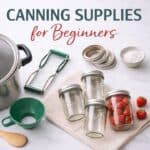
Before you get started, be sure to visit my recommended canning supplies page for recommended pressure canner, jars, tools, and equipment that make home canning easier and safer.
Read next: Canning Supplies for Beginners (Complete Guide)
Basic Steps of Pressure Canning
Step 1: Prepare Food
Use fresh ingredients and tested recipes.
Step 2: Fill Jars
Pack food into hot jars with the correct headspace.
Read next: How Much Headspace for Canning?
Step 3: Add Water to Canner
Follow your canner manufacturer’s directions.
Step 4: Vent Steam
Allow steam to vent before pressurizing.
Step 5: Process at Correct Pressure
Use the proper PSI and time for your recipe and altitude.
Step 6: Cool Naturally
Let pressure return to zero naturally before opening.
Step 7: Remove Jars and Cool
Cool jars undisturbed 12 to 24 hours. Check jars to make sure they have sealed.
Read next: How to Test Canning Jar Seals (3 Easy Methods)
Common Beginner Mistakes to Avoid
Using Untested Recipes
Always use trusted canning recipes.
Skipping Venting
Venting is important for safe temperatures.
Forcing Pressure Down
Never rush cooling by opening vents early.
Incorrect Headspace
Too much or too little headspace can affect seals.
Ignoring Altitude
Higher elevations often require pressure adjustments.
Great Beginner Foods to Pressure Can
If you’re just starting, these are practical options:
Pressure Canning Meal Ideas
Once comfortable, try meal-prep pantry foods like:
- Beef stew
- Split pea soup
- Bean and ham soup
- Chili
- Pulled pork
- Sweet and sour chicken
- Pork and beans
- Spaghetti sauce
- Pizza sauce
These shelf-stable meals can save time on busy days.
My Pressure Canning Recipes
If you’re ready to start, browse these favorites:
- Canning Beef Stew
- Pressure Canning Split Pea Soup
- Pressure Canning Beans
- Bean and Ham Soup
- Pressure Canning Chili
- Pressure Canning Green Beans
- Pressure Canning Mushrooms
- Pressure Canning Vegetable Stock
- Pressure Canning Chicken Stock
- Pressure Canning Pulled Pork
- Pressure Canning Sweet and Sour Chicken
- Pressure Canning Potatoes
- Pressure Canning Garbanzo Beans
- Pressure Canning Spaghetti Sauce
- Pressure Canning Pizza Sauce
- Pressure Canning Pork and Beans
Frequently Asked Questions
Is Pressure Canning Hard?
Not once you learn the process. Many beginners find it easier after a few batches.
Is Pressure Canning Safe?
Yes, when using tested recipes, proper pressure, and safe procedures.
Can I Use My Instant Pot for Pressure Canning?
Only use equipment specifically approved for home pressure canning.
How Long Do Pressure Canned Foods Last?
Best quality is usually within 1 year when stored properly.
Learning Pressure Canning 101 opens the door to preserving healthy ingredients, homemade soups, and ready-to-eat meals right in your pantry.
Start with a simple recipe like green beans or stock, follow tested methods, and build confidence one batch at a time.
Follow my canning and preserving board on Pinterest.