Rhubarb is one of the easiest perennial vegetables to grow. Once planted, it can come back year after year with very little effort.
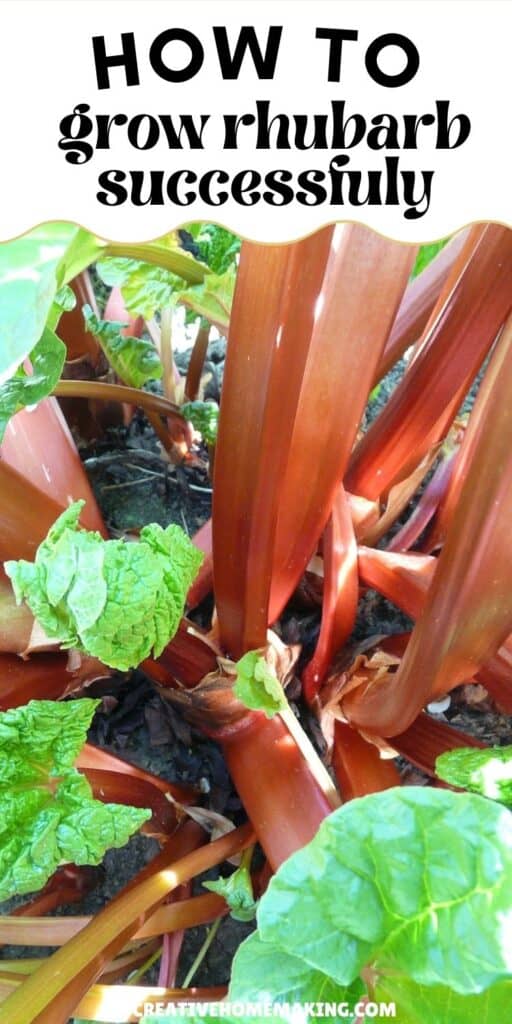
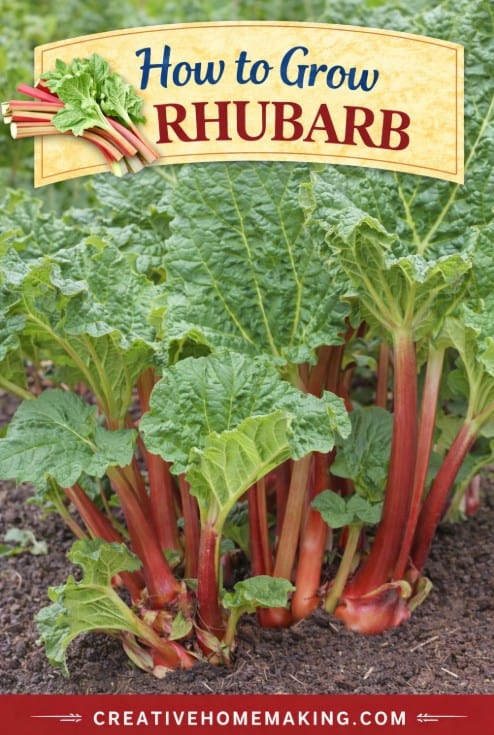
With its giant green leaves and bright red stalks, rhubarb is both ornamental and productive. It’s perfect for pies, crisps, jams, sauces, muffins, and freezing for later.
Looking for more rhubarb ideas? Explore my full Rhubarb Recipes, DIY & Growing Guide here.
Why Grow Rhubarb?
This post may contain affiliate links.
Rhubarb is popular because it is:
- Easy to grow
- Cold hardy
- Long-lived perennial
- Productive for many years
- Beautiful in the garden
- Great for baking and preserving
Once established, one plant can produce harvests for many seasons.
Where Rhubarb Grows Best
Rhubarb thrives in:
- Cool climates
- Northern states
- Areas with cold winters
- Full sun to partial shade
Rhubarb often struggles in hot, humid southern climates.
Best Soil for Rhubarb
Rhubarb prefers:
- Fertile soil
- Well-drained soil
- Rich organic matter
- Slightly acidic to neutral pH
Work compost or aged manure into the soil before planting.
Want to try making your own jelly at home?
Get my free guide with 8 easy, beginner-friendly jelly recipes you can confidently make.
When to Plant Rhubarb
Best planting times:
Early Spring
Most common and easiest time.
Fall
Also works well in many climates.
Plant dormant crowns or divisions.
How to Plant Rhubarb
Step 1: Choose Spacing
Allow at least 3 feet between plants.
Rhubarb gets large.
Step 2: Dig the Hole
Dig about:
- 2 feet wide
- 1 to 2 feet deep
Step 3: Amend Soil
Mix compost, manure, or peat moss into soil.
Step 4: Plant Crown
Set crown so buds are about 1 to 2 inches below soil surface.
Backfill and water well.
How to Care for Rhubarb
Rhubarb is low maintenance once established.
Watering
Water during dry spells, especially first year.
Mulching
Mulch helps retain moisture and suppress weeds.
Fertilizing
Top-dress with compost or aged manure in fall or early spring.
Remove Flower Stalks
Cut flower stalks when they appear so energy goes into stalk growth.
When Can You Harvest Rhubarb?
First Year
Do not harvest.
Let roots establish.
Second Year
Light harvest only.
Established Plants
Harvest when stalks are about finger thickness or larger.
Pull or cut stalks near ground level.
Only eat the stalks. Leaves are poisonous.
Can You Freeze Rhubarb?
Yes. Rhubarb freezes beautifully.
Wash stalks, cut into 1-inch pieces, and freeze in bags or containers.
See my full guide: How to Freeze Rhubarb
Best Ways to Use Rhubarb
Fresh rhubarb is delicious in:
- Rhubarb crisp
- Strawberry rhubarb pie
- Muffins
- Jam
- Sauce
- Jelly
- Syrup
More Rhubarb Recipes to Try
You may also enjoy:
- Rhubarb Simple Syrup
- Easy Rhubarb Butter
- Strawberry Rhubarb Pie Filling
- Strawberry Rhubarb Muffins
- Strawberry Rhubarb Jam
- Rhubarb Crisp
Browse my full Rhubarb Recipes, DIY & Growing Guide here.
Is rhubarb a fruit or vegetable?
Technically a vegetable, though often used like fruit.
How long does rhubarb live?
Many plants produce for 10+ years, often much longer.
Can rhubarb grow in shade?
Yes, partial shade works, but full sun gives best production.
Why is my rhubarb green instead of red?
Some varieties naturally produce greener stalks.
Rhubarb is one of the easiest plants to grow if you live in a cooler climate.
Plant it once, care for it simply, and enjoy years of pies, jams, crisps, and spring harvests.
Follow my Rhubarb Recipes & Ideas board on Pinterest.
Basic Tips for Growing Rhubarb
Rhubarb season runs from April to September. You can buy starter plants (root clumps) at most garden nurseries. The best time to plant them is early spring, but I have also transplanted them in fall, and they came back in the spring.
Rhubarb prefers fertile, well drained soil. It thrives best in full sun but will also tolerate part shade (it just won’t grow as large).
Related Article: How to Freeze Rhubarb: A Quick and Easy Guide
Plant your rhubarb roots in a hole two feet deep and two feet wide and leave at least three feet between plants. When you place the plant in the hole, the crown bud should be two inches below the ground surface. Add some composted manure or peat moss to the hole before filling it in.
The plant won’t be big enough to harvest the first year, but starting in the second year you can cut a few stalks as soon as they grow to about the size of your finger.
Cut the stalk to the ground level. Only the stalks are edible–the leaves are poisonous and should not be consumed. Flowering stalks can be cut and discarded whenever they appear.
Fertilize your rhubarb plant with composted manure or leaves in the fall or early winter.
Rhubarb is easy to freeze. Choosing firm red stalks, wash in cold water and cut into 1-inch lengths. Place in freezer bags or freezer containers. Leave 1/2 inch space for expansion in freezer containers.
Here are some great rhubarb recipes for your family to try:
Rhubarb Crunch
6 c. raw rhubarb, chopped
1-1/2 c. flour
1/2 c. shortening
3 T. flour
1 c. oatmeal
1/2 c. butter
1/2 c. shortening
1 c. white sugar
1 c. brown sugar
Preheat oven to 350 degrees. Mix rhubarb, 3 T. flour, and white sugar and place in bottom of greased 9×13 pan. Mix remaining flour, oatmeal, brown sugar, butter, and shortening until crumbly. Sprinkle on top of rhubarb mixture. Bake 20 min. or until rhubarb is tender.
Rhubarb Upside Down Cake
4 c. rhubarb, diced
3 c. miniature marshmallows
1/2 c. sugar
1/2 box white cake mix
1 (3 oz.) package strawberry Jello
Butter
Preheat oven to 350 degrees. Place ingredients in a greased 13x9x2-inch baking dish in the following order: rhubarb, sugar, dry jello, marshmallows. Top with dry cake mix and a little butter. Bake for 45 minutes.
Rhubarb Jam
4 c. cut rhubarb (fresh or frozen)
4 c. sugar
1 pkg. raspberry gelatin
Heat rhubarb slowly in covered pan until rhubarb is tender, adding a little water if necessary. Add sugar and cook until sugar is dissolved. Stir to keep from sticking. Add gelatin and stir until dissolved. Pour into jelly jars and refrigerate.
Related Rhubarb Articles
- Rhubarb Simple Syrup
- Easy Rhubarb Butter
- Strawberry Rhubarb Pie with Crumb Topping
- Strawberry Rhubarb Pie Filling
- Strawberry Rhubarb Muffins
- Strawberry Rhubarb Jam