This post may contain affiliate links.
When it comes to growing lavender, watering is one of the most important things to get right.
Lavender is known for being drought-tolerant—but that doesn’t mean it doesn’t need water. The key is finding the right balance.
Too much water can lead to root rot, while too little can cause your plant to dry out and struggle.
If you’ve ever wondered exactly how much water lavender needs, this guide will walk you through it in a simple, practical way.
If you’re just getting started, choosing the right variety makes a big difference—here are the best lavender seeds for beginners.
Want to try making your own jelly at home?
Get my free guide with 8 easy, beginner-friendly jelly recipes you can confidently make.
How Often Should You Water Lavender?
Lavender should be watered about once a week during the growing season, allowing the soil to dry out between watering. In cooler months, reduce watering to every two to three weeks to prevent root rot.
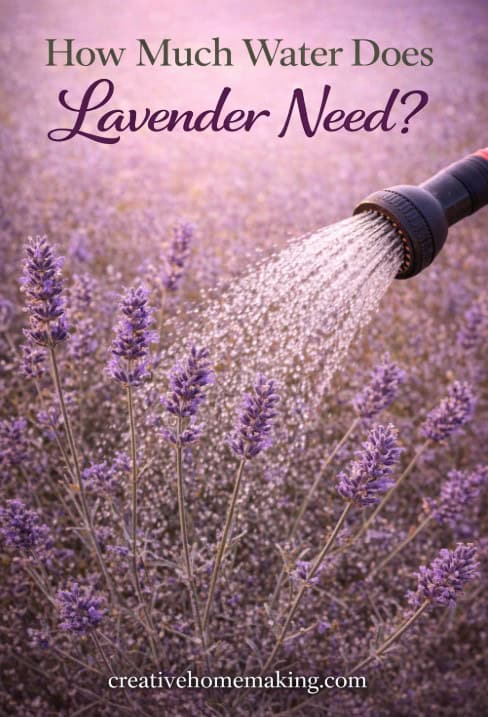
How Much Water Does Lavender Need?
Lavender typically needs about 1 inch of water per week, but this can vary depending on your climate, soil, and growing conditions.
- In hot, dry climates → water a little more often
- In cooler or humid climates → water less frequently
- In pots → check soil more often, as it dries faster
The most important thing is to check the soil—not just follow a schedule.
The Best Way to Water Lavender
Lavender does best with deep, infrequent watering.
- Water deeply so moisture reaches the roots
- Let the soil dry out between watering
- Avoid frequent, shallow watering
This helps your plant develop strong roots and become more drought-resistant.
It also helps prevent one of the most common problems with lavender—overwatering.
Signs You’re Overwatering Lavender
Overwatering is one of the quickest ways to damage lavender.
Watch for these signs:
- Yellowing leaves
- Drooping stems
- Soft or mushy growth
- A general “unhealthy” appearance
If you notice these, reduce watering and make sure your soil drains well.
If you’re unsure, I go into more detail about common lavender growing mistakes and how to avoid them.
Signs Your Lavender Needs More Water
Underwatering can also cause problems.
Look for:
- Dry, brittle leaves
- Wilting or drooping
- Soil that feels very dry
If this happens, give your plant a deep watering and monitor it more closely.
How Often to Water Lavender
During the Growing Season (Spring–Summer)
- Water about once a week
- More often in extreme heat
During Fall
- Reduce watering as temperatures drop
During Winter
- Water every 2–3 weeks (or less)
- Only if the soil is very dry
Lavender needs much less water when it’s not actively growing.
Soil Matters More Than You Think
Lavender needs well-draining soil to stay healthy.
If your soil holds too much moisture, it can lead to root rot—even if you’re not watering often.
To improve drainage:
- Add sand or gravel
- Use raised beds or containers
- Avoid heavy clay soil
Watering Lavender in Pots
Lavender in pots dries out faster than in the ground, so you’ll need to check it more often.
- Check soil every few days
- Water when the top inch feels dry
- Make sure your pot has drainage holes
If you’re growing lavender in containers, I share more detailed tips in my guide to growing lavender in pots.
Best Time of Day to Water
The best time to water lavender is in the morning.
This allows:
- Water to reach the roots before heat evaporates it
- Leaves to dry during the day
- Less risk of fungal disease
Avoid watering at night whenever possible.
Lavender doesn’t need constant watering—but it does need the right watering.
Focus on:
- Deep, infrequent watering
- Letting soil dry between watering
- Adjusting based on weather and season
Once you get the balance right, lavender is one of the easiest and most rewarding plants to grow.
And when your plants are thriving, you’ll have plenty to harvest and use—whether in your home, your garden, or your kitchen.
Once your lavender is healthy and growing well, you can harvest it, dry it, and use it in everything from teas to desserts—I share how to preserve it and some of my favorite lavender recipes to get started.
Follow my lavender board on Pinterest.