This post may contain affiliate links.
Growing lavender can be such a fun and rewarding part of your garden—but if you want your plants to really thrive, there are a few common mistakes you’ll want to avoid.
Lavender is known for being low-maintenance, but it does have some specific needs.
Even small mistakes—like too much water or planting in the wrong soil—can lead to weak plants, fewer blooms, or even root rot.
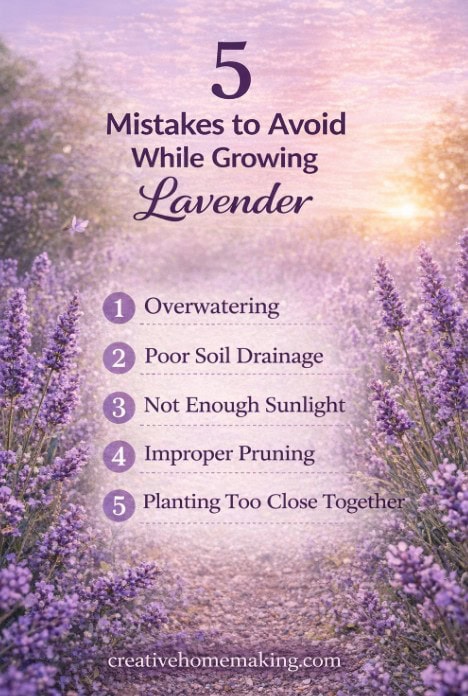
If you want healthy, fragrant lavender that comes back year after year, knowing what not to do is just as important as knowing what to do.
If you’re just getting started, I walk through the basics in my guide on how to grow lavender from seed, and if you love cooking with lavender too, I also share how to use culinary lavender in recipes.
Want to try making your own jelly at home?
Get my free guide with 8 easy, beginner-friendly jelly recipes you can confidently make.
Planting Lavender in Poorly Drained Soil
One of the biggest mistakes you can make is planting lavender in soil that holds too much moisture.
Lavender needs well-drained soil. If the roots sit in water, they can quickly develop root rot and other plant diseases.
If your soil is heavy or clay-like:
- Mix in sand or small gravel
- Consider raised beds or containers
- Make sure water drains quickly after watering
Lavender naturally thrives in dry, sandy conditions. The closer you can mimic that, the better your plants will do.
Overwatering Your Lavender
When it comes to lavender, less is more.
Overwatering is one of the most common reasons lavender plants struggle. These plants actually prefer dry conditions and don’t need frequent watering once established.
Instead:
- Water only when the top inch of soil feels dry
- Always water at the base (not the leaves)
- Reduce watering once plants are mature
Too much moisture can quickly lead to root rot and fungal issues.
Skipping Pruning
If you don’t prune your lavender, it will eventually become woody and stop producing as many blooms.
Regular pruning helps:
- Encourage new growth
- Keep plants compact
- Improve air circulation
Trim your lavender:
- In early spring
- Or right after flowering
Cut back about one-third of the plant, but avoid cutting into old, woody stems.
If you’re planning to use your lavender, this is the perfect time to harvest it—I walk through exactly how to do that in my step-by-step guide to harvesting lavender.
Using the Wrong Mulch
Mulching lavender can be helpful—but only if you do it the right way.
Thick, moisture-holding mulch (like wood chips or straw) can trap water around the base of the plant, leading to rot and disease.
Instead:
- Use gravel or small rocks
- Keep mulch light and breathable
- Avoid piling anything against the plant stems
Lavender prefers dry conditions, even at the base.
Choosing the Wrong Lavender Variety
Not all lavender grows well in every climate.
Some varieties are more cold-hardy, while others prefer warmer regions.
- English lavender is great for cooler climates
- French lavender does better in mild, warmer areas
- Compact varieties like Hidcote are great for smaller spaces
Choosing the right type for your zone makes a huge difference in long-term success.
Planting at the Wrong Time
Timing matters more than you might think.
The best time to plant lavender is:
- In spring, after the last frost
- When the soil has started to warm up
This gives your plants time to establish strong roots before the heat of summer.
Lavender typically grows best in USDA zones 5–9, but you can grow it in pots if you’re in a colder climate.
Not Preserving Your Lavender Harvest
Once your lavender starts thriving, you’ll likely have more than you know what to do with—and that’s a good problem to have.
Instead of letting it go to waste, you can easily preserve your lavender to use year-round—I share how to do that in my guides on drying lavender and preserving it.
Once dried, you can use lavender in so many ways—from teas to baked goods.
Ways to Use Your Lavender
If you’re growing lavender, using it in recipes is one of the most rewarding parts.
A few favorites to try:
You can find all of these recipes in my collection of lavender drinks, desserts, and more.
Lavender is a beautiful, versatile plant—but it thrives best when you avoid a few key mistakes.
Focus on:
- Well-drained soil
- Minimal watering
- Regular pruning
- The right variety for your climate
With just a little attention, your lavender plants will reward you with gorgeous blooms, amazing fragrance, and plenty to harvest.
And once you start growing it successfully, you’ll find endless ways to enjoy it—both in your garden and in your kitchen.
Follow my lavender board on Pinterest.