This post may contain affiliate links.
Lavender is one of the most rewarding plants to grow in the garden. Its fragrant flowers attract pollinators, make beautiful cut flowers, and can be harvested for a variety of homemade projects.
But if your lavender plant is healthy and green yet refuses to bloom, it can be frustrating.
The good news is that lavender usually has a reason for not flowering, and most problems are easy to correct.
Here are the most common reasons lavender isn’t blooming and what you can do to encourage more flowers.
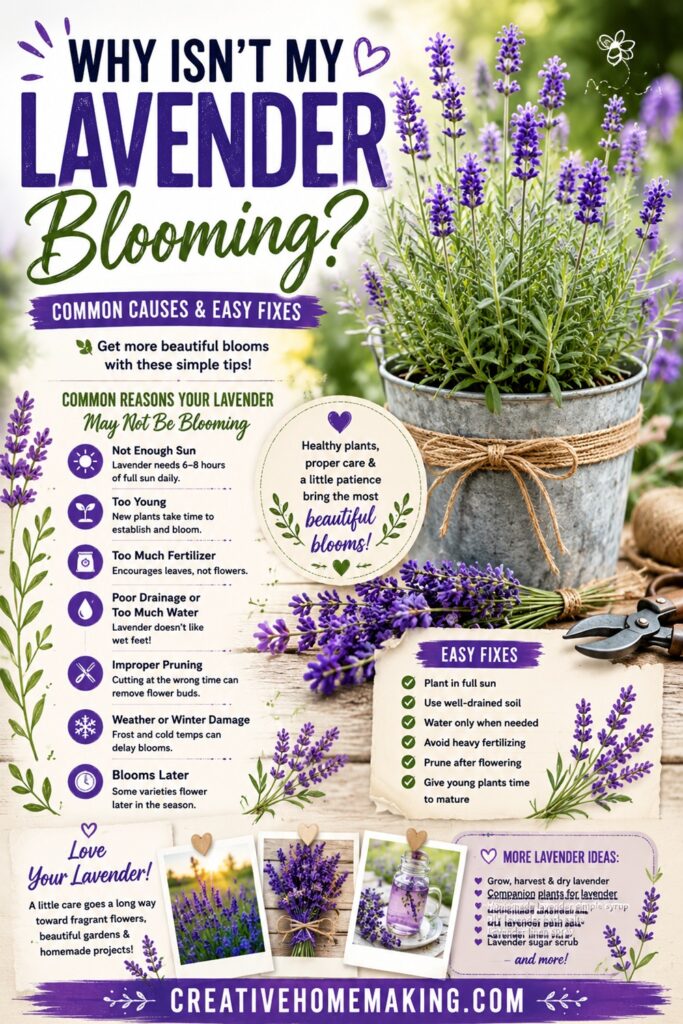
Your Lavender Isn’t Getting Enough Sun
Lavender thrives in full sun and needs at least 6-8 hours of direct sunlight every day.
Want to try making your own jelly at home?
Get my free guide with 8 easy, beginner-friendly jelly recipes you can confidently make.
Plants grown in partial shade often produce plenty of foliage but very few flowers.
If your lavender is planted in a location that receives afternoon shade or is crowded by larger plants, consider moving it to a sunnier location.
The Plant Is Too Young
Many gardeners expect newly planted lavender to bloom heavily during its first season.
While some varieties will produce a few flowers the first year, lavender often focuses on establishing a strong root system before producing abundant blooms.
If your plant is healthy, be patient. Most lavender reaches peak flowering after becoming established.
Too Much Fertilizer
Lavender prefers lean soil and generally doesn’t require much fertilizer.
In fact, excessive fertilizer often encourages lush green growth at the expense of flowers.
If you’ve been feeding your lavender regularly, stop fertilizing and allow the plant to grow naturally.
Lavender typically blooms best in moderately poor, well-drained soil.
Poor Drainage
One of the biggest causes of lavender problems is wet soil.
Lavender is native to dry Mediterranean climates and dislikes soggy conditions.
If the soil stays wet for long periods, the plant may struggle to bloom and could eventually develop root rot.
Improve drainage by:
- Planting in raised beds
- Adding coarse sand or gravel to the soil
- Growing lavender in containers
- Avoiding overwatering
Too Much Water
Once established, lavender is fairly drought tolerant.
Overwatering can encourage excessive leafy growth and reduce flowering.
Allow the soil to dry between waterings and avoid watering on a strict schedule if the soil is still moist.
Improper Pruning
Lavender benefits from regular pruning, but timing matters.
If you cut the plant back too aggressively or at the wrong time, you may remove developing flower buds.
The best time to prune lavender is usually after flowering has finished. Light annual pruning helps maintain shape and encourages future blooms.
You may also enjoy reading:
- How to Grow Lavender
- How to Harvest Lavender
- How to Dry Lavender
- Best Companion Plants for Lavender
- How to Make Lavender Simple Syrup
- Homemade Lavender Bath Salts
- DIY Lavender Linen Spray
- Homemade Lavender Sugar Scrub
The Variety Blooms Later
Not all lavender varieties bloom at the same time.
Some English lavenders bloom in late spring or early summer, while others flower later in the season.
Before assuming there is a problem, make sure you know the typical bloom time for your variety.
Harsh Winters or Late Frosts
Cold temperatures can damage flower buds, especially on newly planted lavender.
If your area experienced a late frost after new growth emerged, blooming may be delayed or reduced for the season.
Remove damaged growth and continue caring for the plant normally. In many cases, the lavender will recover.
The Plant Has Become Woody
Older lavender plants often become woody in the center.
As plants age, flowering may decline and growth can become sparse.
If your lavender is several years old and no longer blooms well, it may be time to replace it with a new plant.
Regular pruning throughout the life of the plant can help delay this problem.
How to Encourage More Lavender Flowers
For the best blooms:
- Plant lavender in full sun
- Use well-drained soil
- Avoid overwatering
- Skip heavy fertilizing
- Prune annually after flowering
- Give young plants time to mature
When lavender receives the conditions it loves, it rewards gardeners with months of fragrant blooms that can be enjoyed fresh, dried, or used in DIY lavender recipes and crafts.
With a few simple adjustments, your lavender should be producing beautiful purple flowers again in no time.
If your lavender isn’t blooming, the problem is usually related to sunlight, watering, soil conditions, or age. Fortunately, most issues can be corrected with a few simple changes.
Once your lavender begins flowering again, you’ll have plenty of blooms to enjoy in the garden and harvest for recipes, crafts, and natural home projects.
Follow my Lavender DIY & Recipes board on Pinterest.