This post may contain affiliate links.
Lavender is one of the most beloved cottage garden flowers thanks to its fragrant blooms, drought tolerance, and ability to attract bees and butterflies.
But if your lavender is turning yellow, developing brown stems, dying from the center, or simply doesn’t look healthy anymore, you’re not alone.
The good news is that most lavender problems can be traced to a few common causes. Once you identify the issue, you may be able to save your plant and help it thrive again.
If you’re new to growing lavender, be sure to check out my guides on How to Grow Lavender in Pots, How to Grow Lavender From Cuttings, and Best Lavender Seeds for Beginners for more growing tips.
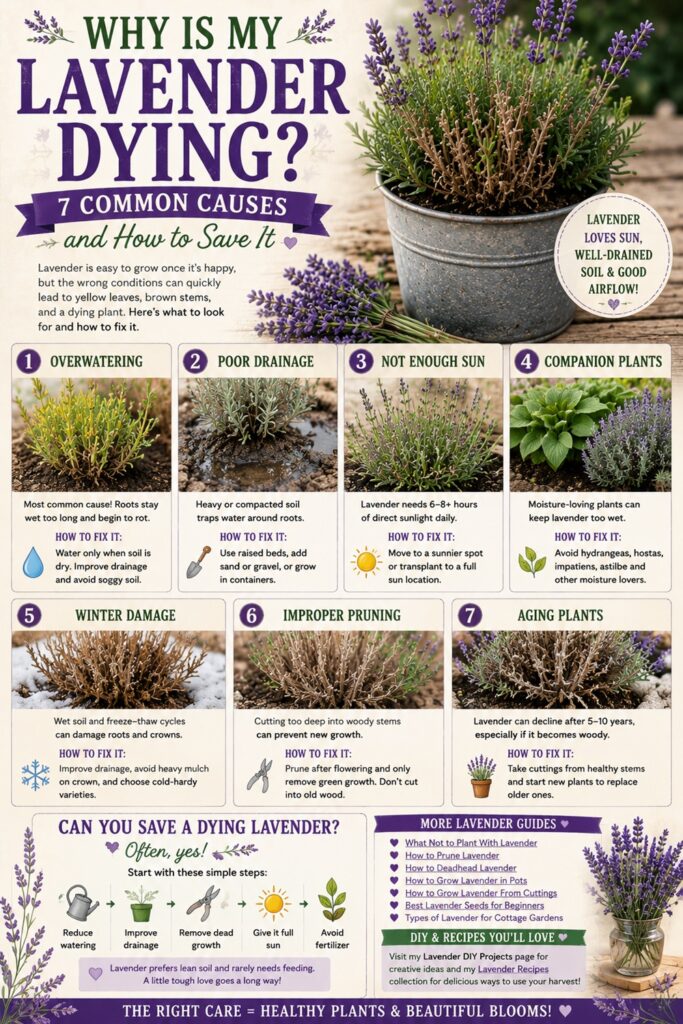
Overwatering
The most common reason lavender dies is too much water.
Want to try making your own jelly at home?
Get my free guide with 8 easy, beginner-friendly jelly recipes you can confidently make.
Lavender originated in the Mediterranean and prefers dry conditions. When the soil stays wet for long periods, roots can begin to rot, causing the plant to decline quickly.
Signs of Overwatering
- Yellow leaves
- Wilting despite moist soil
- Soft stems near the base
- Brown or black roots
- Leaves dropping unexpectedly
How to Fix It
- Water only when the soil is dry several inches below the surface.
- Improve drainage around the plant.
- Reduce watering during cool weather.
- Consider growing lavender in containers if your garden soil remains wet.
Poor Drainage
Even if you don’t water frequently, heavy clay soil can trap moisture around lavender roots.
Lavender prefers loose, well-drained soil and often struggles in areas where water puddles after rain.
Signs of Poor Drainage
- Water standing around the plant
- Yellowing foliage
- Slow growth
- Root rot
How to Fix It
Plant lavender in raised beds, amend heavy soil with sand or gravel, or grow it in containers where drainage can be controlled more easily.
Not Enough Sunlight
Lavender needs plenty of sunshine to thrive.
Most varieties perform best with at least 6 to 8 hours of direct sunlight each day.
Signs of Too Much Shade
- Leggy stems
- Few flowers
- Pale foliage
- Weak growth
How to Fix It
Move potted plants to a sunnier location or transplant garden lavender to an area that receives full sun throughout the day.
Wrong Companion Plants
One of the biggest companion planting mistakes gardeners make is placing lavender near moisture-loving plants.
Hydrangeas, hostas, impatiens, and astilbe all prefer more water than lavender needs.
If you’re wondering whether nearby plants may be causing problems, read my guide on What Not to Plant With Lavender.
Better Companion Plants for Lavender
- Rosemary
- Sage
- Thyme
- Catmint
- Salvia
- Echinacea
- Yarrow
These plants enjoy similar growing conditions and make excellent companion planting partners.
Winter Damage
Lavender often survives cold temperatures better than wet winter soil.
Freeze-thaw cycles and poor drainage can damage roots and crowns during winter.
Signs of Winter Damage
- Brown stems in spring
- Dead patches
- Delayed new growth
- Entire branches failing to leaf out
How to Fix It
- Improve drainage before winter arrives.
- Avoid piling mulch against the crown.
- Choose cold-hardy varieties such as English lavender for colder climates.
Improper Pruning
Lavender benefits from regular pruning, but cutting too deeply into old woody stems can permanently damage the plant.
Lavender does not always regenerate from old wood the way many shrubs do.
Signs of Improper Pruning
- Bare woody stems
- Dead sections
- Uneven growth
- No new shoots
How to Fix It
Prune lightly after flowering and avoid cutting into thick woody stems.
You may also find this guide helpful:
Regular maintenance helps keep plants compact, healthy, and blooming beautifully.
Aging Plants
Even healthy lavender plants eventually decline.
Many varieties begin to lose vigor after 5 to 10 years, especially if they have become woody.
Signs of an Aging Plant
- Large woody base
- Sparse flowers
- Dead center growth
- Reduced vigor
How to Fix It
Take cuttings from healthy stems and start new plants before the original plant becomes too old.
My guide on How to Grow Lavender From Cuttings can help you propagate replacement plants for free.
Can You Save a Dying Lavender Plant?
Often, yes.
If root rot has not completely destroyed the roots, many lavender plants can recover when their growing conditions improve.
Start by:
- Reducing watering.
- Improving drainage.
- Removing dead growth.
- Moving the plant into full sun.
- Avoiding excessive fertilizer.
Lavender typically prefers lean soil and rarely needs supplemental feeding.
Lavender Resources You May Enjoy
If you love growing and using lavender, you may also enjoy:
Growing Lavender
- How to Grow Lavender in Pots
- How to Grow Lavender From Cuttings
- Best Lavender Seeds for Beginners
- Types of Lavender for Cottage Gardens
- What Not to Plant With Lavender
- How to Prune Lavender
- How to Deadhead Lavender
Lavender DIY Projects
Visit my Lavender DIY Projects page for homemade gifts, bath products, and simple self-care ideas featuring fresh and dried lavender.
Lavender Recipes
Be sure to explore my Lavender Recipes collection for lavender syrup, lavender lemonade, teas, baked goods, and other delicious ways to use your harvest.
When lavender starts dying, the problem is usually related to moisture, sunlight, or pruning mistakes.
Fortunately, once you understand what lavender needs, it’s one of the easiest and most rewarding plants to grow.
With proper care, healthy lavender plants can provide years of fragrant blooms for pollinators, cottage gardens, DIY projects, and homemade lavender recipes.
Follow my cottage garden flowers board on Pinterest.