This post may contain affiliate links.
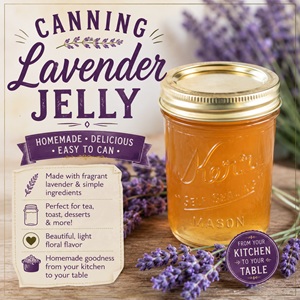
Canning lavender jelly is a fun and unique way to preserve the delicate floral flavor of lavender.
This homemade jelly is lightly sweet, beautifully fragrant, and perfect for spreading on toast or gifting to friends and family.
If you’ve never made jelly before, don’t worry—this recipe walks you through each step so you can confidently make your own batch at home.
Canning Expertise: Rachel Paxton is a certified Master Home Food Preserver with over 25 years of hands-on experience in safe home canning and food preservation.
If you enjoy preserving seasonal flavors, be sure to browse all of my canning recipes here and my full collection of jam and jelly recipes for more ideas.
Want to try making your own jelly at home?
Get my free guide with 8 easy, beginner-friendly jelly recipes you can confidently make.
If you’re new to canning, be sure to read my water bath canning for beginners guide and see the canning supplies you need here before getting started.
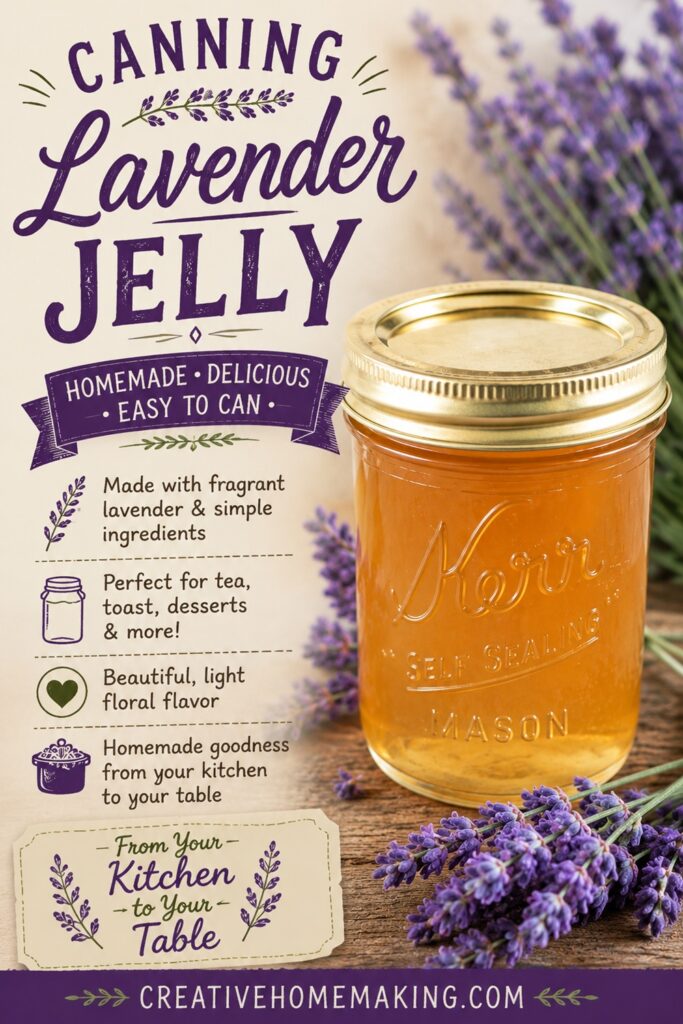
Why You’ll Love This Lavender Jelly
- Light, floral flavor that feels special
- Easy beginner-friendly recipe
- Perfect for gifting
- Great way to use fresh or dried lavender
- Beautiful addition to your pantry
Ingredients for Lavender Jelly
- 2 cups of water
- 2 cups of granulated sugar
- 1/4 cup of fresh or 1/8 cup of dried lavender
- 1 pkg. or 6 tbsp. powdered pectin*
- 1 tablespoon of lemon juice
Important: Always use culinary lavender, as some varieties are not safe to eat.
Note: If you are going to make a lot of jam and/or jelly, then you HAVE to try this powdered pectin that you can buy in bulk from Amazon.
How to Make Lavender Jelly
Step 1: Make the Lavender Infusion
Bring the water to a boil, then remove from heat.
Add the lavender and let it steep for 15–20 minutes to extract the flavor.
Strain through a fine mesh straine, cheesecloth, or jelly strainer and discard the lavender.
Step 2: Cook the Jelly
Return the infused liquid to the pot.
- Stir in sugar and lemon juice
- Bring to a boil
- Add powdered pectin
Bring to a full rolling boil and stir continuously until thickened.
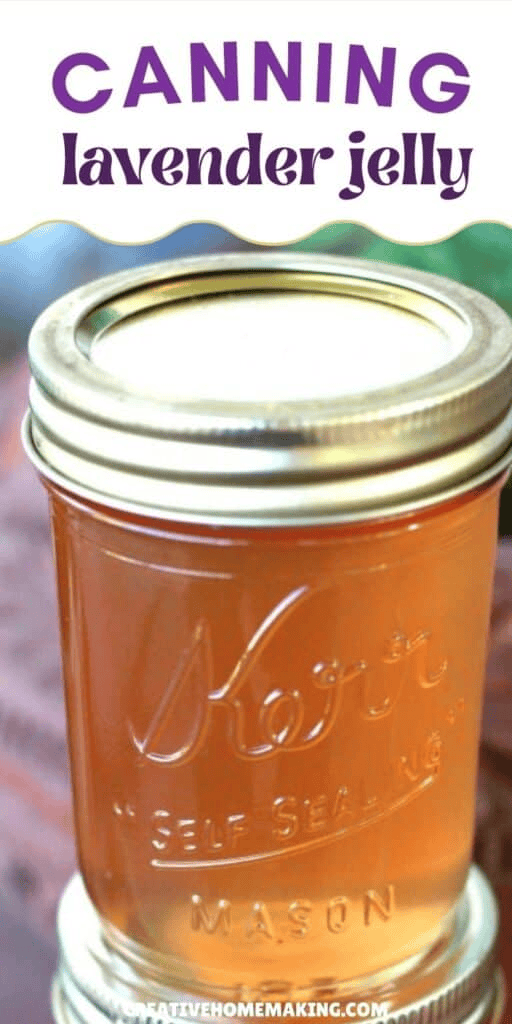
How to Can Lavender Jelly (Step-by-Step)
If you’re new to canning, read my full water bath canning for beginners guide before starting.
Step 1: Prepare Jars
Wash jars, lids, and rings in hot soapy water.
Keep jars hot until ready to use.
Step 2: Fill the Jars
- Pour hot jelly into jars
- Leave 1/4 inch headspace
- Remove air bubbles
- Wipe rims clean
Step 3: Seal the Jars
Place lids and rings on jars and tighten finger tight.
Step 4: Process in Water Bath
- Place jars in boiling water canner
- Ensure 1–2 inches of water above jars
- Bring to a boil
- Process for 5 minutes
Carefully remove jars and let cool undisturbed.
Ready to make it? Scroll down to the recipe card below for the full step-by-step instructions.
Yield and Storage
- Makes about 4–5 half-pint jars
- Store sealed jars in a cool, dark place for 1–2 years
- Refrigerate unsealed jars and use within a few weeks
Important Canning Tips
- Use culinary lavender only
- Don’t over-steep (can become bitter)
- Measure ingredients carefully
- Keep jars hot before filling
- Let jars sit undisturbed for 24 hours
What to Do if Your Jelly Doesn’t Set
Jelly can take 24–48 hours to fully set, so don’t worry right away.
If it’s still runny after a couple of days, follow my step-by-step guide on what to do if your jelly doesn’t set to fix it successfully.
More Jelly & Canning Recipes to Try
If you enjoy this recipe, you might also like:
You can also browse all of my canning recipes here for more ideas.
- 2 cups water
- 2 cups sugar
- 1/4 cup fresh lavender or 1/8 cup dried
- 1 package powdered pectin
- 1 tbsp lemon juice
-
Steep lavender in boiling water for 15–20 minutes; strain.
-
Add sugar and lemon juice; bring to a boil.
-
Add pectin and boil until thickened.
-
Pour into jars (1/4″ headspace).
-
Process in water bath for 5 minutes.
-
Yield: 4–5 half-pints
Follow my canning and preserving board on Pinterest.