This post may contain affiliate links.
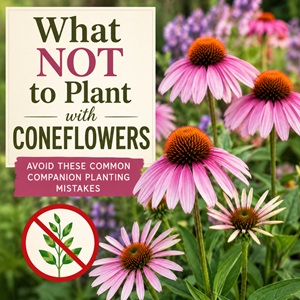
Coneflowers (Echinacea) are one of the most popular perennial flowers for cottage gardens and pollinator gardens.
Their cheerful blooms attract butterflies, bees, and even goldfinches, while their drought tolerance makes them one of the easiest flowers to grow.
Although coneflowers are adaptable, they don’t thrive next to every plant. Choosing companions with similar growing conditions helps them stay healthy, bloom longer, and resist disease.
Here are a few plants you should avoid growing near coneflowers.
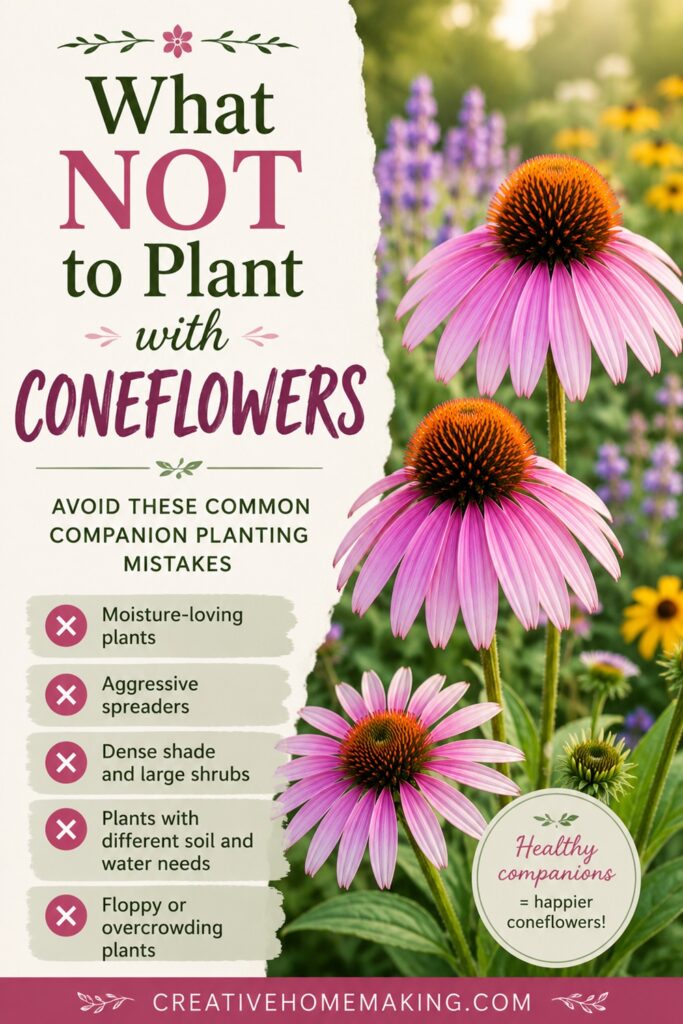
1. Moisture-Loving Perennials
Coneflowers prefer well-drained soil and don’t like constantly wet conditions. Planting them beside flowers that require frequent watering can lead to root rot and poor growth.
Want to try making your own jelly at home?
Get my free guide with 8 easy, beginner-friendly jelly recipes you can confidently make.
Avoid planting coneflowers near:
- Astilbe
- Cardinal Flower
- Japanese Iris
- Ligularia
Instead, choose drought-tolerant companions with similar watering needs.
2. Aggressive Spreaders
Some perennials spread so aggressively that they quickly crowd out neighboring plants.
Avoid growing coneflowers next to:
- Mint
- Obedient Plant
- Creeping Bellflower
- Bee Balm (unless you don’t mind it spreading)
These plants can compete with coneflowers for water, nutrients, and sunlight.
3. Dense Shade Trees and Shrubs
Coneflowers bloom best in full sun, needing at least six hours of direct sunlight each day.
Avoid planting them beneath large shrubs or trees such as:
- Mature lilacs
- Large hydrangeas
- Viburnums
- Dense evergreen shrubs
As these plants grow, they create too much shade, reducing flowering and encouraging mildew.
If you’re growing lilacs, be sure to read my guide to Best Companion Plants for Lilacs (What Grows Well Together) for better planting combinations.
4. Plants That Need Rich, Constantly Fertilized Soil
Coneflowers actually perform best in average garden soil. Excess fertilizer often encourages leafy growth instead of flowers.
Avoid planting them near:
- Heavy-feeding vegetables
- Large annual bedding displays
- Plants that require constant fertilizing
Keeping growing conditions simple helps coneflowers produce stronger stems and more blooms.
5. Large, Floppy Plants
Plants that lean over or spread across nearby flowers can crowd coneflowers and reduce air circulation.
Examples include:
- Tall, unstaked dahlias
- Hollyhocks planted too closely
- Large delphiniums
Give each plant plenty of room to grow.
If you enjoy growing dahlias, you’ll also like 10 Beautiful Companion Plants for Dahlias.
6. Fast-Growing Vines
Annual vines can quickly climb over coneflowers and block sunlight.
Avoid planting nearby:
- Morning Glory
- Hyacinth Bean Vine
- Canary Creeper
These vigorous vines can overwhelm smaller perennials in just one growing season.
7. Plants With Different Soil pH Needs
Coneflowers prefer neutral to slightly acidic soil.
Avoid pairing them with plants that require highly acidic conditions, such as blueberries, or plants that thrive in consistently soggy ground.
Trying to satisfy both plants usually leaves one struggling.
What Grows Well With Coneflowers?
Coneflowers combine beautifully with other sun-loving cottage garden flowers.
Excellent companion plants include:
- Salvia
- Lavender
- Catmint
- Coreopsis
- Black-eyed Susans
- Yarrow
- Shasta Daisies
- Ornamental grasses
- Blanket Flower
These plants bloom around the same time, attract pollinators, and enjoy similar growing conditions.
For more companion planting ideas, be sure to read:
- Best Perennials for a Cottage Garden (Easy Cottage Garden Flowers You’ll Love)
- Roses and Lavender: The Perfect Cottage Garden Pairing
- Purple Flowers Bees Love: The Best Pollinator-Friendly Blooms for Your Garden
- Beautiful Flowers That Attract Butterflies to Your Garden
- Top 11 Butterfly-Friendly Plants for Your Garden
- Why Every Butterfly Garden Needs Milkweed
Frequently Asked Questions
Can I plant zinnias with coneflowers?
Yes! Zinnias and coneflowers both thrive in full sun and well-drained soil, making them excellent companions.
If you’re planning a flower bed, you may also enjoy What Not to Plant With Zinnias: 8 Plants to Avoid.
Do coneflowers spread?
Coneflowers gradually form larger clumps and often self-seed, but they aren’t considered invasive. Deadheading spent flowers can help reduce unwanted seedlings if desired.
Are coneflowers good for pollinator gardens?
Absolutely! Coneflowers are among the best flowers for attracting butterflies, native bees, and birds. They pair well with many other pollinator-friendly perennials to create a long-lasting display of blooms.
Coneflowers are easy-care perennials that reward gardeners with months of colorful blooms.
By avoiding moisture-loving plants, aggressive spreaders, dense shade, and companions with very different growing requirements, you’ll enjoy healthier plants and a more beautiful flower garden.
Pair them with other sun-loving perennials, and you’ll have a vibrant cottage garden that’s filled with butterflies and blooms from summer into fall.
Follow my companion planting board on Pinterest.