This post may contain affiliate links.
Zinnias are one of the easiest flowers to grow, adding bright color to flower beds, cutting gardens, vegetable gardens, and cottage gardens from summer until frost.
Their cheerful blooms attract butterflies, bees, and other beneficial pollinators, making them a favorite among home gardeners.
Although zinnias grow well with many plants, there are a few that aren’t the best companions.
Giving your zinnias enough space and pairing them with compatible plants will help reduce disease, improve air circulation, and keep your garden looking its best.
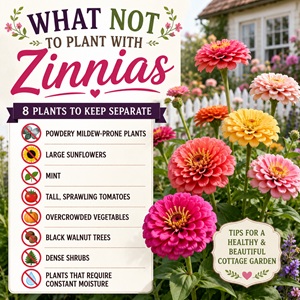
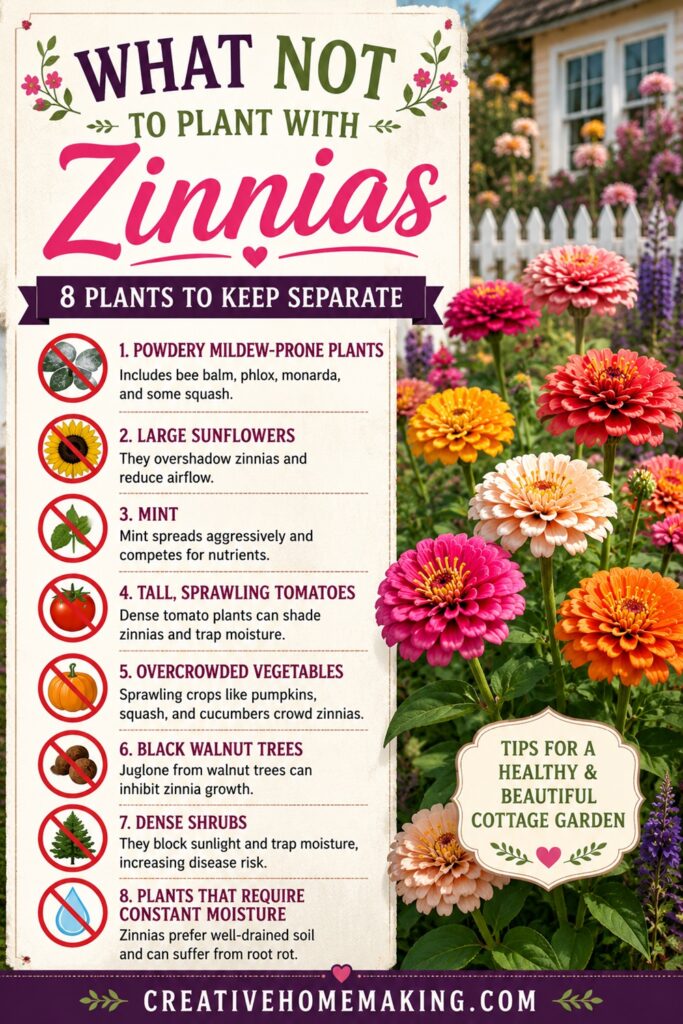
Here’s what not to plant with zinnias.
Want to try making your own jelly at home?
Get my free guide with 8 easy, beginner-friendly jelly recipes you can confidently make.
Related post: How to Grow Zinnias from Cuttings: Easy Steps for a Blooming Garden
1. Powdery Mildew-Prone Plants
Zinnias are susceptible to powdery mildew, especially during warm, humid weather. Avoid crowding them with other plants that commonly develop the same disease, such as:
- Bee balm
- Phlox
- Monarda
- Some varieties of squash
Grouping several mildew-prone plants together can make it easier for fungal diseases to spread throughout your garden.
Related post: Deadheading Zinnias: The Easy Trick for a Longer Bloom Season
2. Large Sunflowers
While both flowers love full sun, giant sunflowers can quickly overshadow zinnias.
Their tall stalks block sunlight and reduce airflow, which increases humidity around the zinnias and encourages fungal diseases.
If you love growing both, plant sunflowers behind your zinnias where they won’t cast shade.
3. Mint
Mint is famous for taking over the garden.
Its aggressive underground runners quickly invade flower beds, competing with zinnias for water and nutrients.
If you’d like to grow mint nearby, keep it in a container instead of planting it directly in the ground.
Related post; When to Pinch Zinnias: A Quick Guide
4. Tall, Sprawling Tomatoes
Tomatoes and zinnias can actually make good companions in some gardens because zinnias attract pollinators.
However, large indeterminate tomato plants can become so dense that they shade nearby flowers and reduce airflow.
Leave plenty of space between the two so each plant receives adequate sunlight.
Related post: How to Save Seeds from Zinnias: A Beginner’s Guide
5. Overcrowded Vegetables
Avoid planting zinnias in the middle of sprawling crops like:
- Pumpkins
- Winter squash
- Large cucumbers
These plants spread rapidly across the ground and can crowd young zinnias before they have a chance to mature.
6. Black Walnut Trees
Like many ornamental flowers, zinnias may struggle near black walnut trees because of juglone, a natural chemical released by the tree that inhibits the growth of many plants.
If you have black walnut trees, choose another area of the garden for your flower beds.
Related post: How to Grow Zinnias in Pots: A Beginner’s Guide
7. Dense Shrubs
Large evergreen shrubs and dense hedges can reduce sunlight and trap moisture around zinnias.
Since zinnias bloom best in full sun and benefit from good air circulation, plant them in open areas whenever possible.
8. Plants That Require Constant Moisture
Zinnias prefer well-drained soil and don’t appreciate constantly wet conditions.
Avoid pairing them with moisture-loving plants that require frequent watering, as overly damp soil can increase the risk of root rot and fungal diseases.
Related post: How to Grow Zinnias from Seeds: A Beginner’s Guide
What Should You Plant With Zinnias?
Fortunately, zinnias have many excellent companions.
Some of the best include:
- Cosmos
- Marigolds
- Salvia
- Nasturtiums
- Basil
- Dill
- Coneflowers
- Black-eyed Susans
These plants attract pollinators, create beautiful color combinations, and thrive under similar growing conditions.
Zinnias in Cottage Gardens
Zinnias are a classic addition to cottage gardens thanks to their long blooming season and vibrant colors.
Mix them with cosmos, coneflowers, foxgloves, hollyhocks, lavender, and bee balm for an informal garden filled with butterflies and bees.
To keep your cottage garden healthy, avoid overcrowding plants. Proper spacing improves air circulation, reduces disease problems, and allows each flower to reach its full potential.
More Companion Planting Guides
If you’re planning your garden, you may also enjoy:
- What Not to Plant With Hollyhocks
- What Not to Plant With Sunflowers
- What Not to Plant With Bee Balm
- What Not to Plant With Peonies
- What Not to Plant With Lavender
- What Not to Plant With Lilacs
- What Not to Plant With Cucumbers
- What Not to Plant With Rhubarb
These companion planting guides can help you create a healthier, more productive flower and vegetable garden.
Follow my cottage garden flowers board on Pinterest.