This post may contain affiliate links.
If you’re looking for an easy way to attract more bees to your garden, planting purple flowers is a great place to start.
Bees are naturally drawn to shades of purple, blue, and violet. These colors stand out to pollinators and help them locate nectar-rich flowers more easily.
By adding a variety of purple blooms to your landscape, you can create a beautiful garden while also supporting local bee populations.
Here are some of the best purple flowers bees love and how to grow them in your garden.
Why Bees Love Purple Flowers
Bees see colors differently than humans.
Want to try making your own jelly at home?
Get my free guide with 8 easy, beginner-friendly jelly recipes you can confidently make.
While they may not see red very well, they are highly attracted to purple, blue, and ultraviolet shades. Many nectar-rich flowers have evolved to display these colors because they help attract pollinators.
Planting a variety of purple flowers can:
- Attract honeybees and native bees
- Improve pollination in vegetable gardens
- Support local ecosystems
- Increase garden biodiversity
- Create a beautiful cottage garden look
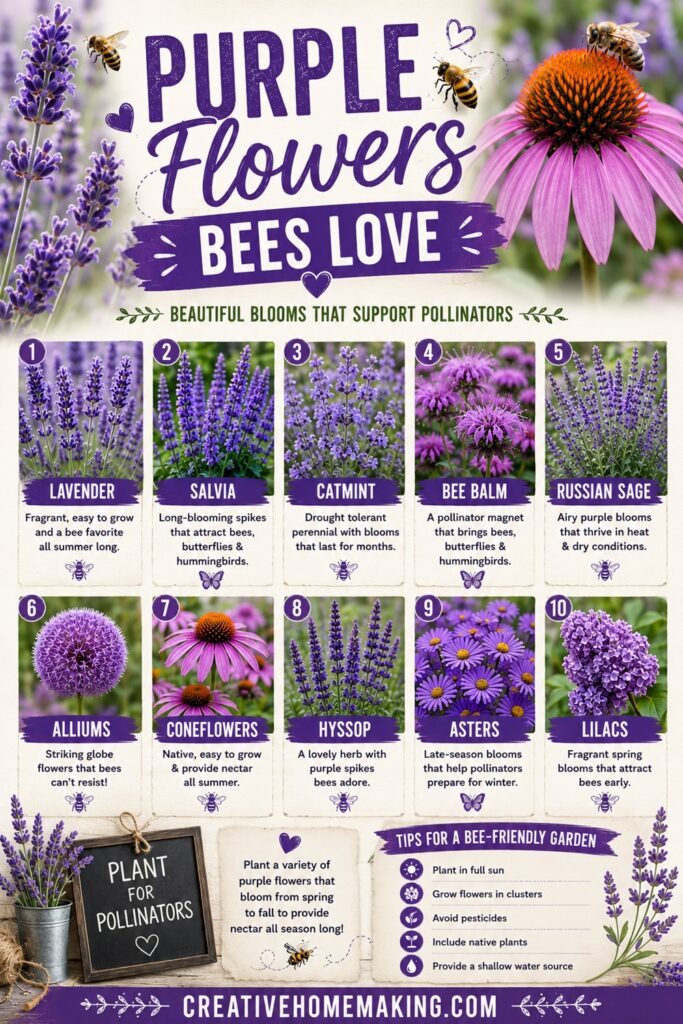
Lavender
Lavender is one of the most popular bee-friendly plants you can grow.
Its fragrant purple flower spikes provide nectar throughout summer and attract countless pollinators.
Growing tips:
- Plant in full sun
- Use well-drained soil
- Avoid overwatering
- Prune lightly after flowering
Related posts:
Salvia
Salvia produces spikes of purple, blue, or violet flowers that bloom for months.
Bees, butterflies, and hummingbirds all flock to these long-lasting flowers.
Many varieties are drought tolerant and easy to grow.
Catmint
Catmint is one of the easiest perennial flowers for pollinators.
Its soft purple blooms appear in late spring and continue throughout much of the growing season.
Benefits include:
- Drought tolerance
- Long bloom time
- Deer resistance
- Excellent bee attraction
Bee Balm
The name says it all.
Bee balm is a favorite among bees, butterflies, and hummingbirds. Purple and lavender varieties are especially attractive in pollinator gardens.
Plant bee balm where it has good air circulation to help prevent powdery mildew.
Related posts:
- Why Bee Balm Is the Best Pollinator Plant for Your Garden
- The Best Companion Plants for Bee Balm
- How to Grow Bee Balm from Cuttings: A Step-by-Step Guide
Russian Sage
Russian sage produces airy spikes of lavender-purple flowers that bloom from summer into fall.
Its drought tolerance makes it ideal for low-maintenance gardens.
Bees frequently visit Russian sage during hot summer weather when other plants may stop blooming.
Alliums
Ornamental alliums create large purple globe-shaped flowers that stand above the garden.
These dramatic blooms are highly attractive to bees and make excellent additions to cottage gardens.
Coneflowers
Purple coneflowers are among the best native plants for pollinators.
Their large blooms provide nectar during summer and later produce seed heads that attract birds.
They are:
- Easy to grow
- Drought tolerant
- Long blooming
- Native to many regions
Related posts:
Hyssop
Hyssop is a lesser-known herb that produces beautiful purple flower spikes.
Bees absolutely love it, and it makes an excellent addition to herb gardens and pollinator gardens alike.
Related posts:
Asters
Late-season flowers are especially important for pollinators.
Purple asters provide nectar in late summer and fall when many other flowers have finished blooming.
They help bees prepare for winter and extend pollinator activity in the garden.
Related posts:
Lilacs
Lilacs are beloved for their fragrant purple flower clusters in spring.
They attract bees early in the season and add beauty and fragrance to cottage gardens.
You may also enjoy:
- What Not to Plant With Lilacs
- Best Cottage Garden Flowers
- How to Grow Lilacs (Easy Guide for Healthy, Fragrant Blooms)
Creating a Bee-Friendly Garden
For the best pollinator habitat:
- Plant flowers that bloom from spring through fall
- Grow flowers in clusters rather than single plants
- Avoid pesticides whenever possible
- Include native plants
- Provide a shallow water source for pollinators
A variety of flowering plants ensures bees always have access to nectar and pollen throughout the growing season.
Purple flowers are some of the most effective plants for attracting bees to the garden.
Whether you choose lavender, salvia, catmint, coneflowers, or asters, you’ll create a beautiful landscape that supports pollinators while adding color and interest to your outdoor space.
By planting a mix of bee-friendly purple flowers, you can enjoy a thriving garden filled with blooms, butterflies, and the gentle hum of busy pollinators all season long.
Follow my cottage garden flowers board on Pinterest.