This post may contain affiliate links.
Lavender is one of the most beautiful and fragrant cottage garden flowers you can grow.
Regular pruning helps keep lavender plants compact, encourages more blooms, and prevents them from becoming woody and overgrown.
Many gardeners are afraid to prune lavender because they’re worried about damaging the plant. Fortunately, pruning lavender is simple once you understand when and where to cut.
In this guide, you’ll learn how to prune lavender correctly, when to prune it, and how to avoid the common mistakes that can shorten the life of your plants.
If you’re new to growing lavender, you may also enjoy my guides on How to Grow Lavender in Pots, How to Grow Lavender From Cuttings, and Best Lavender Seeds for Beginners.
Want to try making your own jelly at home?
Get my free guide with 8 easy, beginner-friendly jelly recipes you can confidently make.
Why Pruning Lavender Is Important
Without regular pruning, lavender plants often become woody, leggy, and produce fewer flowers.
Pruning helps:
- Encourage more blooms
- Maintain a compact shape
- Improve air circulation
- Prevent plants from splitting open in the center
- Extend the life of the plant
- Keep cottage garden borders looking neat
A properly pruned lavender plant will stay fuller and healthier for years.
When to Prune Lavender
The best time to prune lavender depends on the season.
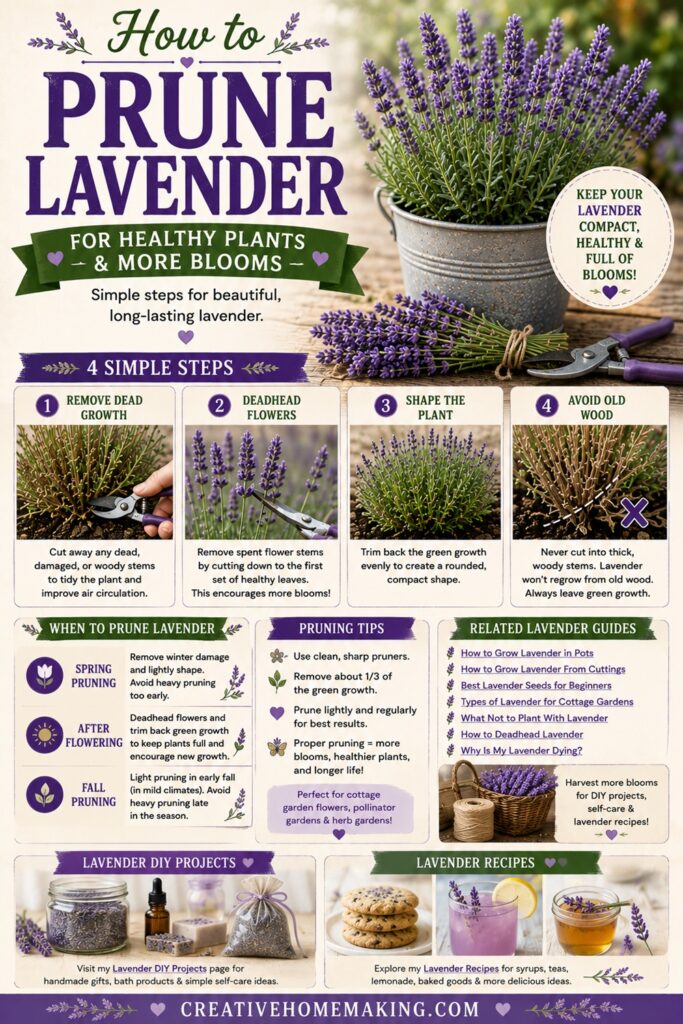
Spring Pruning
In early spring, remove any winter-damaged stems and lightly shape the plant.
Avoid heavy pruning at this time, especially if new growth has not yet appeared.
After Flowering
The most important pruning happens after lavender finishes blooming.
Once the flowers begin to fade:
- Remove spent flower stems
- Trim back some of the green growth
- Shape the plant into a rounded mound
This helps encourage fresh growth and keeps plants tidy.
Fall Pruning
In warmer climates, a light pruning can be done in early fall.
Avoid heavy pruning late in the season because tender new growth may be damaged by winter weather.
Tools You’ll Need
Pruning lavender doesn’t require special equipment.
A few simple tools are all you need:
- Hand pruners
- Garden scissors
- Gardening gloves
- A small garden basket for collecting stems
Always use clean, sharp pruners to reduce the risk of disease.
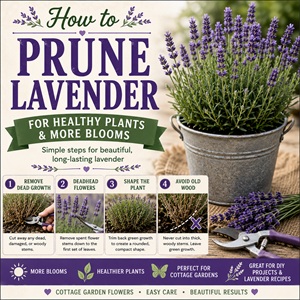
How to Prune Lavender Step by Step
Remove Dead or Damaged Stems
Start by cutting away:
- Dead branches
- Broken stems
- Winter-damaged growth
This allows you to see the healthy structure of the plant.
Cut Back Spent Flower Stems
Remove old flower spikes by following the stem down to the first set of healthy leaves.
This is also known as deadheading.
For a more detailed guide, see How to Deadhead Lavender.
Shape the Plant
Trim the green growth evenly around the plant to create a rounded shape.
A compact mound helps improve airflow and keeps the plant attractive throughout the season.
Avoid Cutting Into Old Wood
This is the most important rule when pruning lavender.
Do not cut deeply into thick woody stems.
Unlike many shrubs, lavender often struggles to produce new growth from old wood.
Always leave some green growth on the plant when pruning.
How Much Should You Cut Back?
A good rule of thumb is to remove about one-third of the plant’s green growth after flowering.
Avoid removing more than that at one time.
Light, regular pruning is better than waiting until the plant becomes overgrown.
Signs Your Lavender Needs Pruning
Your lavender may be overdue for pruning if you notice:
- Long floppy stems
- Fewer flowers
- A woody center
- Plants splitting open
- Sparse growth
Regular maintenance helps prevent these problems before they start.
Common Lavender Pruning Mistakes
Cutting Into Woody Stems
This is the most common mistake gardeners make.
Old wood often does not regenerate new growth.
Pruning Too Late in Fall
Heavy pruning just before winter can encourage tender new growth that may not survive freezing temperatures.
Skipping Pruning Altogether
Lavender naturally becomes woody with age.
Annual pruning helps maintain healthy plants and abundant flowers.
What If Your Lavender Is Already Woody?
Older lavender plants often develop thick woody stems and bare centers.
Unfortunately, severely woody lavender cannot always be restored.
You may be able to improve its appearance with gradual pruning over several seasons, but sometimes replacement is the best option.
If your plant is declining, read my guide on Why Is My Lavender Dying? 7 Common Causes and How to Save It.
You can also take cuttings from healthy stems and start fresh plants.
See How to Grow Lavender From Cuttings for step-by-step instructions.
Best Lavender Varieties for Beginners
Some lavender varieties naturally stay compact and are easier to maintain.
Popular choices include:
- Hidcote Lavender
- Munstead Lavender
- Provence Lavender
- Grosso Lavender
- English Lavender
You can learn more in my guides to Types of Lavender for Cottage Gardens and Best Lavender Seeds for Beginners.
Lavender Resources You May Enjoy
Growing Lavender
- How to Grow Lavender in Pots
- How to Grow Lavender From Cuttings
- Best Lavender Seeds for Beginners
- Types of Lavender for Cottage Gardens
- What Not to Plant With Lavender
- How to Deadhead Lavender
- Why Is My Lavender Dying?
Lavender DIY Projects
Visit my Lavender DIY Projects page for homemade gifts, bath products, and simple self-care ideas featuring fresh and dried lavender.
Lavender Recipes
Don’t miss my collection of Lavender Recipes, including lavender syrup, lavender lemonade, teas, baked goods, and other delicious ways to use your harvest.
Pruning lavender is one of the easiest ways to keep plants healthy, attractive, and productive.
By removing spent blooms, shaping plants regularly, and avoiding cuts into old wood, you’ll enjoy fuller plants and more flowers year after year.
Whether you’re growing lavender in containers, herb gardens, or among your favorite cottage garden flowers, proper pruning will help your plants thrive and provide plenty of blooms for crafts, DIY projects, and lavender recipes.
Follow my cottage garden flowers board on Pinterest.