This post may contain affiliate links.
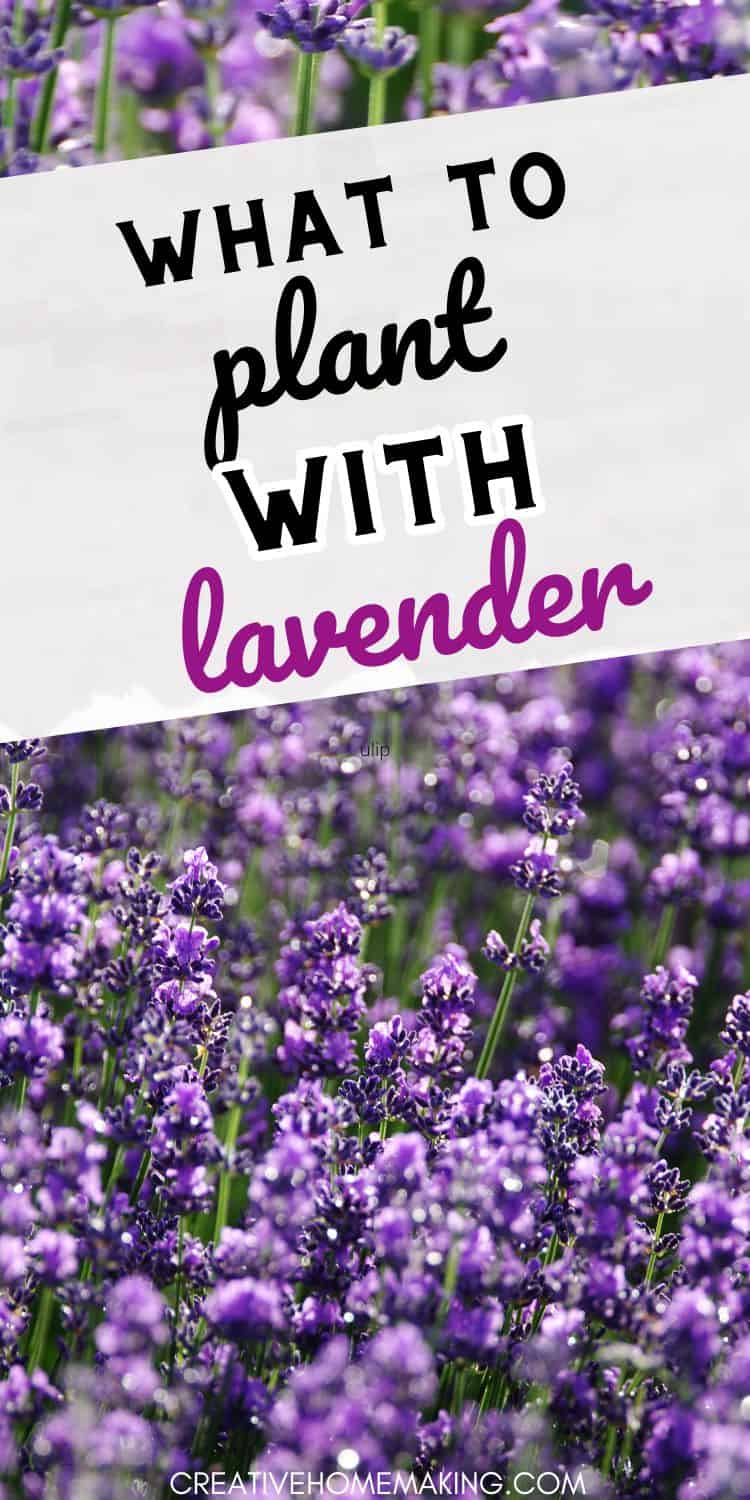
If you’re looking to add beauty and fragrance to your garden, lavender is always a favorite. It’s easy to grow, smells amazing, and attracts pollinators like bees and butterflies.
But if you really want to take your lavender garden to the next level, choosing the right companion plants can make a big difference.
The right combinations not only look beautiful together—they can also help your lavender grow better, attract beneficial insects, and even repel pests.
If you’re still getting started with lavender, I share a simple step-by-step guide to growing it from seed so you can build your garden from the ground up.
Choosing the right variety makes a big difference—here are the best lavender seeds for beginners.
Want to try making your own jelly at home?
Get my free guide with 8 easy, beginner-friendly jelly recipes you can confidently make.
What to Plant with Lavender
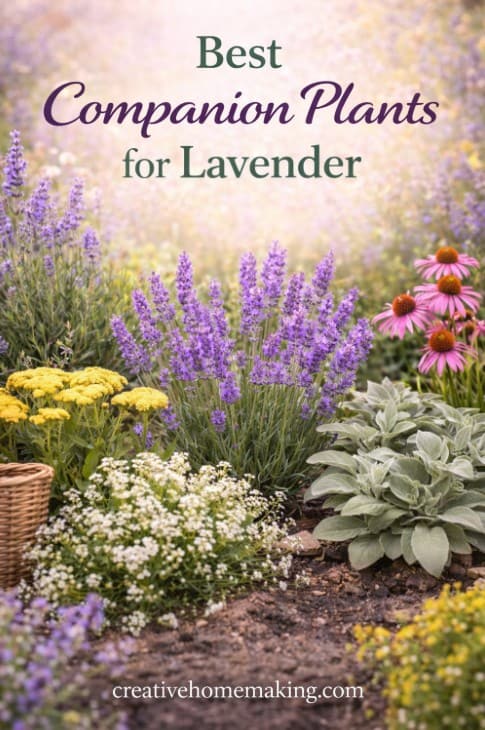
Lavender grows best with plants that prefer full sun and well-drained soil. Some of the best companion plants for lavender include:
- Thyme
- Rosemary
- Sage
- Echinacea (coneflower)
- Yarrow
- Black-eyed Susans
These plants thrive in similar conditions, help attract pollinators, and create a beautiful, low-maintenance garden.
Why Companion Planting with Lavender Works
Lavender thrives in:
- Full sun
- Well-drained soil
- Drier conditions
So the best companion plants are ones that enjoy those same conditions.
When you group plants with similar needs, everything becomes easier to care for—and your garden tends to thrive with less effort.
Herbs That Grow Well with Lavender
One of the easiest ways to plan your lavender garden is to pair it with other herbs.
Some of the best options include:
- Thyme
- Rosemary
- Sage
These herbs not only grow well alongside lavender, but they also complement its fragrance beautifully.
They’re also incredibly useful in the kitchen, especially if you enjoy cooking or making homemade recipes with fresh herbs.
If you like using lavender in recipes too, I share how to choose and use culinary lavender in your kitchen.
Flowers That Pair Beautifully with Lavender
If you want a more colorful garden, adding flowers alongside lavender creates a stunning contrast.
Some great choices include:
- Echinacea (coneflower)
- Black-eyed Susans
- Yarrow
- Daisies
These flowers:
- Add color and texture
- Attract pollinators
- Help create a more balanced garden ecosystem
The mix of soft purple lavender with bright, bold flowers is especially beautiful in summer gardens.
Choosing the Right Lavender Variety
Not all lavender varieties grow the same, so choosing the right one matters—especially when planning your layout.
Some popular options include:
- English lavender (great for most climates)
- Spanish lavender (better for warmer regions)
- Lavandin (larger plants with strong fragrance)
- Munstead (compact and great for smaller spaces)
Think about your space, climate, and how you want your garden to look when choosing your variety.
How to Prepare Your Garden Bed
Setting up the right environment will make all the difference in how well your lavender and companion plants grow.
Soil
Lavender needs well-drained soil—this is one of the most important factors.
If your soil is heavy or clay-like:
- Mix in sand or gravel
- Consider raised beds
Sunlight
Lavender needs at least 6–8 hours of sunlight per day, so choose a bright, open location.
Spacing
Give plants room to breathe:
- Space lavender 12–18 inches apart
- Avoid overcrowding
Good airflow helps prevent disease and keeps plants healthy.
Benefits of Companion Planting
Companion planting with lavender isn’t just about looks—it has real benefits:
- Attracts pollinators like bees and butterflies
- Helps repel pests naturally
- Improves overall garden health
- Creates a more balanced ecosystem
It’s a simple way to make your garden both beautiful and functional.
Lavender Plant Care Tips
Once your garden is planted, a little care goes a long way.
- Water deeply but infrequently
- Let soil dry out between watering
- Avoid overwatering (lavender doesn’t like wet roots)
- Prune regularly to keep plants healthy
If you’re new to growing lavender, it’s easy to make a few common mistakes—I share the biggest ones to avoid so your plants stay healthy and fragrant.
Harvesting and Using Lavender
Once your lavender starts blooming, you can harvest it and use it in so many ways.
You can:
- Dry it for later
- Use it in recipes
- Make sachets or home products
If you want to preserve your harvest, I share simple ways to dry and store lavender so you can use it all year long.
And if you enjoy cooking with lavender, it’s perfect for drinks, desserts, and even brunch recipes.
Planting lavender with the right companions can completely transform your garden.
By choosing herbs and flowers with similar growing needs, you’ll create a space that’s not only beautiful—but also easier to care for and more productive.
Whether you’re planting a small herb garden or designing a full garden bed, lavender is a wonderful place to start—and even better when paired with the right plants.
Frequently Asked Questions
What grows well with lavender?
Lavender grows well with herbs like thyme, rosemary, and sage, as well as flowers like echinacea, yarrow, and black-eyed Susans. These plants enjoy similar growing conditions and look beautiful together.
What should not be planted near lavender?
Avoid plants that need moist soil, like ferns or hostas. Lavender prefers dry, well-drained conditions, so pairing it with water-loving plants can lead to problems.
Can I plant vegetables with lavender?
Yes, some vegetables like tomatoes, peppers, and eggplant can grow well near lavender. Lavender may also help repel certain pests, making it a helpful companion in the garden.
Does lavender attract or repel pests?
Lavender attracts beneficial pollinators like bees and butterflies, but it can also help repel pests like mosquitoes and some garden insects.
Can lavender and rosemary be planted together?
Yes, lavender and rosemary are a great pairing. They have similar sunlight and soil needs, and they complement each other beautifully in both fragrance and appearance.
If you’re just getting started, I also share a simple guide to growing lavender from seed and how to avoid common mistakes so your plants thrive.
Follow my lavender board on Pinterest.