This post may contain affiliate links.
Not every pear is equally suited to being canned. Some varieties hold their shape beautifully in the jar, while others become soft and tender and are better suited to certain types of preserves.
When I’m choosing pears for canning, I look for fruit that has good flavor and the right texture to stand up to heating and processing.
Bartlett, Bosc, and Anjou are three excellent choices for general pear canning, and several other varieties can work well depending on what you’re making.
Canning Expertise: Rachel Paxton is a certified Master Home Food Preserver with over 25 years of hands-on experience in safe home canning and food preservation.
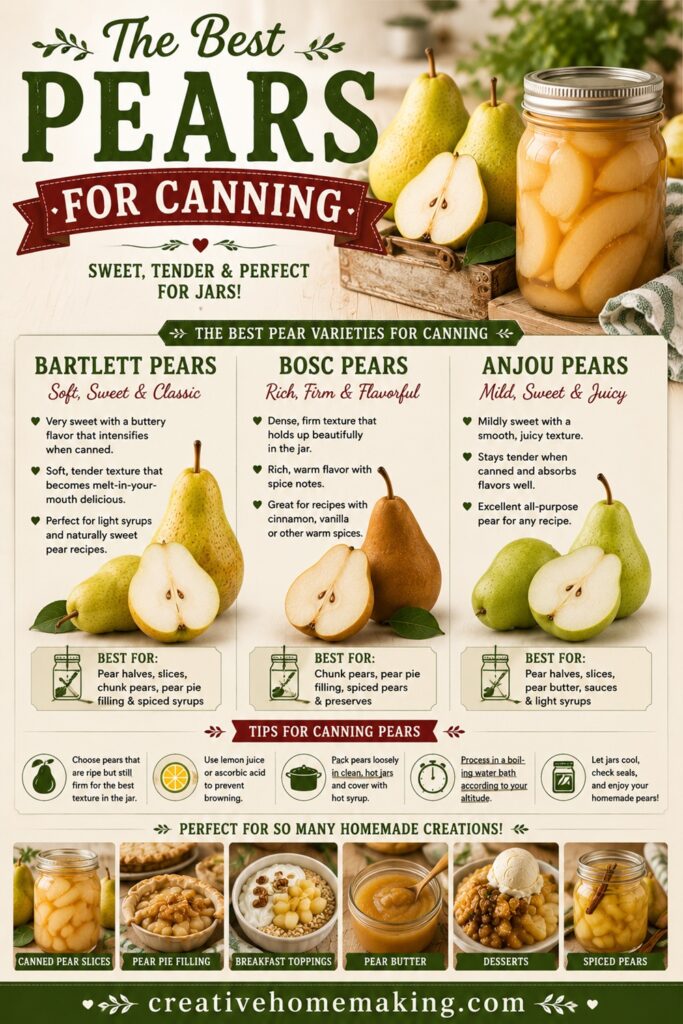
Penn State Extension specifically recommends Bartlett, Bosc, Anjou, and Comice for preservation, with Seckel being particularly suitable for pickled and spiced products.
Want to try making your own jelly at home?
Get my free guide with 8 easy, beginner-friendly jelly recipes you can confidently make.
Bartlett Pears
Bartlett is probably the classic pear for canning, and for good reason. Penn State Extension calls Bartlett the best variety for canning, and it is widely used for canned pears because of its sweet flavor and tender texture.
Bartlett pears are especially good for:
- Canned pear halves
- Canned pear slices
- Pears packed in light syrup
- Pear pie filling
- Spiced pears
- Pear preserves
They become soft and tender when heated, which makes them especially nice when you want that traditional canned-pear texture.
Bosc Pears
Bosc pears are firmer and denser than Bartletts, so they’re a good choice when you want pear pieces that retain more structure.
They’re also wonderfully flavorful, with a rich, slightly spicy character that works beautifully with cinnamon and other warm spices.
Bosc pears are good for:
- Pear halves
- Pear slices
- Chunky pear preserves
- Spiced pears
- Pear pie filling
- Pears packed with warm spices
Oregon State Extension lists Bosc among the varieties that can well, noting that Anjou, Comice, Nelis, and Forelle can also be preserved depending on the finished product.
Anjou Pears
Anjou pears have a mild, sweet flavor and a smooth texture. They’re another good all-purpose option for canning and can work particularly well when you want a pear that absorbs the flavors of the syrup or spices around it.
Anjou pears are good for:
- Pear halves
- Sliced pears
- Pear butter
- Pear sauces
- Lightly spiced pears
- Pears packed in juice or syrup
Anjou is also specifically included among the varieties recommended for preservation by Penn State Extension.
What About Comice Pears?
Comice is a sweet, flavorful pear that can be preserved, although it is softer and more delicate than varieties such as Bosc.
Penn State Extension includes Comice among its recommended varieties for preservation, while Oregon State notes that Comice may be preserved depending on the end product.
Because texture matters so much when canning, I would choose Comice when the recipe is appropriate rather than assuming every pear variety will behave identically.
What About Seckel Pears?
Seckel pears are small, sweet pears that are especially nice for pickled and spiced products.
They’re adorable canned whole or used in recipes where their smaller size is an advantage. The National Center for Home Food Preservation specifically has a pear pickle recipe using Seckel pears or other suitable pickling pears.
They’re a particularly fun choice for:
- Spiced pears
- Pear pickles
- Whole canned pears
- Holiday preserves
How Ripe Should Pears Be for Canning?
This is an important part of getting good-quality canned pears.
You don’t want pears that are completely soft and ripe. For canning, choose mature pears that are still firm, then allow them to reach the proper stage before processing.
Oregon State Extension recommends harvesting pears when they’re mature but not fully ripe; fruit picked too early can lack flavor, while overripe fruit can become coarse, grainy, and overly soft.
The National Center for Home Food Preservation also recommends pears of good quality that are ripe and mature for canning.
Don’t Wait Until They’re Overripe
One of the easiest mistakes to make is waiting until your pears are beautifully soft and ready to eat before deciding to can them.
That’s usually too late for the best canned texture.
You want fruit that’s mature and firm enough to withstand heating without turning mushy.
This is particularly important when you’re canning pear halves or slices and want them to remain attractive in the jar.
How to Keep Pears From Browning
Once pears are peeled and cut, they can discolor quickly.
The National Center for Home Food Preservation recommends keeping prepared pears in an ascorbic acid solution while you’re working with them. This helps preserve their natural color before they go into the jars.
Commercial ascorbic-acid products made for fruit preservation are convenient for this purpose.
Hot-Pack Pears for Better Quality
For standard canned pears, the National Center for Home Food Preservation recommends a hot-pack method; its tested procedure notes that raw-packed pears produce a poor-quality product.
The pears are cooked for five minutes in syrup, juice, or water before being packed into hot jars.
You can use a light syrup, medium syrup, or pack pears in apple juice, white grape juice, or water according to the tested recipe you’re following.
What Can You Do With Canned Pears?
Once you have jars of pears in the pantry, they’re useful for much more than simply eating straight from the jar.
Try canned pears in:
Pear pie filling
Use tender pear pieces in homemade pies, crisps, and cobblers.
Breakfast
Serve pears with oatmeal, yogurt, pancakes, or waffles.
Desserts
Add them to cakes, crisps, puddings, and other simple desserts.
Pear butter
Cooked pears can be transformed into a flavorful spread when using a tested recipe appropriate for canning. Here’s my favorite recipe for canning pear butter.
Spiced pears
Add warm spices such as cinnamon to a tested pear-canning recipe for a cozy pantry treat. Here’s my favorite recipe for canning cinnamon pears.
Salads and savory dishes
Canned pears can also work beautifully in salads and some savory recipes.
A Note About Asian Pears
Asian pears are a little different from the European pears most people think of when they hear “canning pears.”
The National Center for Home Food Preservation has a specific tested procedure for Asian pears, and importantly, Asian pears must be acidified with bottled lemon juice before canning in a boiling-water canner.
So I wouldn’t simply substitute Asian pears into a standard canned-pear recipe. Use a tested recipe specifically formulated for Asian pears.
My Favorite Pears for the Pantry
For everyday pear canning, Bartlett, Bosc, and Anjou are excellent varieties to know. Bartlett is the classic choice when you want sweet, tender canned pears, Bosc is a great choice when you want firmer pieces with rich flavor, and Anjou is a versatile option with a mild, sweet flavor.
And for something a little different, Seckel pears are wonderful for spiced or pickled preparations.
There’s something especially satisfying about seeing a row of pear-filled jars in the pantry after the harvest.
A few jars can turn an ordinary pear season into homemade desserts, breakfasts, and pantry treats months later.
More Pear Recipes
If you have more pears than you know what to do with, you might also enjoy:
- How to Quickly Ripen Pears
- Canning Cinnamon Pears
- Pear Muffins
- Ginger Pear Jam
- Pear Jelly
- Cranberry Pear Jam
And when you’re ready to preserve another harvest, there’s always something satisfying about adding another homemade jar to the pantry.
Food-safety note: For actual canning, use a current, tested recipe from a reliable source rather than improvising processing times or changing the proportions of ingredients.
The National Center for Home Food Preservation specifically recommends following tested canning procedures and provides the current pear-processing directions.
Follow my canning and preserving board on Pinterest.