This post may contain affiliate links.
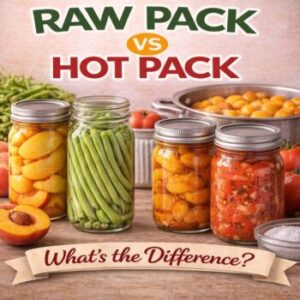
If you’re new to canning, you may have noticed that some recipes say to use a raw pack method, while others call for hot pack.
Knowing the difference can help you get better results and avoid common mistakes.
Both methods are safe when used correctly, but they affect the texture, flavor, and quality of your finished product.
If you’re just getting started, be sure to read my water bath canning for beginners guide and see the canning supplies you need here before you begin.
What is Raw Packing?
- Raw packing means placing uncooked food directly into jars before processing.
- Liquid (such as water, juice, or syrup) is then added, and the jars are processed in a water bath or pressure canner.
- Pros:
- Faster and easier
- Less prep work
- Works well for firm fruits and vegetables
- Cons:
- Can trap air in jars
- May result in floating fruit
- Texture can be firmer
What is Hot Pack Canning?
Hot packing means cooking the food before placing it into jars.
Want to try making your own jelly at home?
Get my free guide with 8 easy, beginner-friendly jelly recipes you can confidently make.
The food is heated in liquid (water, juice, or syrup), then packed into jars while hot and processed.
Pros:
- Reduces air in jars
- Helps food pack more tightly
- Improves shelf life
- Often enhances flavor
Cons:
- Takes more time
- Slightly more prep work
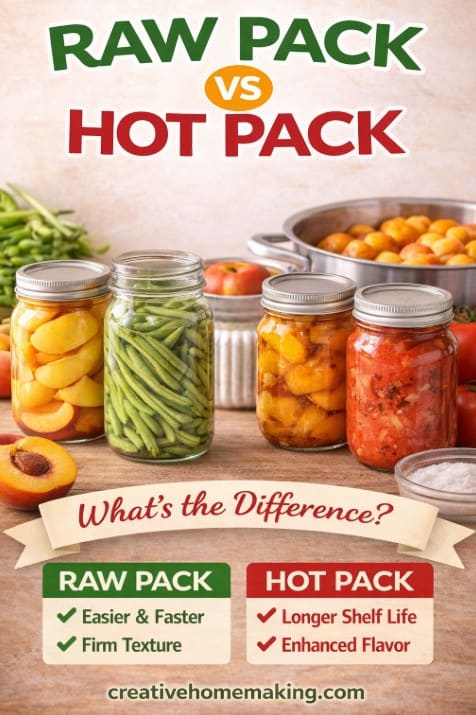
Raw Pack vs Hot Pack (Key Differences)
Here’s a quick comparison:
| Feature | Raw Pack | Hot Pack |
|---|---|---|
| Prep time | Faster | Slower |
| Texture | Firmer | Softer |
| Air in jars | More likely | Reduced |
| Shelf life | Slightly shorter | Longer |
| Ease | Very easy | Moderate |
When to Use Each Method
Use Raw Pack For:
- Peaches
- Pears
- Green beans
- Firm fruits and vegetables
Canning is an essential preservation method that allows you to store food safely for long periods. Understanding the different techniques is key to ensuring your food maintains its quality and safety.
Use Hot Pack For:
- Tomatoes
- Pie fillings
- Syrups
- Meats
- Recipes that specifically require it
Always follow your recipe instructions—some recipes require one method for safety and best results.
Which Method Is Better?
Neither method is “better”—it depends on what you’re making.
- Choose raw pack for simplicity and speed
- Choose hot pack for better shelf life and texture
Most beginner recipes (like jams, jellies, and syrups) use a hot pack method, since the food is cooked before being added to jars.
Common Questions About Packing Methods
Do I have to use the method listed in the recipe?
Yes—always follow the recipe. The method is chosen for safety, texture, and proper preservation.
Is hot packing safer than raw packing?
Hot packing can reduce air and bacteria, which helps improve shelf life—but both methods are safe when done correctly.
Why is my fruit floating in the jar?
This often happens with raw pack. Hot packing helps reduce floating by removing air from the food before canning.
If you’re learning to can, these guides will help:
- Water bath canning for beginners
- Canning supplies for beginners
- What to do if your jelly doesn’t set
You can also browse all of my canning recipes here for more beginner-friendly ideas.
Follow my canning and preserving board on Pinterest.