This post may contain affiliate links.
You want a show-stopping beef tenderloin that’s tender, flavorful, and worth the splurge. The best beef tenderloin comes from a whole, well-trimmed loin cooked to the right internal temperature and seasoned simply to let the meat shine.
This guide helps you pick the right cut, prepare it with easy seasoning, and roast or sear it so your meal turns out perfectly every time.
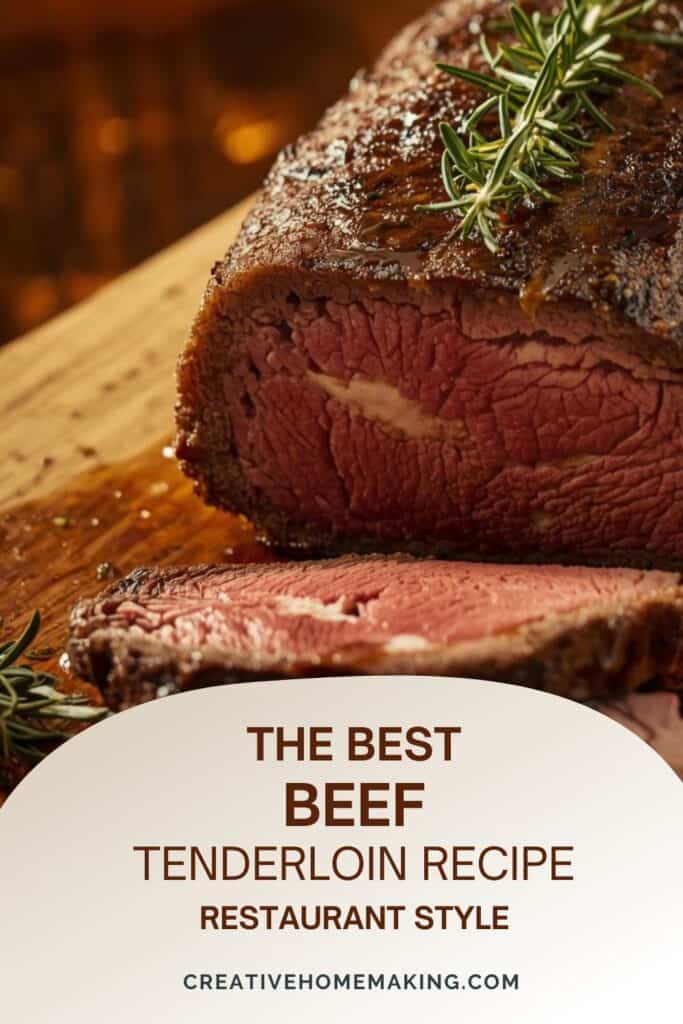
Follow quick tips on choosing quality meat, trimming and tying it, and using a foolproof temperature-and-time plan for even doneness.
You’ll also find simple sauce and serving ideas that make the roast feel special without extra fuss.
| You Might Also Like | |
| Slow Cooker Pot Roast Slow-cooked, tender pot roast perfection |
|
| Slow Cooker Pork Roast Tender, flavorful pork roast made effortless |
|
| Slow Cooker Pork Tenderloin Juicy slow-cooked pork tenderloin dinner |
|
Choosing the Best Beef Tenderloin
You want a tenderloin that cooks evenly, tastes rich, and fits your budget. Focus on grade, cut shape and size, and how much trimming you’ll need.
Want to try making your own jelly at home?
Get my free guide with 8 easy, beginner-friendly jelly recipes you can confidently make.
Grades of Beef for Tenderloin
Look for USDA Prime if you want the most marbling and flavor. Prime tenderloin gives slightly more juiciness and a richer mouthfeel, but it costs more.
USDA Choice is a good value. It has less marbling than Prime but still cooks very tender when you avoid overcooking.
If you buy grass-fed or choice-grade labeled from a trusted butcher, expect leaner meat and a firmer texture. Ask the butcher about the animal’s aging — 14–28 days of wet or dry aging improves tenderness and flavor.
Check the color and fat: bright, cherry-red meat and creamy white fat are signs of freshness. Avoid dark brown spots or excessive liquid in the packaging.
How to Select the Right Cut
Pick a whole center-cut tenderloin when you need uniform steaks or a roast. The center has the most even diameter, which helps with consistent cooking.
If you want individual steaks, look for “trimmed” or “filet mignon” portions cut from the center. Each steak should be about 1½–2 inches thick for a good sear and medium-rare finish.
Weigh your needs: a whole tenderloin ranges 4–6 pounds and serves 8–12 people. Smaller tail-end pieces cook unevenly and are best for stews or stir-fries.
Inspect the surface: it should be smooth with minimal silver skin. Ask the butcher to remove the chain (a stringy side muscle) if you don’t plan to trim it yourself.
Trimming and Preparing Beef Tenderloin
Start by removing the silver skin: slide a sharp boning knife under it and cut away in long, shallow strokes. Silver skin won’t melt and makes the meat tough if left on.
Trim the chain and any uneven thin tail. You can fold or tie the roast to even the shape for uniform cooking. Use kitchen twine every 1–1½ inches.
Season simply: salt and pepper highlight the mild flavor. For roasts, sear all sides in a hot pan first, then finish in the oven at 425°F until 120–125°F for rare or 130–135°F for medium-rare.
If you plan to slice steaks, let the meat rest 10–15 minutes after cooking. This keeps juices in the meat and makes slicing cleaner.
Cooking and Serving Beef Tenderloin
You’ll want a high-heat sear and a gentle roast to keep the center pink and the outside browned. Use simple seasonings, slice against the grain, and save trimmings for a quick next-day meal.
Ingredients
- 2 to 3 pound beef tenderloin roast (center-cut, trimmed and tied)
- 2 tablespoons olive oil
- 1 tablespoon kosher salt
- 1 tablespoon coarsely ground black pepper
- 3 cloves garlic, minced
- 1 tablespoon fresh rosemary, finely chopped
- 1 tablespoon fresh thyme, finely chopped
- 2 tablespoons unsalted butter
Instructions
Remove the beef from the refrigerator about an hour before you plan to cook it to allow it to come to room temperature for even cooking.
Preheat your oven to 425°F (220°C).
Pat the beef completely dry with paper towels, as moisture on the surface will prevent a good sear.
In a small bowl, combine the olive oil, minced garlic, rosemary, thyme, salt, and pepper to create a herb rub.
Rub the mixture all over the beef tenderloin, pressing the herbs and spices into the meat so they adhere well.
Heat a large oven-safe skillet or heavy roasting pan over medium-high heat on the stovetop.
Add the butter to the pan and, once melted and bubbling, place the tenderloin in the skillet.
Sear the meat for about 2 to 3 minutes per side until a brown crust has formed on all sides.
Transfer the skillet directly into the preheated oven.
Roast the beef until a meat thermometer inserted into the thickest part reaches your desired level of doneness: 125°F for rare, 135°F for medium-rare, or 145°F for medium.
This usually takes between 15 and 25 minutes depending on the thickness of the cut.
Remove the roast from the oven and transfer it to a cutting board or warm platter.
Tent the beef loosely with aluminum foil and let it rest for at least 15 minutes; this is crucial for allowing the juices to redistribute throughout the meat.
Snip and remove the kitchen twine, slice the tenderloin into thick portions, and serve immediately.
Tips for Leftovers
Cool sliced meat quickly and store in an airtight container in the fridge for up to 3–4 days. Reheat gently: wrap in foil with a splash of beef broth and warm at 300°F (150°C) for 8–12 minutes, or use a low oven until just warm.
Use leftover tenderloin cold in salads or sandwiches. Chop small pieces into stroganoff, fried rice, or pasta where brief reheating keeps the texture tender.
Trim and freeze any excess for up to 3 months; thaw in the fridge before reheating.
Follow my Tenderloin board on Pinterest.