This post may contain affiliate links.
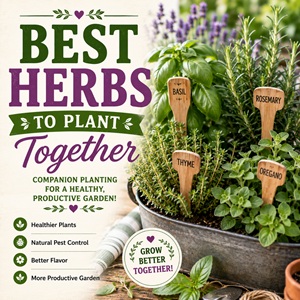
Growing herbs together is one of the simplest ways to create a productive, low-maintenance garden. When you group herbs with similar needs, they grow better, require less care, and are easier to manage.
The key to success is understanding which herbs thrive under the same conditions. In this guide, you’ll learn the best herbs to plant together and how to group them for a healthy, thriving herb garden.
See next: Companion Gardening for Beginners
Why Some Herbs Grow Better Together
Herbs grow best when they share similar needs for sunlight, water, and soil.
When you plant herbs with matching conditions together, you’ll get:
Want to try making your own jelly at home?
Get my free guide with 8 easy, beginner-friendly jelly recipes you can confidently make.
- Healthier plants
- Stronger flavor
- Easier watering and care
- Less risk of disease
Mixing herbs with very different needs can lead to one plant thriving while another struggles. Grouping them correctly makes everything easier.
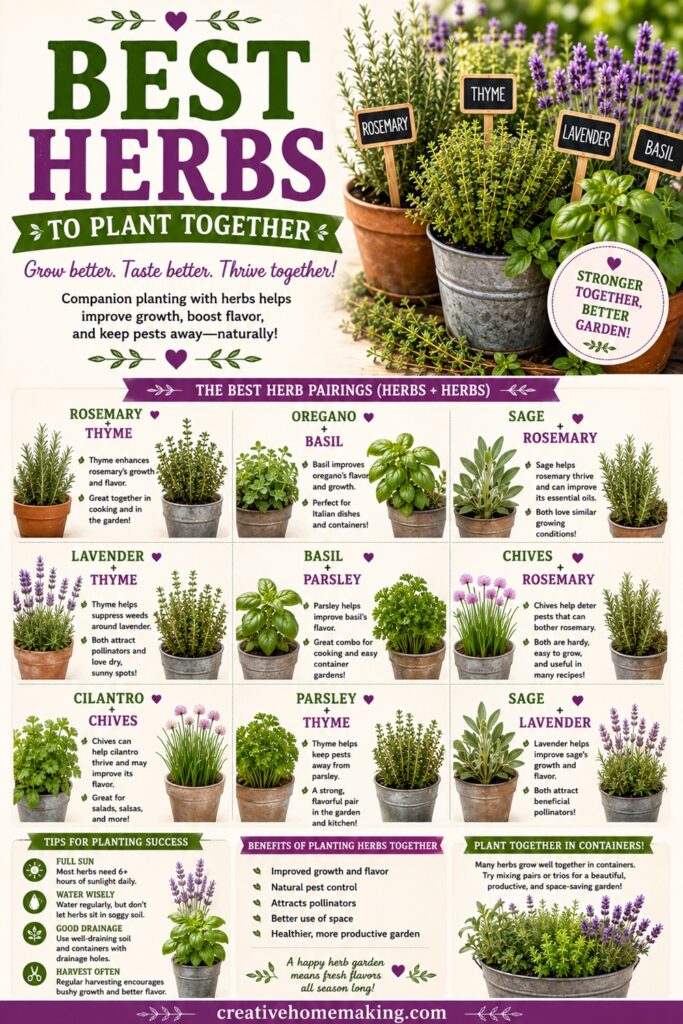
Best Herbs to Plant Together
Mediterranean Herb Group (Dry Soil, Full Sun)
These herbs naturally grow in hot, dry climates and prefer well-drained soil with less frequent watering.
Plant these together:
- Rosemary
- Thyme
- Oregano
- Sage
- Lavender
These herbs thrive in the same conditions and are perfect for garden beds or containers that dry out quickly.
Tip: Avoid overwatering this group. They prefer drier soil and lots of sun.
Moisture-Loving Herb Group (Rich Soil, Regular Water)
These herbs prefer more moisture and nutrient-rich soil. They grow quickly and benefit from consistent watering.
Plant these together:
- Basil
- Parsley
- Cilantro
- Chives
This group does well in garden beds or containers where the soil stays slightly moist.
Tip: Regular watering helps keep these herbs tender and flavorful.
Container-Friendly Herb Group
If you’re growing herbs in pots, grouping compatible plants makes maintenance much easier.
Good combinations include:
- Basil and parsley
- Chives and parsley
- Thyme and oregano
- Rosemary and sage
Choose herbs with similar water needs for each container to avoid over- or under-watering.
Herbs That Help Each Other Grow
Some herbs not only grow well together but can also benefit nearby plants.
- Basil can help improve the growth and flavor of nearby plants
- Chives can help deter pests
- Lavender attracts pollinators
- Oregano works well as a ground cover to protect soil
Planting herbs together can create a more balanced and productive garden environment.
More Herb Growing Ideas
- How to Grow Basil: Essential Tips for a Thriving Herb Garden
- How to Grow Parsley
- How to Grow Chives Easily in Your Home Garden
- How to Grow Lavender from Cuttings (Easy Step-by-Step Guide)
Herb Pairings to Try
If you’re not sure where to start, these simple combinations work well:
- Basil, parsley, and chives for a kitchen herb garden
- Rosemary, thyme, and sage for a low-water garden
- Cilantro and parsley for cooler seasons
- Oregano and thyme for containers
These combinations are easy to grow and require similar care.
Herbs to Keep Separate
Even though many herbs grow well together, a few should be kept separate.
Mint spreads aggressively and can quickly take over other plants. Fennel can interfere with the growth of nearby herbs.
It’s best to grow mint in its own container and keep fennel in a separate space away from other plants.
Tips for Planting Herbs Together
Group herbs by their watering needs. Plant sun-loving herbs together in full sun. Avoid overcrowding so plants have good airflow. Use containers if you need more control over soil and moisture.
Small adjustments in how you group your herbs can make a big difference in how well they grow.
Planting herbs together is one of the easiest ways to simplify your garden and improve your results.
By grouping herbs with similar needs and avoiding incompatible combinations, you’ll create a garden that’s easier to care for and more productive.
Start with a few simple groupings, and you’ll quickly see how much easier herb gardening can be.
For more ideas, explore your full companion planting guide for vegetables, herbs, and flowers.
More Companion Planting Ideas
- Companion Gardening for Beginners
- The Best Companion Plants for Bee Balm
- Best Companion Plants for Blueberries
- The Best Companion Plants for Lavender
- Best Companion Plants for Strawberries
Follow my companion planting board on Pinterest.