This post may contain affiliate links.
Peonies are one of the most loved flowers in the garden, known for their large, beautiful blooms and long lifespan.
Once established, they can thrive for decades—but only if they’re planted in the right conditions and with the right companions.
Planting peonies next to the wrong plants can lead to fewer blooms, poor air circulation, and increased risk of disease.
If your peonies aren’t performing as well as you expected, nearby plants could be part of the problem.
In this guide, you’ll learn what not to plant with peonies and how to create a healthier, more balanced garden.
Want to try making your own jelly at home?
Get my free guide with 8 easy, beginner-friendly jelly recipes you can confidently make.
If you’re planning your garden layout, you can also see the best companion plants for peonies to learn what grows well alongside them.
Why Companion Planting Matters for Peonies
Peonies prefer full sun, good airflow, and well-drained soil. They do not like to be crowded, and they need space to grow and establish strong root systems.
Related post: The Best Pink Peonies for a Dreamy Cottage Garden
When planted next to incompatible plants, peonies may struggle due to competition, shade, or excess moisture. Choosing the right neighbors helps them stay healthy and bloom more reliably.
If you’re planning your garden layout, you can also explore the full companion planting guide to see what grows well together and what to avoid.
Getting placement right makes a big difference. You can also read more about the best time to plant peonies to help them get established successfully.
Plants to Avoid Growing with Peonies
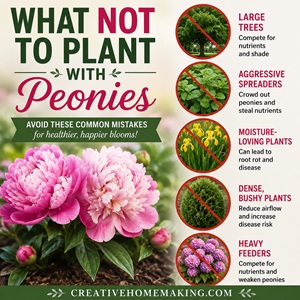
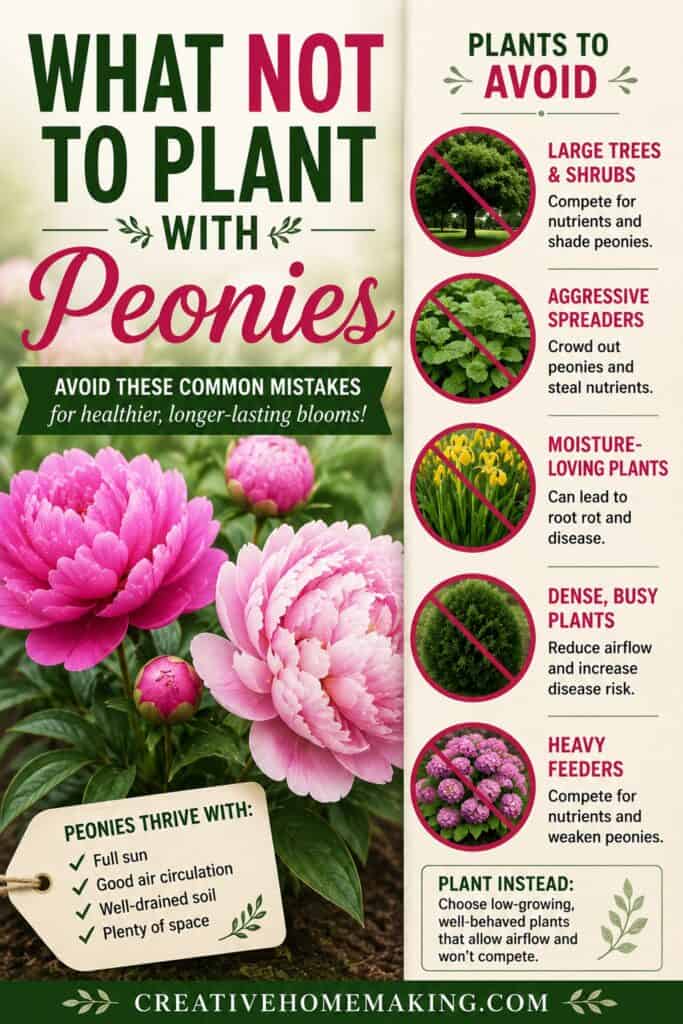
Large Shrubs and Trees
Peonies should not be planted near large shrubs or trees.
These plants compete for nutrients and water, and they often cast shade that peonies don’t tolerate well.
Peonies need full sun for best blooming, and even partial shade can reduce flower production.
Keep peonies in an open area where they receive plenty of sunlight throughout the day.
Aggressive Spreading Plants
Plants that spread quickly can crowd out peonies and take over their space.
Avoid planting peonies near aggressive growers such as mint or other fast-spreading perennials. These plants can compete for nutrients and make it difficult for peonies to establish themselves.
Peonies do best when they have room to grow without competition.
Moisture-Loving Plants
Peonies prefer well-drained soil and do not tolerate overly wet conditions.
Avoid planting them next to moisture-loving plants that require frequent watering. Too much moisture can increase the risk of root rot and fungal diseases.
Choose plants with similar water needs to keep your garden easier to manage.
Dense, Bushy Plants with Poor Airflow
Air circulation is very important for peonies, especially to prevent fungal issues like botrytis blight.
Avoid planting peonies next to dense, bushy plants that block airflow. Crowded conditions can trap moisture around the leaves and stems, increasing the risk of disease.
Spacing plants properly helps keep peonies healthy and strong.
Proper spacing is just as important as pruning. Here’s how and when to cut back peonies to keep them healthy and reduce disease risk.
Heavy Feeders
Peonies do not compete well with plants that require a lot of nutrients.
Heavy feeders can quickly deplete the soil, leaving peonies with fewer resources to grow and bloom. This can result in weaker plants and fewer flowers.
Keeping peonies away from high-demand plants helps them perform better over time.
What to Plant Instead
Instead of planting peonies with incompatible plants, choose companions that support their growth.
Good companion plants for peonies include:
- Low-growing plants that won’t compete for space
- Plants that prefer similar sunlight and soil conditions
- Flowers that allow good airflow around peony stems
For more ideas, take a look at the best companion plants for peonies to find combinations that work well together.
For ideas on what works well, take a look at these companion plants for peonies that can help support healthy growth and beautiful blooms.
If you’re planning a full garden layout, the companion planting guide is a helpful resource for choosing the right combinations across your entire garden.
Tips for Growing Healthy Peonies
Plant peonies in full sun for the best blooms. Give them plenty of space so they are not crowded by other plants.
Make sure the soil drains well to prevent root problems. Avoid overwatering and allow airflow around the plants.
Peonies are low-maintenance once established, but proper placement makes all the difference.
Peonies are long-lasting and beautiful, but they need the right environment to thrive. Planting them next to the wrong neighbors can lead to fewer blooms and more problems over time.
By avoiding overcrowding, reducing competition, and choosing better companion plants, you can enjoy healthy peonies that return year after year.
If you need to move your plants, here’s how to transplant peonies successfully without damaging their roots.
For more planting tips, explore the full companion planting guide and continue building a garden that works together naturally.
If you love a romantic garden style, you might also enjoy this peonies and hydrangeas pairing idea for a classic cottage garden look.
Follow my companion planting board on Pinterest.