This post may contain affiliate links.
Lavender is one of the most popular cottage garden flowers, loved for its fragrant blooms, drought tolerance, and ability to attract bees and butterflies.
However, not every plant enjoys the same growing conditions as lavender.
Because lavender thrives in dry, well-drained soil and full sun, planting it next to moisture-loving plants can create problems for both plants.
Choosing the right companions can help keep your garden healthy and your lavender blooming beautifully year after year.
See next: Lavender Recipes, DIY, and Growing Guide
Want to try making your own jelly at home?
Get my free guide with 8 easy, beginner-friendly jelly recipes you can confidently make.
Why Companion Planting Matters for Lavender
Lavender is native to the Mediterranean region and prefers:
- Full sun
- Well-drained soil
- Low to moderate fertility
- Infrequent watering
Many common garden plants require richer soil and more frequent watering. When these plants are grown together, one or both may struggle.
Plants You Should Avoid Planting Near Lavender
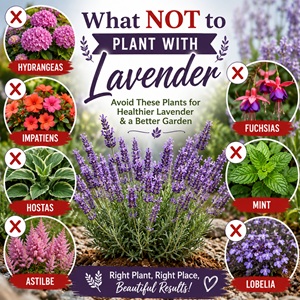
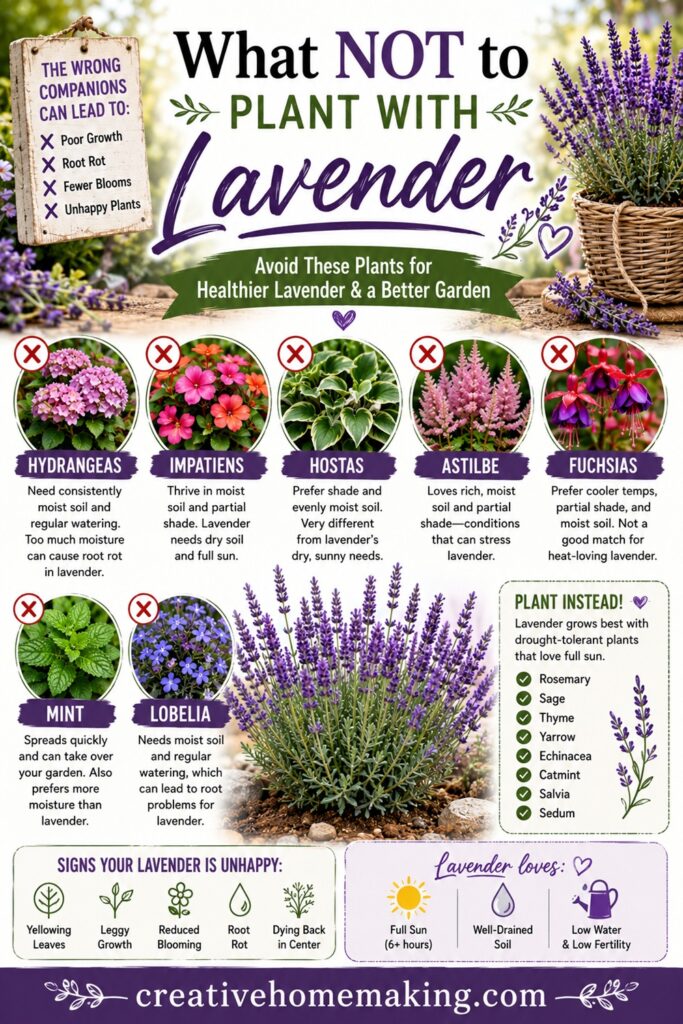
Hydrangeas
Hydrangeas need consistently moist soil and regular watering, especially during hot weather. Lavender prefers the opposite conditions and can develop root problems if kept too wet.
Instead of planting hydrangeas next to lavender, place them in a separate area of the garden where they can receive the moisture they need.
Impatiens
Impatiens thrive in moist soil and partial shade. Lavender requires full sun and drier conditions, making these two plants poor companions.
Hostas
Hostas are grown primarily for their foliage and prefer shade and evenly moist soil. The growing requirements are completely different from lavender’s needs.
Astilbe
Astilbe performs best in rich, moist soil and partial shade. Lavender may suffer if planted nearby because of the additional watering required.
Fuchsias
Fuchsias prefer cooler conditions, partial shade, and consistently moist soil. Lavender’s love of heat and dry conditions makes them incompatible companions.
Mint
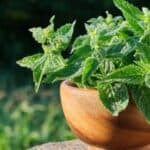
While both are popular herb garden plants, mint spreads aggressively and can quickly take over a planting area. Mint also prefers more moisture than lavender.
For best results, grow mint in containers.
Lobelia
Lobelia produces beautiful flowers but prefers moist soil and regular watering. These conditions can lead to root rot and reduced flowering in lavender.
Popular Lavender Ideas
- Elegant Lavender Lemonade
- The Best Lavender Tea Bread Recipe
- How to Make Lavender Oil
- What Is Culinary Lavender? (How to Use It in Recipes)
- How to Harvest Lavender: A Simple Step-by-Step Guide
Signs Your Lavender Is Planted in the Wrong Location
If lavender is surrounded by moisture-loving plants, you may notice:
- Yellowing leaves
- Leggy growth
- Reduced flowering
- Root rot
- Plants dying back from the center
These symptoms often indicate excessive moisture rather than a lack of water.
What Should You Plant With Lavender Instead?
Lavender grows well with other drought-tolerant cottage garden flowers and herbs, including:
- Rosemary
- Sage
- Thyme
- Yarrow
- Echinacea
- Russian Sage
- Salvia
- Catmint
- Sedum
These plants enjoy similar growing conditions and create beautiful pollinator-friendly garden displays.
Lavender is relatively easy to grow when its basic needs are met. The biggest mistake gardeners make is planting it near flowers that require frequent watering and rich soil.
By choosing companion plants with similar growing requirements, you can enjoy healthier plants, more blooms, and a thriving cottage garden filled with pollinators.
Follow my cottage garden flowers board on Pinterest.