This post may contain affiliate links.
Bee balm is a beautiful, pollinator-friendly plant—but not every plant makes a good neighbor.
Some plants compete for space, spread disease, or block sunlight, which can lead to weaker growth and fewer blooms.
If you want your bee balm to thrive, it’s important to know what not to plant nearby.
Looking for more tips? Visit my full Bee Balm Recipes, Uses & Growing Guide.
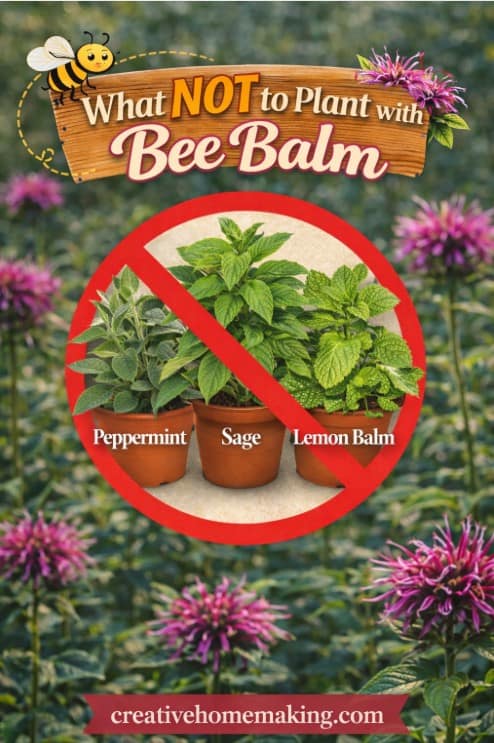
Plants You Shouldn’t Plant with Bee Balm
Other Mint Family Plants
Bee balm is part of the mint family, and planting it near other mint varieties can cause problems.
Want to try making your own jelly at home?
Get my free guide with 8 easy, beginner-friendly jelly recipes you can confidently make.
Avoid planting near:
- Mint
- Lemon balm
- Oregano (in some cases)
Why:
They spread aggressively and compete for space and nutrients.
Plants with Different Water Needs
Some plants need much drier or wetter soil than bee balm.
Avoid:
- Drought-tolerant herbs (like rosemary)
- Water-sensitive plants
Why:
Different watering needs make it hard to keep all plants healthy.
Heavy-Feeding Vegetables
Certain vegetables compete for nutrients.
Avoid planting near:
- Tomatoes
- Peppers
- Brassicas (like cabbage and broccoli)
Why:
They can drain nutrients from the soil and stress your bee balm.
Plants Prone to Powdery Mildew
Bee balm is already prone to mildew, so avoid plants that spread it easily.
Why:
Poor airflow + shared disease risk = weaker plants
Tall or Shading Plants
Bee balm needs full sun to bloom well.
Avoid planting near:
- Tall shrubs
- Large plants that block sunlight
Why:
Less sunlight = fewer flowers
Why Companion Planting Matters
Bee balm thrives when:
- It gets full sun
- Air can circulate freely
- It isn’t competing for nutrients
Planting the wrong neighbors can lead to:
- Fewer blooms
- Disease issues
- Weak growth
What to Plant Instead
Choose plants that grow well alongside bee balm:
- Echinacea
- Phlox
- Yarrow
- Other pollinator-friendly flowers
Learn more: Best Companion Plants for Bee Balm
Quick Tips for Healthy Bee Balm
- Give plants space (airflow matters)
- Plant in full sun
- Avoid overcrowding
- Water consistently
Use Your Bee Balm Too
Once your bee balm is growing well, you can harvest and use it:
How to Harvest and Dry Bee Balm
How to Make Bee Balm Tea
FAQs
Can you plant mint near bee balm?
It’s best not to—both spread aggressively and compete.
Does bee balm need full sun?
Yes, at least 6 hours for best blooms.
What grows well with bee balm?
Pollinator-friendly flowers with similar needs.