This post may contain affiliate links.
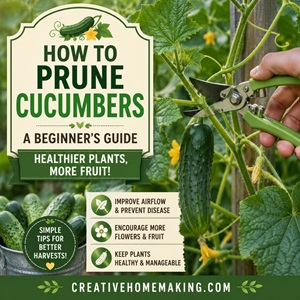
If your cucumber plants are growing wildly across your garden, pruning can help keep them healthy, manageable, and more productive.
While cucumbers are naturally vigorous growers, a little pruning can improve airflow, reduce disease problems, and encourage better fruit production.
Whether you grow cucumbers in raised beds, garden rows, or containers, learning how to prune cucumber plants is a simple gardening skill that can lead to healthier vines and bigger harvests.
If you are growing cucumbers in small spaces, you may also enjoy my guide on How to Grow Cucumbers in Containers.
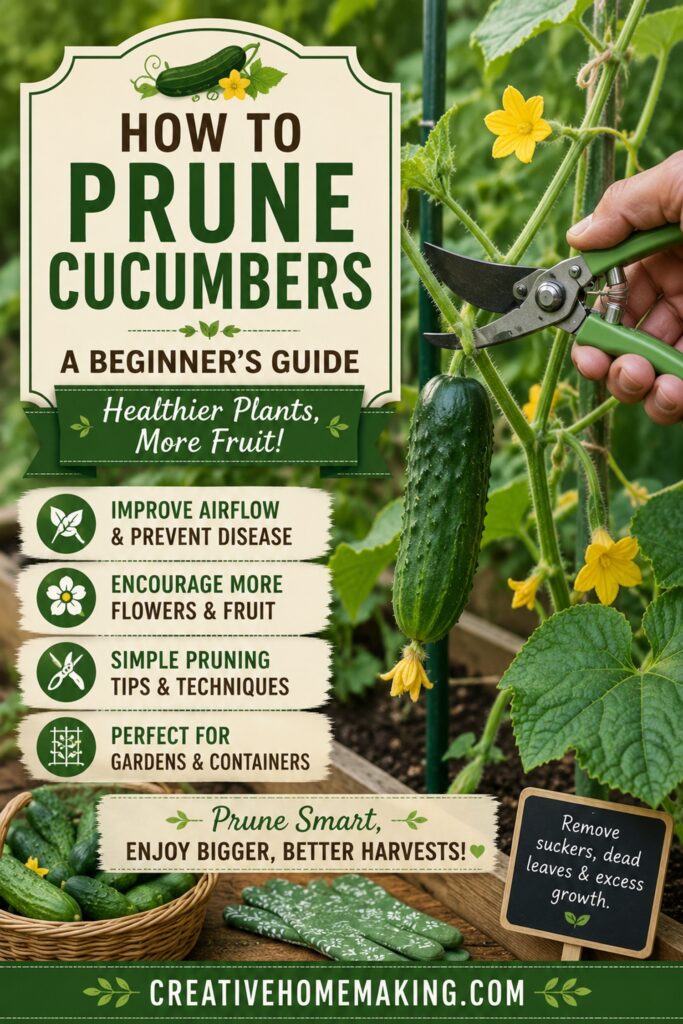
Why Prune Cucumber Plants?
Cucumber plants grow quickly and can easily become tangled and overcrowded if left alone.
Want to try making your own jelly at home?
Get my free guide with 8 easy, beginner-friendly jelly recipes you can confidently make.
Pruning helps:
- Improve airflow
- Reduce disease problems
- Direct energy toward fruit production
- Make harvesting easier
- Keep plants manageable
- Encourage healthier growth
Pruned cucumber plants are often easier to train on trellises and vertical supports as well.
Understanding How Cucumbers Grow
Cucumbers grow on long vines with leaves, flowers, tendrils, and side shoots.
The main vine is the primary stem of the plant. Smaller side shoots, sometimes called suckers, grow from the main vine and can quickly create dense growth.
By removing some of these side shoots, the plant can focus more energy on producing cucumbers instead of excess foliage.
When to Prune Cucumbers
It’s best to begin pruning once cucumber plants have several sets of true leaves and are actively growing.
Avoid heavy pruning all at once. Instead, prune lightly throughout the growing season to prevent stressing the plant.
Regular maintenance is usually more effective than aggressive pruning later in the season.
Tools You’ll Need
Pruning cucumbers is simple and requires very little equipment.
You will need:
- Sharp pruning shears or garden scissors
- Gardening gloves (optional)
- Rubbing alcohol for cleaning tools
Always clean pruning tools before and after use to help prevent the spread of plant diseases.
What Parts of the Plant to Prune
Remove Yellow or Damaged Leaves
Begin by removing any leaves that are:
- Yellowing
- Wilted
- Diseased
- Damaged by insects
Removing unhealthy foliage improves airflow and helps keep plants healthier.
Remove Excess Side Shoots
Side shoots can take energy away from fruit production.
Trim small side shoots growing from the main stem, especially near the lower part of the plant.
Avoid removing too much foliage at once because cucumber plants still need healthy leaves for photosynthesis.
Pruning Cucumbers on a Trellis
Pruning becomes even more helpful when cucumbers are grown vertically.
Training cucumbers up a trellis helps:
- Save garden space
- Improve airflow
- Keep fruit cleaner
- Make harvesting easier
- Reduce disease problems
As the vines grow, gently guide them onto the support structure and remove overcrowded growth when necessary.
How Pruning Improves Fruit Production
Pruning helps cucumber plants direct more energy toward flowering and fruit development instead of excess leaves and vines.
Benefits may include:
- Larger cucumbers
- Better airflow around fruit
- Easier harvesting
- More consistent production
Healthy airflow also helps reduce problems like powdery mildew and fungal diseases.
Watering and Fertilizing After Pruning
After pruning, continue watering cucumber plants consistently.
Cucumbers grow best with evenly moist soil, especially during hot summer weather.
Feed plants regularly with a balanced vegetable fertilizer during the growing season to support healthy growth and fruit production.
Mulching around the plants can also help retain moisture and reduce weeds.
Watch for Pests and Diseases
Pruning can make it easier to spot common cucumber problems early.
Keep an eye out for:
- Aphids
- Spider mites
- Powdery mildew
- Cucumber beetles
- Yellowing leaves
Removing damaged foliage quickly can help prevent problems from spreading through the plant.
Companion Planting Tips
Healthy cucumber plants also benefit from good companion planting.
Some beneficial companion plants include:
- Marigolds
- Nasturtiums
- Dill
- Beans
- Radishes
You may also enjoy these related posts:
- Top 5 Companion Plants for Thriving Cucumbers!
- What Not to Plant with Cucumbers (Avoid These Common Mistakes)
Growing Cucumbers in Containers
Container-grown cucumbers can also benefit from regular pruning, especially when growing vertically on trellises or supports.
Pruning helps prevent container plants from becoming overcrowded and improves airflow in smaller growing spaces.
For more tips, visit my post on How to Grow Cucumbers in Containers.
Common Pruning Mistakes
Pruning Too Much
Removing too many leaves at once can weaken the plant and reduce production.
Using Dirty Tools
Always sanitize pruning tools to help prevent disease spread.
Ignoring Airflow
Overcrowded plants are more likely to develop fungal problems and mildew.
Pruning cucumbers is a simple gardening task that can make a big difference in the health and productivity of your plants.
By removing damaged leaves, trimming excess growth, and improving airflow, you can help your cucumber plants stay healthier and produce better harvests all season long.
Follow my gardening board on Pinterest.