This post may contain affiliate links.
You can make a light, well-draining potting mix that helps your African violets bloom by combining peat or coco coir, a chunky aeration material like perlite or coarse vermiculite, and a small bit of compost or balanced fertilizer.
This homemade African violet potting mix keeps roots airy, holds just enough moisture, and gives the nutrients violets need to grow and flower.
You’ll learn which ingredients work best, the right ratios for different pots and climates, and simple steps to mix and use the soil so your plants stay healthy.
Follow along and you’ll feel confident mixing the perfect medium for your violets.
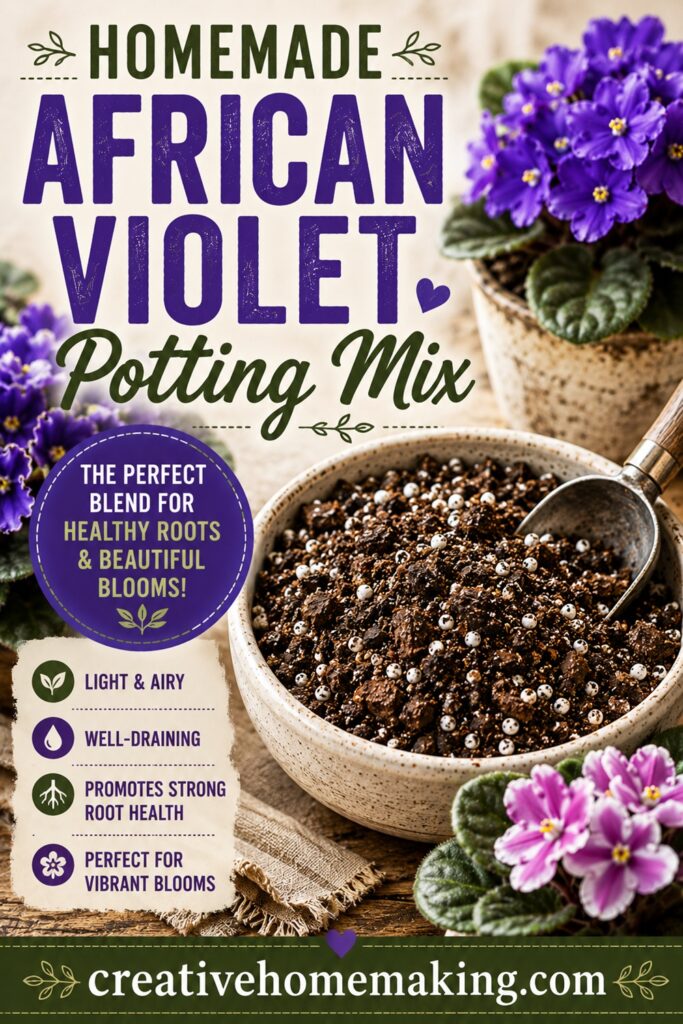
Essential Components of Homemade African Violet Potting Soil
Use light, airy ingredients that drain fast but still hold some moisture. Aim for a slightly acidic mix and add materials that boost aeration, water retention, and gentle nutrition.
Want to try making your own jelly at home?
Get my free guide with 8 easy, beginner-friendly jelly recipes you can confidently make.
Choosing the Right Base Mix
Start with a base that stays fluffy when wet. A common and reliable base is peat moss or sphagnum peat because it holds moisture without compacting.
Mix peat with an equal or slightly greater amount of perlite to improve drainage and air space.
If you prefer less acidity, use coconut coir in place of peat. Coir drains well and is more sustainable, but it may need pH adjustment. A typical ratio to try is:
- 2 parts peat or coir
- 1 part perlite
- 1 part vermiculite (optional, for extra moisture hold)
Use small pots for African violets, so use fine-grade perlite and sifted peat to avoid large chunks that can tilt small root systems.
Selecting Organic Amendments
Add a small amount of organic matter to feed roots and improve texture. Worm castings or well-aged leaf mold work well in tiny amounts—about 5–10% of the mix.
They provide gentle nutrients without burning sensitive roots.
Avoid heavy garden soil and fresh compost that can contain pathogens or hold too much water.
You may include a tablespoon of slow-release, balanced fertilizer per quart of mix, or dilute liquid fertilizer when you water. Sterilize any homemade components by baking or steaming if you suspect pests or disease.
Balancing pH and Moisture Retention
African violets like a pH around 5.5–6.2. Test your mix with a pH meter or kit. If pH is too high, add small amounts of sulfur or use peat instead of coir. If pH is too low, add a bit of lime sparingly and retest.
Control moisture by adjusting perlite and vermiculite. Increase perlite to speed drying and reduce root rot risk.
Add vermiculite to hold more water if your home is very dry. Always pot so excess water drains freely and avoid waterlogging; the top should feel slightly damp, not soggy.
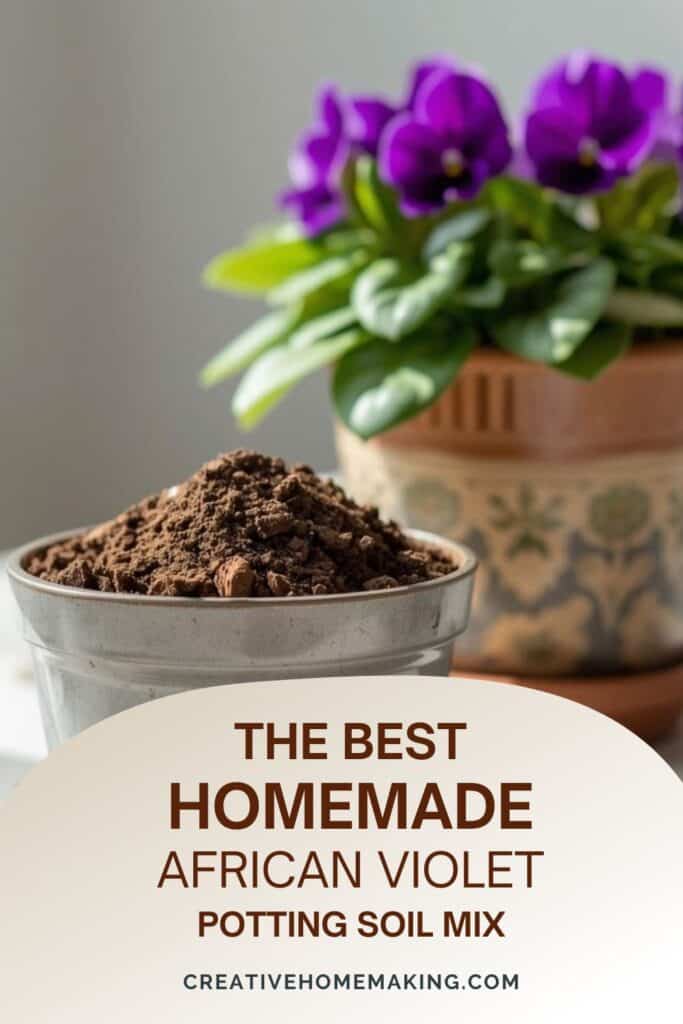
Mixing and Using Your African Violet Potting Soil
You will make a light, well-draining mix and learn how to store it and fix common problems. The steps below show exact measurements, how to test moisture, and signs that your soil needs change.
Step-by-Step Mixing Instructions
Measure by volume, not weight. Use 2 parts peat or coco coir, 1 part perlite, and 1 part vermiculite or coarse orchid bark for a standard mix.
For a very airy mix, swap half the peat for coco coir and add 1/2 part pumice.
Break up any clumps in peat or coir before mixing. Combine dry ingredients in a clean bucket or tub, then stir thoroughly with a trowel until uniform.
Moisten the mix to feel like a wrung-out sponge: it should hold shape but not drip when squeezed.
Fill pots so the crown sits about 1/4 inch below the rim. Press lightly—do not compact. Water gently from the top until water runs from the drainage hole, then let the pot drain completely before returning to its light.
Proper Storage Methods
Store unused homemade African violet potting mix in clean, sealed plastic bins or heavy-duty bags to keep moisture and pests out. Label containers with the mix date and recipe so you know exact ratios later.
Keep stored mix in a cool, dry place away from direct sunlight. If the mix smells musty or shows mold, spread it out to dry and discard heavily contaminated portions.
Add fresh perlite or pumice before use if the mix has compressed or settled.
Troubleshooting Common Soil Issues
If the soil stays soggy and roots rot, increase drainage: add 1 part perlite or pumice to every 4 parts mix and repot into a pot with better drainage holes. Reduce watering frequency and let the top 1/2 inch dry between waterings.
If plants show slow growth or pale leaves, test pH and nutrient levels.
African violets prefer pH 5.5–6.2. Feed with a balanced, water-soluble fertilizer at quarter to half strength every 2–4 weeks. If compacted, gently tease roots and repot into a fresher, looser mix.
If pests or mold appear, isolate the plant. Remove affected soil and topdress with fresh mix. For persistent mold, improve air flow and allow surface to dry more between waterings.
Follow my gardening board on Pinterest.