This post may contain affiliate links.
Sunflowers are one of the most cheerful flowers you can grow. Their towering stems and bright blooms attract bees, butterflies, and birds while adding height and color to the garden.
But while sunflowers make excellent companions for many plants, there are a few crops and flowers that don’t grow well nearby.
Understanding what not to plant with sunflowers can help you avoid stunted growth, poor harvests, and unnecessary competition in your garden.
If you’re new to companion planting, start with my guide to Companion Gardening for Beginners to learn how plants can help—or hinder—each other’s growth.
Why Companion Planting Matters
Companion planting is the practice of growing plants together that benefit one another. Some plants attract pollinators, repel pests, improve soil conditions, or provide shade and support.
Want to try making your own jelly at home?
Get my free guide with 8 easy, beginner-friendly jelly recipes you can confidently make.
However, certain plant combinations can compete for nutrients, attract the same pests, or interfere with growth.
Before choosing sunflower companions, be sure to read Best Companion Plants for Sunflowers for flowers and herbs that thrive alongside these sunny giants.
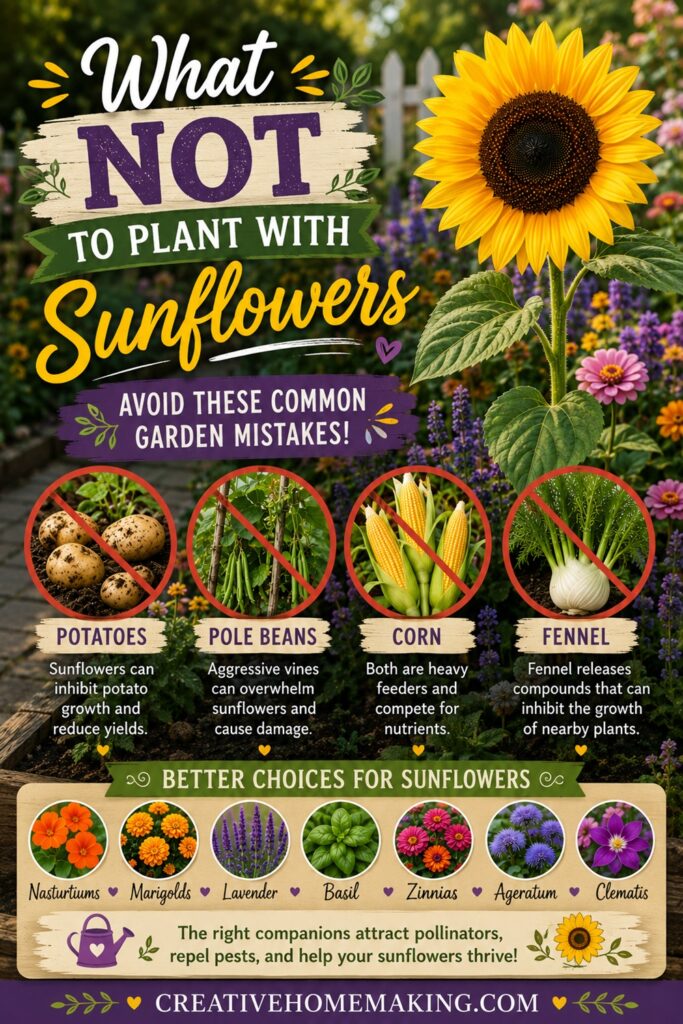
Potatoes
Potatoes and sunflowers are generally considered poor companions.
Sunflowers produce compounds that can inhibit the growth of some nearby plants, and potatoes are particularly sensitive.
Growing them together may reduce potato yields and create unnecessary competition for nutrients and water.
For best results, plant potatoes in a separate area of the garden.
Pole Beans
While some gardeners successfully grow climbing beans near sunflowers, pole beans can become overly aggressive and overwhelm sunflower stalks.
Heavy bean vines may weigh down sunflowers or make them more susceptible to wind damage.
If you want to use sunflowers as a natural trellis, choose lighter climbing varieties and monitor growth carefully.
Corn
Corn and sunflowers have similar growing requirements. Both are tall, heavy feeders that require plenty of sunlight, water, and nutrients.
Planting them together can create competition for resources and reduce overall plant performance.
Additionally, both plants may attract similar pests, increasing the likelihood of infestations.
Fennel
Fennel is one of the most difficult plants to companion plant with because it releases compounds that can inhibit the growth of nearby vegetables and flowers.
Since sunflowers already have mild allelopathic properties, combining fennel and sunflowers can create even more challenges for surrounding plants.
It’s best to grow fennel in its own dedicated bed.
Plants That Need Constant Moisture
Sunflowers develop deep root systems and can use a significant amount of water during the growing season.
Shallow-rooted plants that require consistently moist soil may struggle if planted too close to large sunflower varieties.
Provide adequate spacing to reduce competition.
Common Cottage Garden Flowers That Need Extra Space Around Sunflowers
Aggressive Morning Glories
While beautiful in cottage gardens, vigorous morning glory vines can overwhelm sunflower stalks, weighing them down and competing for sunlight.
Sweet Peas (Tall Climbing Varieties)
Sweet peas can sometimes become tangled in sunflowers and compete for support structures and sunlight, especially in smaller gardens.
Aggressive Pole Bean Flowers
Scarlet runner beans are often grown for their flowers, but their heavy vines can pull down sunflower stalks.
Large Dahlias (When Space Is Limited)
Not a terrible companion, but both are heavy feeders and can compete for nutrients and water if planted too closely together.
Large Chrysanthemums
Established mums can form dense root systems that compete with sunflower roots for moisture and nutrients.
Tall Cannas
Cannas and sunflowers both create height and can compete for sunlight and space in smaller cottage garden beds.
Flowers That Are Usually Fine But Need Extra Space
These aren’t bad companions, but give them room:
- Hollyhocks
- Delphiniums
- Foxgloves
- Lupines
- Peonies
- Roses
- Hydrangeas
The issue isn’t incompatibility—it’s simply that these plants can become large and crowded when combined with giant sunflower varieties.
Better Cottage Garden Companions for Sunflowers
These are generally excellent companions:
- Nasturtiums
- Marigolds
- Zinnias
- Cosmos
- Lavender
- Ageratum
- Calendula
- Bachelor Buttons
- Bee Balm
- Salvia
- Clematis
Better Companion Choices for Sunflowers
Instead of planting problematic companions nearby, choose plants that complement sunflowers.
Excellent companion plants include:
- Nasturtiums
- Marigolds
- Lavender
- Basil
- Zinnias
- Ageratum
- Clematis
These flowers and herbs attract pollinators, add color, and help create a healthy cottage garden ecosystem.
For a complete list, visit Best Companion Plants for Sunflowers.
Growing Healthy Sunflowers
If you’re just getting started with sunflowers, these helpful guides can walk you through every step of the process:
- When to Plant Sunflowers: A Simple Guide for Thriving Blooms
- Growing Sunflowers in Containers: Tips and Tricks
- Step-by-Step Guide to Growing Sunflowers from Seed
These articles cover everything from choosing the right planting time to growing sunflowers in small spaces and starting them successfully from seed.
Sunflowers are easy-to-grow garden favorites, but they perform best when paired with the right companions.
Avoid planting potatoes, corn, fennel, and aggressive pole beans too close to your sunflowers.
Instead, surround them with pollinator-friendly flowers and herbs that support healthy growth and attract beneficial insects.
With a little planning, your sunflowers can become the centerpiece of a thriving cottage garden filled with color, blooms, and pollinators all season long.
Follow my cottage garden flowers board on Pinterest.