This post may contain affiliate links.
Hollyhocks are one of the most beloved cottage garden flowers. Their towering flower spikes create a stunning backdrop for flower beds, attracting pollinators and adding old-fashioned charm to the garden.
While hollyhocks pair beautifully with many cottage garden favorites, there are some plants that don’t make the best companions.
Understanding what not to plant with hollyhocks can help improve air circulation, reduce disease problems, and create a healthier, more attractive garden.
Why Companion Planting Matters for Hollyhocks
Hollyhocks can grow 6 to 8 feet tall or even taller, depending on the variety. Because of their size, they require adequate airflow and sunlight to thrive.
They are also susceptible to rust, a fungal disease that can spread quickly in crowded plantings.
Want to try making your own jelly at home?
Get my free guide with 8 easy, beginner-friendly jelly recipes you can confidently make.
Choosing the right companions—and avoiding the wrong ones—can help keep your plants healthy throughout the growing season.
If you’re looking for flowers that provide continuous color throughout the growing season, be sure to check out my Cottage Garden Flowers That Bloom All Summer guide.
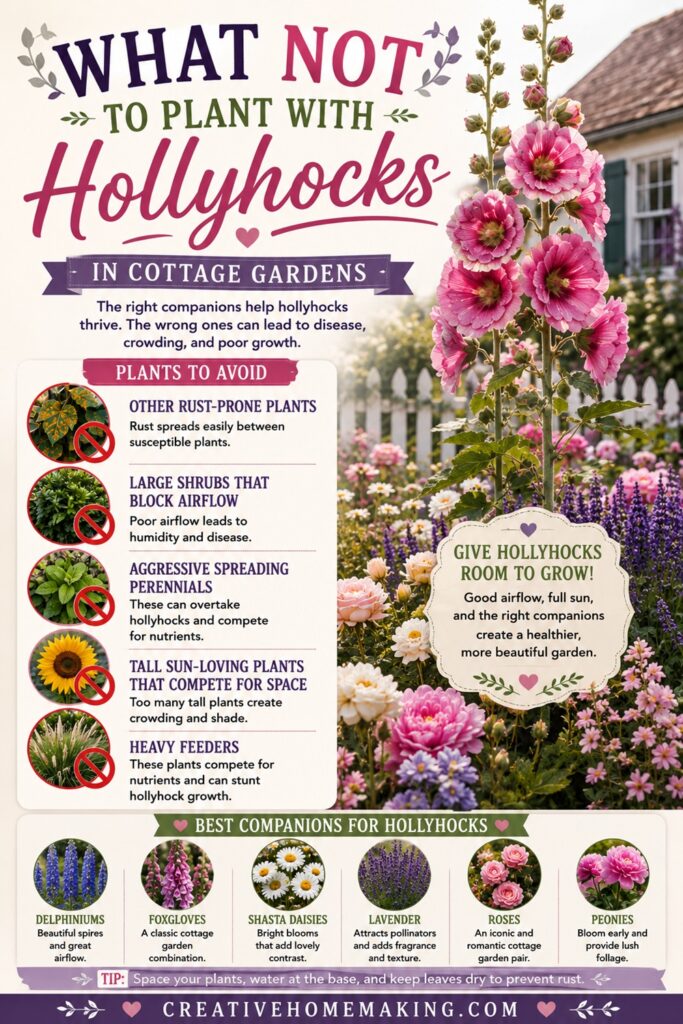
Plants to Avoid Growing Near Hollyhocks
Other Rust-Prone Plants
One of the biggest concerns when growing hollyhocks is rust disease. Avoid planting them near other plants that frequently struggle with fungal diseases.
When rust develops, it spreads more easily between susceptible plants growing close together.
Watch for:
- Poor air circulation
- Overcrowded beds
- Consistently damp foliage
Giving hollyhocks plenty of space can significantly reduce disease issues.
Large Shrubs That Block Airflow
While hollyhocks appreciate some protection from strong winds, planting them directly against dense shrubs can create problems.
Large shrubs can:
- Reduce airflow
- Increase humidity around foliage
- Encourage fungal diseases
- Compete for water and nutrients
Instead, place hollyhocks where they can receive full sun and good ventilation.
Aggressive Spreading Perennials
Some perennials spread rapidly and can quickly crowd hollyhocks.
Avoid planting hollyhocks next to aggressive spreaders such as:
- Mint
- Obedient Plant
- Some varieties of Bee Balm
- Running bamboo
These plants can compete with young hollyhocks and make maintenance more difficult.
Tall Sun-Loving Plants That Compete for Space
Hollyhocks are already vertical plants. Pairing them with several other giant plants can make beds look crowded and block sunlight from lower-growing flowers.
Too many tall plants in one area can:
- Reduce airflow
- Create visual clutter
- Make staking difficult
- Shade neighboring plants
Balance tall hollyhocks with medium-height and lower-growing flowers instead.
Heavy Feeders
Hollyhocks are vigorous growers and benefit from fertile soil. Planting them alongside other heavy-feeding plants can increase competition for nutrients.
Examples include:
- Large sunflowers
- Giant ornamental grasses
- Some vegetable crops
If you choose to grow them together, amend the soil regularly with compost to support healthy growth.
The Best Companion Plants for Hollyhocks
Fortunately, many cottage garden flowers make excellent companions.
Some of my favorites include:
Delphiniums
Delphiniums provide beautiful spires of flowers that complement hollyhocks without overwhelming them.
Foxgloves
Foxgloves and hollyhocks are classic cottage garden companions that create a romantic, storybook look.
Shasta Daisies
The bright white flowers provide contrast to the bold colors of hollyhocks.
Lavender
Lavender helps attract pollinators while providing a different texture and fragrance in the garden.
You may also enjoy my guide to Lavender Plants for Cottage Gardens.
Roses
Roses and hollyhocks are one of the most iconic cottage garden combinations.
For inspiration, see:
Peonies
Peonies bloom earlier than hollyhocks and provide lush foliage throughout the season.
You may also like:
Creating a Classic Cottage Garden Look
The secret to a beautiful cottage garden is layering plants of different heights, textures, and bloom times.
Plant tall hollyhocks toward the back of borders and surround them with medium-height flowers and lower-growing plants. This creates the relaxed, overflowing look cottage gardens are famous for.
For even more inspiration, check out these cottage garden favorites:
- English Cottage Flower Garden Design Ideas
- Lavender Plants for Cottage Gardens
- Best Companion Plants for Peonies in a Cottage Garden
- Flowers That Attract Hummingbirds Fast
- Beautiful Flowers That Attract Butterflies to Your Garden
Hollyhocks are easy-to-grow cottage garden flowers that add height, color, and old-fashioned charm to any landscape.
By avoiding overcrowding, aggressive spreaders, and plants that encourage poor airflow, you can keep your hollyhocks healthy and blooming beautifully all season long.
With the right companions, these towering flowers can become the centerpiece of a stunning cottage garden filled with pollinators, fragrance, and continuous color.
Follow my cottage garden flowers page on Pinterest.