This post may contain affiliate links.
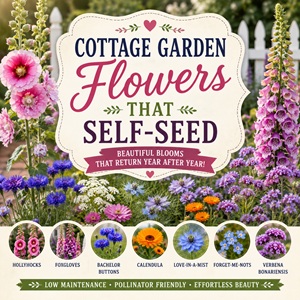
One of the secrets to creating a lush, overflowing cottage garden is choosing flowers that self-seed.
These hardworking plants drop seeds at the end of the season and often return year after year without any effort from the gardener.
Self-seeding flowers help fill empty spaces, attract pollinators, and create the relaxed, informal look that cottage gardens are known for.
Instead of replanting annuals every spring, you can let nature do much of the work for you.
If you love gardens filled with continuous color, be sure to visit my guide to Cottage Garden Flowers That Bloom All Summer, where you’ll find even more easy-to-grow favorites.
Want to try making your own jelly at home?
Get my free guide with 8 easy, beginner-friendly jelly recipes you can confidently make.
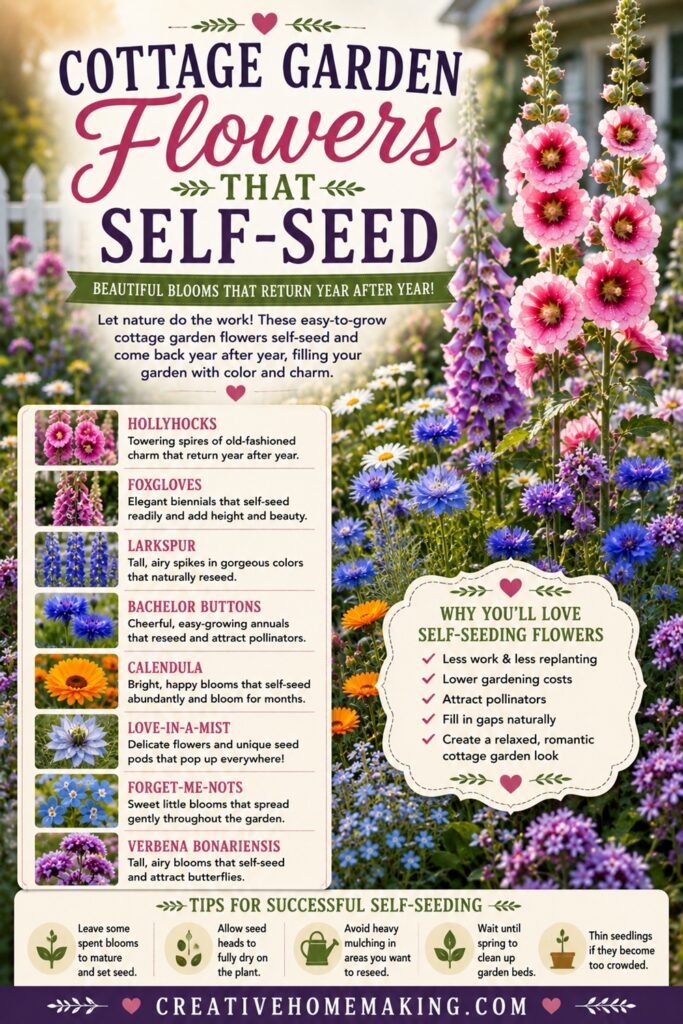
What Does Self-Seeding Mean?
Self-seeding flowers produce seeds that fall to the ground and germinate on their own the following season.
While not every seed will grow, many cottage garden flowers readily naturalize and spread throughout the garden over time.
Some gardeners remove spent flowers to prevent self-seeding, but if you enjoy a natural cottage garden style, allowing some seed heads to mature can reward you with dozens of new plants the following year.
Best Cottage Garden Flowers That Self-Seed
Hollyhocks
Hollyhocks are among the most famous self-seeding cottage garden flowers.
Their tall flower spikes create dramatic vertical interest, and once established, they often appear throughout the garden year after year.
These old-fashioned favorites attract pollinators and look beautiful planted along fences, walls, and the backs of flower borders.
You may also enjoy:
Foxgloves
Foxgloves are beloved for their tall spires of bell-shaped flowers. Although technically biennials, they often behave like perennials in cottage gardens because they self-seed so readily.
Allow a few flower stalks to mature and you’ll often discover new seedlings emerging nearby the following spring.
Larkspur
Larkspur produces tall spikes of blue, pink, purple, and white flowers that fit perfectly into cottage-style gardens.
Once established, it frequently self-seeds and returns each year, creating beautiful drifts of color throughout the garden.
Bachelor Buttons
Also known as cornflowers, bachelor buttons are easy-to-grow annuals that readily reseed themselves.
Their cheerful blue blooms attract bees and butterflies and make excellent cut flowers.
Calendula
Calendula is one of the easiest self-seeding flowers you can grow. Its bright yellow and orange blooms continue for months and often return year after year in favorable conditions.
Love-in-a-Mist
Love-in-a-Mist is prized for its delicate flowers and decorative seed pods. This charming annual readily self-seeds and often appears in surprising places throughout the garden.
Verbena Bonariensis
This airy, tall flower has become a cottage garden favorite. Its clusters of purple blooms attract butterflies while allowing other flowers to remain visible through its open growth habit.
Once established, it often self-seeds gently throughout the garden.
Sweet Alyssum
Sweet alyssum produces masses of tiny fragrant flowers that attract beneficial insects and pollinators. In many climates, it reseeds easily and helps fill gaps between larger plants.
Forget-Me-Nots
Forget-me-nots are known for their charming blue flowers and their enthusiasm for self-seeding.
Many gardeners plant them once and enjoy them for years as they naturalize throughout flower beds.
Nigella
Nigella is another excellent self-seeding annual that adds texture and whimsy to cottage garden plantings. Its attractive seed pods provide additional interest long after flowering ends.
Benefits of Self-Seeding Flowers
Growing self-seeding flowers offers several advantages:
- Less planting each spring
- Lower gardening costs
- More pollinator habitat
- Natural-looking flower borders
- Continuous garden evolution
- Increased biodiversity
Many gardeners find that self-seeding flowers create the most authentic cottage garden appearance because the plants arrange themselves naturally over time.
How to Encourage Self-Seeding
If you’d like your flowers to reseed successfully:
- Leave some spent blooms on the plant
- Allow seed heads to fully mature
- Avoid heavy mulching in reseeding areas
- Wait until spring to clean up some garden beds
- Thin seedlings if they become overcrowded
Remember that not every seedling will appear exactly where you want it. Part of the charm of a cottage garden is embracing a little unpredictability.
Other Cottage Garden Flowers You’ll Love
If you’re planning a cottage garden, you may also enjoy these articles:
- English Cottage Flower Garden Design Ideas
- Lavender Plants for Cottage Gardens
- Best Companion Plants for Peonies in a Cottage Garden
- Best Roses for a Cottage Garden
- Storybook Climbing Roses for a Dreamy Cottage Garden
- Flowers That Attract Hummingbirds Fast
- Beautiful Flowers That Attract Butterflies to Your Garden
Self-seeding flowers are one of the easiest ways to create a beautiful, low-maintenance cottage garden.
Hollyhocks, foxgloves, larkspur, calendula, and many other cottage garden favorites will happily return year after year, helping your garden become fuller and more beautiful with each season.
By combining self-seeding flowers with long-blooming perennials, you’ll create a garden that looks effortlessly charming while requiring less work over time.
Follow my cottage garden flowers board on Pinterest.