This post may contain affiliate links.
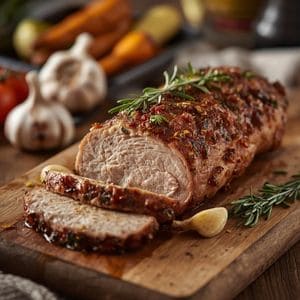
Roasted pork tenderloin cooks fast and tastes great with just a few simple steps. If you want juicy, flavorful pork with a golden crust, a quick sear and a short oven roast will get you there every time.
You’ll learn how to trim, season, and time the roast so it stays tender and not dry.
This post walks you through an easy method you can use any night of the week and offers simple serving and storage tips to stretch leftovers.
Follow along and you’ll feel confident making a roast that looks and tastes like you spent hours on it.

How to Make Oven Roasted Pork Tenderloin
You will pick a lean, uniform piece of pork, trim it, and either rub or marinate it. Then roast at high heat until the center reaches 145°F, rest, and slice thin against the grain.
Want to try making your own jelly at home?
Get my free guide with 8 easy, beginner-friendly jelly recipes you can confidently make.
Selecting the Right Cut
Choose a pork tenderloin labeled “tenderloin,” not “loin roast.” Tenderloin is long, narrow, and weighs about 1 to 1.5 pounds per piece. Look for even thickness so it cooks uniformly.
Check the color and smell. Fresh pork is pale pink with little odor. Avoid pieces with slimy texture or strong smell.
If you buy two small tenderloins, roast them together. For a single bigger meal, one 1.25-pound tenderloin serves 3–4 people. Keep it refrigerated and use within 2 days or freeze for longer storage.
Ingredients
- 1.5 lbs pork tenderloin (about 1 or 2 pieces)
- 1/4 cup honey
- 4 cloves garlic, minced
- 2 tablespoons soy sauce
- 1 tablespoon apple cider vinegar
- 1 tablespoon olive oil
- 1/2 teaspoon black pepper
- 1 teaspoon salt
- 1/2 teaspoon onion powder
- Optional: Fresh parsley for garnish
Instructions
Preheat your oven to 400°F (200°C) and lightly grease a baking dish or line a rimmed baking sheet with foil.
In a small bowl, whisk together the honey, minced garlic, soy sauce, and apple cider vinegar until well combined.
Pat the pork tenderloin dry with paper towels and season all sides generously with salt, black pepper, and onion powder.
Heat the olive oil in a large oven-safe skillet over medium-high heat. Sear the pork for about 2–3 minutes per side until it is golden brown all over.
If you do not have an oven-safe skillet, sear it in a regular pan and then transfer it to your prepared baking dish.
Pour the honey garlic mixture over the pork tenderloin, using a brush or spoon to ensure it is completely coated.
Place the pork in the oven and roast for 15 to 20 minutes. The pork is done when a meat thermometer inserted into the thickest part reads 145°F (63°C).
Remove the pork from the oven and transfer it to a cutting board. Let it rest for at least 5 to 10 minutes before slicing; this allows the juices to redistribute so the meat stays moist.
While the meat rests, you can simmer the remaining juices in the pan over medium heat for a few minutes if you want a thicker glaze to drizzle over the top.
Slice the pork into medallions, drizzle with the extra pan sauce, and garnish with fresh parsley before serving.
Serving and Storing Suggestions
Pair the pork with sides that balance its mild flavor and make storage simple for quick meals later. Serve hot within 10 minutes of resting, and cool leftovers quickly to keep texture and safety.
Best Side Dishes
Choose sides that add contrast in texture and flavor. Roasted baby potatoes and carrots, tossed with olive oil, rosemary, salt, and pepper, take the oven at the same temperature and crisp up while the pork rests.
A simple pan sauce or mustard gravy adds moisture and brightens each bite.
For a fresher counterpoint, serve a quick apple-fennel slaw: thinly sliced apple, fennel, lemon juice, and a pinch of salt.
Steamed green beans or sautéed spinach with garlic provide color and a light vegetable note. If you want starch, garlic mashed potatoes or buttered egg noodles work well.
Mixing two types—one roasted vegetable and one fresh salad—gives both warmth and brightness. Keep portion sizes around 3–4 ounces of vegetable and 1/2 cup of starch per person for balanced plates.
Slicing and Presentation
Let the tenderloin rest 5–10 minutes after it comes out of the oven to keep juices inside.
Use a sharp carving knife and cut across the grain into 1/2‑inch slices for the best texture and tenderness. Thinner slices dry faster; thicker slices will stay juicier on the plate.
Arrange slices slightly overlapping on a warm platter. Spoon any pan juices or a warmed pan sauce over the top to add shine and flavor.
Garnish with chopped fresh herbs like parsley or thyme and a few lemon wedges if you used citrus in the seasoning.
If you serve family-style, keep the whole trimmed tenderloin on the board and place sliced pieces beside it so guests can take their preferred thickness. Label any sauces so people know whether they’re tangy, sweet, or savory.
Reheating and Storage Tips
Cool roasted pork tenderloin leftovers within two hours by slicing or cutting into meal-sized portions. Store in airtight containers in the fridge for up to 3–4 days.
For longer storage, freeze slices in a single layer on a tray, then transfer to a freezer bag for up to 3 months.
Reheat gently to avoid drying. Oven method: place slices in a baking dish, add a splash of broth or pan sauce, cover with foil, and warm at 275°F (135°C) until just heated through, about 10–15 minutes.
Microwave method: cover and heat at 50% power in 30‑second bursts, turning once, until warm.
Thawed frozen pork benefits from the same gentle reheating. If you plan to repurpose leftovers, chop cold slices into a sandwich, salad, or stir‑fry for best texture and flavor.
Follow my Tenderloin recipe board on Pinterest.