This post may contain affiliate links.
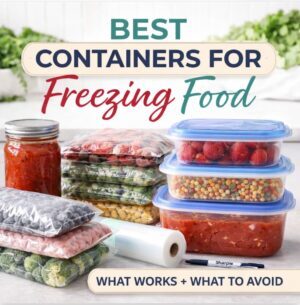
If you’ve ever opened your freezer and found freezer burn, cracked containers, or food that just didn’t taste right, the problem might not be the food—it might be the container.
Choosing the right containers for freezing food makes a huge difference in how well your food stores, how long it lasts, and how easy it is to use later.
Whether you’re freezing fruits, vegetables, leftovers, or recipes like freezer jam, this guide will help you choose the best containers for the job.
For more tips, see my full collection of freezing food guides.
Freezing is one of the easiest ways to preserve food. If you’re interested in other methods, visit my canning and preserving guide to learn more.
Want to try making your own jelly at home?
Get my free guide with 8 easy, beginner-friendly jelly recipes you can confidently make.
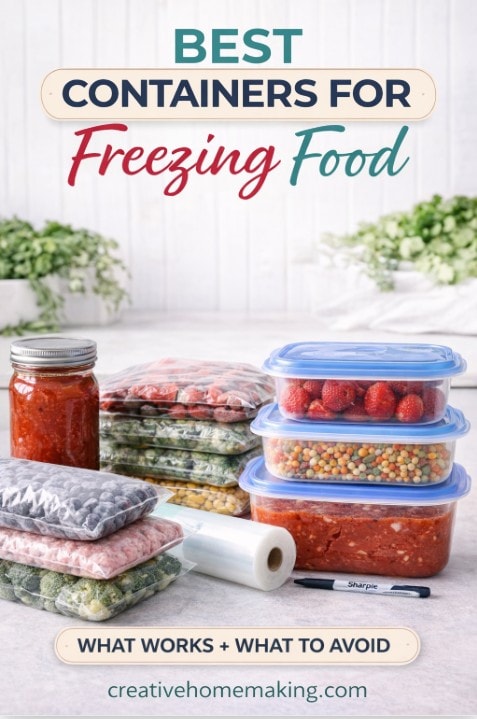
What to Look for in Freezer Containers
Not all containers are made for the freezer. Here’s what matters most:
- Freezer-safe material (won’t crack or become brittle)
- Airtight seal (prevents freezer burn)
- Stackable shape (saves space)
- Durable and reusable
- Easy to label
Best Containers for Freezing Food
Plastic Freezer Containers
These are one of the most popular options for everyday freezing.
Best for:
- Soups
- Applesauce
- Freezer jam
- Leftovers
Pros:
- Lightweight
- Stack easily
- Less likely to break than glass
Cons:
- Can stain or absorb odors over time
These are my go-to freezer containers for things like applesauce and freezer jam because they don’t crack and stack neatly in the freezer.
Glass Mason Jars (Freezer Safe)
Yes—you can freeze in glass jars, but you have to do it correctly.
Best for:
- Liquids
- Sauces
- Broths
Tips:
- Use wide-mouth jars only
- Leave headspace (at least 1 inch)
- Avoid shoulder-style jars (narrow mouth)
Pros:
- Reusable
- Doesn’t absorb odors
- Great for long-term storage
Cons:
- Can break if overfilled or frozen too quickly
Freezer Bags
A great option when you want to save space.
Best for:
- Fruits
- Vegetables
- Bread
- Meat
Pros:
- Lay flat for easy storage
- Take up less space
- Great for bulk freezing
Cons:
- Single-use (unless reused carefully)
- Can puncture
These freezer bags work especially well for things like freezing strawberries or shredded zucchini.
Vacuum Sealed Bags
If you want the longest storage time, this is your best option.
Best for:
- Meat
- Bulk food storage
- Long-term freezing
Pros:
- Prevents freezer burn
- Extends storage life
- Saves space
Cons:
- Requires a vacuum sealer
- Higher upfront cost
I do love my vacuum sealer for freezing foods like meat.
What NOT to Use in the Freezer
Avoid these common mistakes:
- Thin plastic containers (they crack easily)
- Regular glass jars (not freezer-safe shapes)
- Containers without tight lids
- Overfilled containers (causes breakage)
Tips to Prevent Freezer Burn
- Remove as much air as possible
- Use airtight containers
- Label everything with date
- Freeze food quickly
- Don’t leave empty space in containers
Labeling Your Freezer Food
Always label:
- What it is
- Date frozen
This makes a huge difference when you’re trying to use up food later. Here are some removable labels designed just for freezer containers.
Best Containers for Freezer Jam
For recipes like strawberry freezer jam, the best options are:
- Plastic freezer containers
- Wide-mouth mason jars (with headspace)
Avoid overfilling—jam expands as it freezes.
Related Freezing Guides
If you’re freezing food, these posts will help:
See all of my tips here: freezing food guides
Using the right freezer containers makes a big difference in how your food stores and tastes later.
A few simple changes—like using airtight containers and leaving proper headspace—can help you avoid waste and make the most of your freezer.
Follow my canning and preserving board on Pinterest.