This post may contain affiliate links.
You can make a crisp, flaky quiche crust with just flour, butter, salt, and a splash of cold water — no fuss, no soggy bottom. This simple dough gives you a buttery base that holds creamy fillings and bakes evenly every time.
Follow clear steps to roll, fit, and blind-bake the crust so your filling stays perfect.
Along the way, you’ll see easy swaps and tasty variations to match savory flavors and time limits, whether you want classic pastry or a quicker shortcut.

A great quiche is all about the harmony between a buttery, crisp base and a rich, velvety custard filling.
Whether you are craving the timeless flavors of a classic Quiche Lorraine, spinach feta quiche, or a ham and swiss quiche, the quiche crust recipe shared here offer a variety of ways to customize your meal.
Want to try making your own jelly at home?
Get my free guide with 8 easy, beginner-friendly jelly recipes you can confidently make.
These quiches are ideal for a festive brunch, a meal-prepped lunch, or a sophisticated dinner, proving that once you master the foundation of a great crust, you can create an endless array of impressive and satisfying dishes.
Classic Quiche Crust Recipe
This crust gives you a crisp, buttery base that holds creamy fillings without getting soggy. You’ll work with cold fat, minimal handling, and a short chill so the dough stays flaky.
Ingredients
- 1 1/4 cups all-purpose flour
- 1/2 teaspoon salt
- 1/2 cup (1 stick) unsalted butter, very cold and cut into small cubes
- 3 to 4 tablespoons ice water
Instructions
Begin by whisking the all-purpose flour and salt together in a large chilled mixing bowl until well combined.
Add the cold, cubed butter to the flour mixture and use a pastry cutter or two knives to work the butter into the flour until the mixture resembles coarse meal with some pea-sized lumps of butter remaining.
Drizzle the ice water over the mixture one tablespoon at a time, tossing gently with a fork after each addition until the dough just starts to come together in a shaggy mass.
Turn the dough out onto a lightly floured work surface and gently press it into a flat disk, taking care not to overwork the dough or melt the butter with the warmth of your hands.
Wrap the disk tightly in plastic wrap and refrigerate it for at least one hour, or up to two days, to allow the gluten to relax and the fats to firm up.
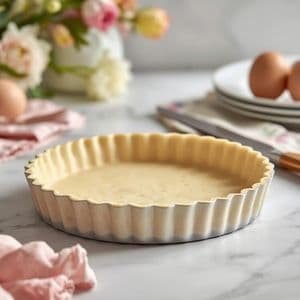
When ready to bake, roll the chilled dough out on a floured surface into a 12-inch circle and carefully drape it over a 9-inch quiche or tart pan.
Press the dough gently into the bottom and sides of the pan, trim any excess overhang, and prick the bottom all over with a fork to prevent air bubbles.
Place the crust back in the refrigerator for 30 minutes to chill again, which helps prevent the sides from shrinking during the baking process.
Line the crust with parchment paper and fill it with pie weights or dried beans, then bake in a preheated 375°F (190°C) oven for 15 minutes.
Remove the weights and parchment paper, then continue baking for another 5 to 7 minutes until the bottom is dry and just beginning to turn golden before adding your quiche filling.
Tips for Perfect Flakiness
- Keep everything cold: your butter, bowl, and water. Cold fat creates steam during baking and forms flaky layers.
- Use varied butter sizes: mix pea-sized bits with a few larger chunks. The mix gives both flake and tenderness.
- Handle dough minimally: over-kneading develops gluten and makes a tough crust. Stop when it holds together.
- Chill between steps: resting relaxes gluten and firms butter. Chill the disk before rolling and the shaped crust before baking.
- Blind-bake with weights for a crisp bottom: line the crust with foil, add weights, bake until edges set, remove weights, then finish until golden.
If the edges brown too fast, cover them with foil. For extra flavor, brush the prebaked crust lightly with beaten egg white to seal it before adding the custard.
Quiche Crust Variations
You can change the crust to fit diet needs, flavor goals, or texture preferences. Choices below show simple swaps, ingredient amounts, and basic tips so you get a reliable crust every time.
Gluten-Free Options
Gluten-free crusts use a mix of flours to mimic the structure of wheat. Use 1 cup rice flour, 1 cup tapioca or potato starch, and 1/2 cup almond flour as a starting blend. Add 1 teaspoon xanthan gum to help bind the dough if your blend lacks it.
Keep butter cold and handle dough gently to avoid a crumbly crust. Press the dough into the pan rather than rolling if it’s fragile. Blind-bake at 375°F for 12–15 minutes with pie weights, then cool slightly before adding filling.
For a lighter crust, substitute 1/3 cup plain yogurt or 1 egg for some butter to improve cohesion. Store leftover crust in the fridge up to 3 days or freeze wrapped well for 1 month.
Whole Wheat and Alternative Flours
Whole-wheat flour adds nutty flavor and more fiber, but it can make the crust dense. Use half whole-wheat and half all-purpose to keep flakiness: for a 9-inch crust, mix 1 cup whole-wheat + 1 cup all-purpose, 1/2 teaspoon salt, 10 tablespoons cold butter, and 3–4 tablespoons ice water.
For gluten-containing alternatives, try spelt or einkorn at a 50:50 ratio with all-purpose. These flours absorb liquid differently, so add water a teaspoon at a time until the dough holds.
If you want a lighter bite, replace 2–3 tablespoons of flour with fine cornmeal or semolina for a slight crunch. Chill the dough for 30 minutes before rolling to reduce shrinking.
Herb-Infused and Flavored Crusts
Infuse butter or add dry herbs to the flour to boost flavor without extra effort. Mix 1–2 tablespoons finely chopped fresh herbs (thyme, rosemary, chives) or 1 teaspoon dried herbs into the flour before adding butter.
For cheesy crusts, fold 1/2 to 3/4 cup grated Parmesan or sharp cheddar into the dry mix. The cheese adds salt and crispness; reduce added salt by 1/4 teaspoon.
For a savory-sweet twist, stir 1 tablespoon honey or 1 teaspoon mustard into the water or egg wash. Brush the rim with egg wash and sprinkle seeds (sesame, poppy) for texture and visual appeal.
Follow my Brunch Food board on Pinterest.