This post may contain affiliate links.
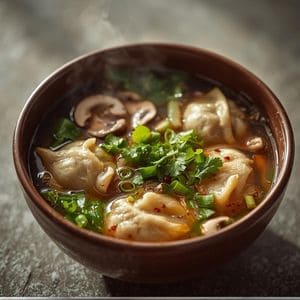
You can make a cozy, flavorful potsticker soup in about 25–30 minutes using frozen potstickers, a simple savory broth, and a few fresh veggies.
This quick recipe turns frozen dumplings into a hearty weeknight meal with minimal fuss and big flavor.
You’ll find step-by-step cooking tips, easy swaps to match your pantry, and simple garnish ideas so the soup feels homemade and special. Follow along and you’ll have a warm, customizable bowl ready before dinner.
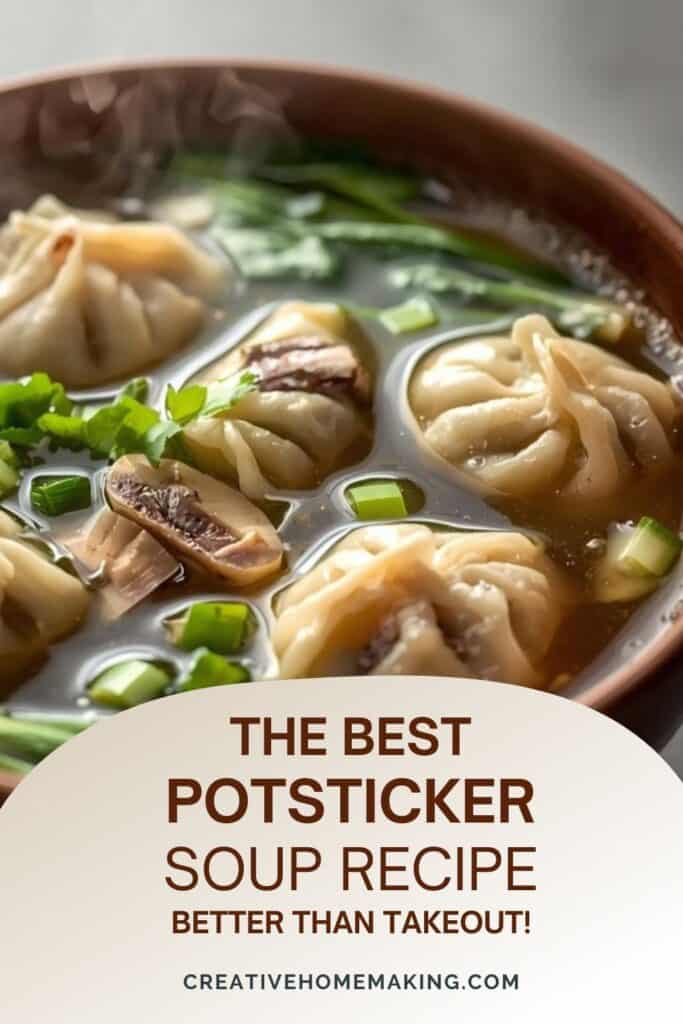
How to Make Potsticker Soup
This recipe shows the key parts: the broth base, the potstickers, and quick cooking steps that keep dumplings tender. You’ll learn exact ingredients, a clear cooking order, and simple tips to avoid soggy or broken potstickers.
Essential Ingredients
- 12–16 frozen or fresh potstickers (pork, chicken, or veggie). Frozen work well and save time.
- 4 cups low-sodium chicken or vegetable broth
- 1 tablespoon toasted sesame oil
- 1–2 cloves minced garlic
- 1 teaspoon grated ginger
- 2 tablespoons soy sauce (or tamari)
- 1 tablespoon rice vinegar
- 1 cup sliced mushrooms
- 2–3 sliced scallions
- 1 cup chopped bok choy or spinach
- 1 teaspoon chili oil (optional)
- Sesame seeds (optional)
Step-by-Step Instructions
Heat a large pot over medium heat. Add sesame oil, then garlic and ginger. Stir 30–45 seconds until fragrant.
Want to try making your own jelly at home?
Get my free guide with 8 easy, beginner-friendly jelly recipes you can confidently make.
Pour in the broth and soy sauce. Bring to a gentle simmer. Taste and adjust soy or vinegar for balance.
Add mushrooms first and simmer 3–4 minutes to release flavor. Then add frozen potstickers, spacing them so they don’t stick.
Simmer 6–8 minutes for frozen potstickers (3–4 for fresh), until they float and are heated through. Stir gently once or twice.
Add bok choy or spinach and cook 1–2 minutes until wilted. Turn off heat and stir in scallions and a drizzle of sesame or chili oil.
Serve hot. Garnish with sesame seeds or sliced scallions. If using eggs, add halved soft-boiled eggs to bowls.
Tips for Perfect Potstickers
Pan-fry first if you want crisp edges: heat 1 tablespoon oil in a skillet, fry potstickers 2 minutes until browned, then transfer to simmering broth to finish cooking.
Avoid overcrowding the pot; cook in two batches if needed so potstickers don’t clump. Gentle stirring helps, but avoid rough movements that tear wrappers.
If broth becomes cloudy or starchy, skim gently with a spoon. Use low-sodium broth to control salt, and always taste before adding more soy.
For extra texture, add crunchy toppings like sliced cabbage or toasted sesame seeds just before serving.
Customizing Potsticker Soup
You can change the soup’s flavor, heat, and texture with simple swaps. Pick a broth base, add aromatics, and choose vegetables and garnishes that match your taste.
Flavor Variations
Boost umami with mushroom or miso. Add 1 tablespoon white miso dissolved in a cup of hot broth, or sauté sliced shiitake for 5 minutes before adding stock.
For a lighter taste, use chicken or vegetable stock and stir in a splash (1–2 teaspoons) of rice vinegar to brighten the broth.
Make it spicy by stirring in chili oil, gochujang, or sriracha to taste. Start with 1 teaspoon and increase slowly.
For a fresh, herbal profile, add torn cilantro, chopped scallions, or thinly sliced basil just before serving. Swap proteins by using shrimp or thin-sliced chicken instead of pork potstickers if you prefer.
Serving Suggestions
Serve in deep bowls so the dumplings stay warm. Top each bowl with scallions, toasted sesame seeds, and a drizzle of chili oil for crunch and heat.
Offer small dishes of soy sauce, black vinegar, and chili crisp so guests can adjust salt and acidity.
Pair the soup with a simple side: steamed rice, blanched bok choy, or a cucumber salad dressed with rice vinegar and sesame oil.
If you want more body, stir in a handful of baby spinach or a beaten egg (slowly poured in while stirring) for richness.
Follow my Asian Food board on Pinterest.