This post may contain affiliate links.
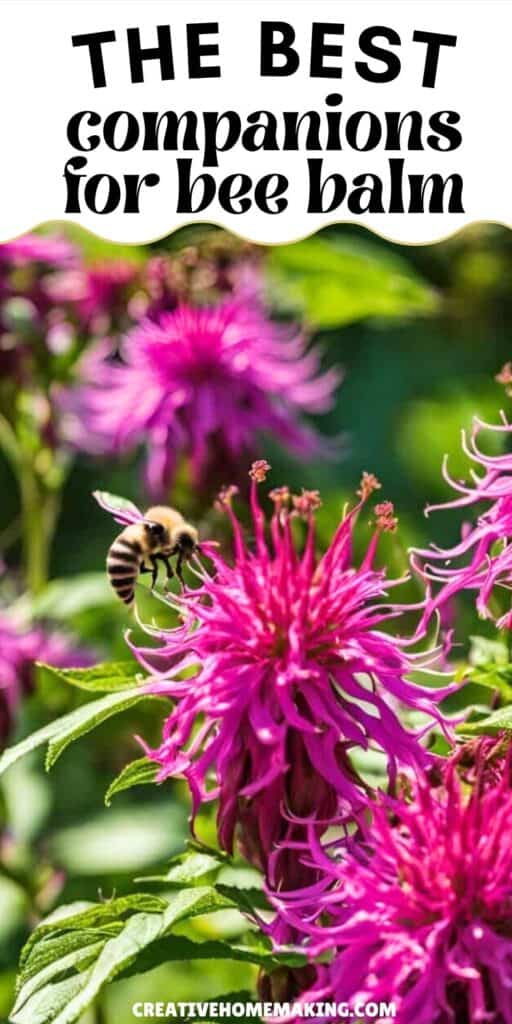
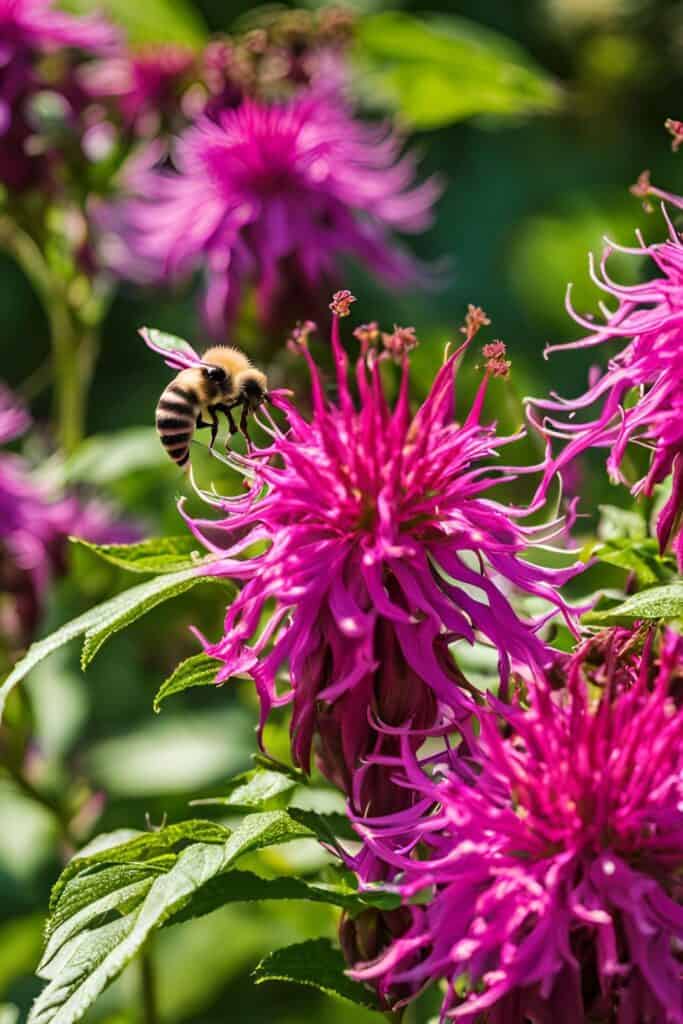
Bee Bee balm is a beautiful, pollinator-friendly plant—but it grows even better when paired with the right companions.
The best companion plants for bee balm share similar sunlight, soil, and watering needs while helping attract pollinators and improve garden health.
Looking for more tips? Visit my full Bee Balm Recipes, Uses & Growing Guide.
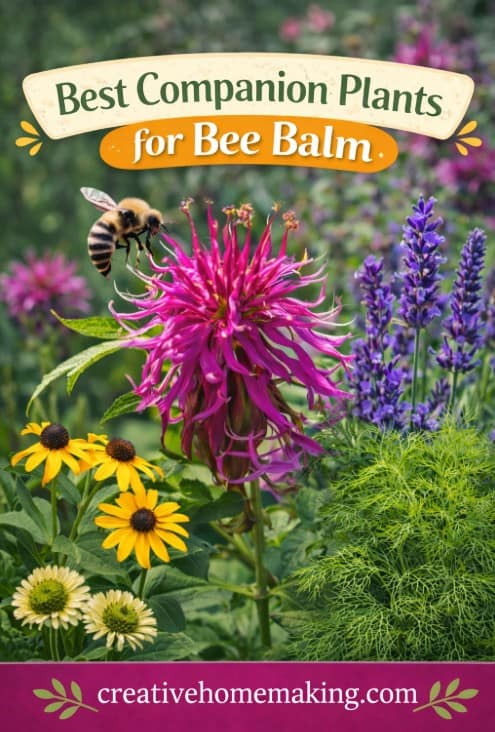
Best Companion Plants for Bee Balm
These plants grow well with bee balm and help create a thriving garden:
Echinacea (Coneflower)
- Attracts bees and butterflies
- Thrives in the same conditions
- Blooms at the same time
Phlox
- Adds color and height variety
- Supports pollinators
- Pairs well in garden beds
Yarrow
- Drought-tolerant
- Attracts beneficial insects
- Helps improve soil health
Black-Eyed Susan (Rudbeckia)
- Bright, cheerful blooms
- Draws pollinators
- Complements bee balm visually
Lavender
- Similar growing needs
- Strong scent helps deter pests
- Adds contrast and texture
Catmint
- Long blooming season
- Attracts pollinators
- Easy to grow alongside bee balm
Why Companion Planting Works
Planting bee balm with the right companions helps:
Want to try making your own jelly at home?
Get my free guide with 8 easy, beginner-friendly jelly recipes you can confidently make.
- Attract more pollinators
- Improve plant health
- Reduce pest problems
- Create a fuller, more vibrant garden
Bee balm’s strong scent can also help confuse pests, protecting nearby plants.
What to Avoid
Some plants don’t grow well with bee balm.
Avoid:
- Plants with very different water needs
- Crowded or aggressive spreaders
- Plants prone to powdery mildew
Learn more: What Not to Plant with Bee Balm
Quick Planting Tips
- Plant in full sun (6+ hours)
- Space plants for airflow
- Use well-drained soil
- Avoid overcrowding
Learn more: Top Mistakes to Avoid While Growing Bee Balm
Create a Pollinator-Friendly Garden
Bee balm works best as part of a pollinator garden.
Mixing flowers with different bloom times helps:
- Support bees and butterflies longer
- Keep your garden colorful all season
Don’t Forget—You Can Use Bee Balm Too
Once your plants are thriving:
How to Harvest and Dry Bee Balm
How to Make Bee Balm Tea
More Bee Balm Guides
You may also enjoy:
FAQs
What grows well with bee balm?
Pollinator-friendly flowers like echinacea, phlox, and yarrow.
Can you plant lavender with bee balm?
Yes—they have similar growing needs.
Does companion planting really help?
Yes—it improves pollination, plant health, and garden balance.
Follow my gardening board on Pinterest.