This post may contain affiliate links.
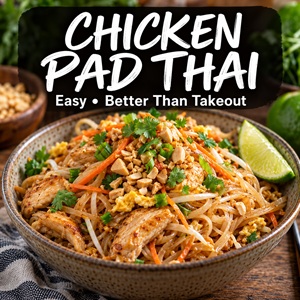
You can make a flavorful chicken Pad Thai at home that beats takeout in taste and freshness.
This recipe gives you tender pan-seared chicken, balanced sweet-sour-salty sauce, and classic crunchy peanuts and sprouts — ready in about 30 minutes.
Follow simple steps for soaking rice noodles, seasoning the sauce, and stir-frying ingredients so each bite has the right texture and flavor.
You’ll also find easy serving ideas and quick swaps to match what you have on hand or your taste.

Homemade Pad Thai Chicken Recipe
This Pad Thai chicken recipe gives clear ingredient choices, a step-by-step cook method, and texture tips so your noodles stay tender, sauce tastes balanced, and the chicken cooks through.
Want to try making your own jelly at home?
Get my free guide with 8 easy, beginner-friendly jelly recipes you can confidently make.
You’ll get exact amounts, timing cues, and small tricks to keep everything from clumping or turning soggy.
Essential Ingredients
- Rice noodles (8–10 oz dry): Use flat rice noodles labeled for Pad Thai. Soak or brief-boil to pliable but not fully soft.
- Chicken (1 lb): Thinly sliced boneless chicken breast or thigh cooks fast and stays juicy.
- Sauce: 3 tbsp tamarind paste (or 2 tbsp lime juice + 1 tbsp brown sugar), 3 tbsp fish sauce, 2 tbsp palm or brown sugar, 1–2 tsp chili paste. Taste and adjust.
- Aromatics & veg: 2 cloves garlic (minced), 2 eggs, 1 cup bean sprouts, 3–4 green onions (cut into 1-inch), optional shredded carrot.
- Peanuts: 1/4 cup roasted peanuts, crushed for garnish.
- Oils & extras: Neutral oil for high heat, lime wedges, and a small handful of cilantro if desired.
Measure ingredients before you start. Keep sauce in a bowl and all produce prepped. That quick mise en place prevents overcooking.
Ingredients
The Sauce
- 3 tablespoons tamarind paste (concentrate)
- 3 tablespoons fish sauce
- 1 tablespoon rice vinegar
- 3 tablespoons palm sugar (or brown sugar)
- 1/2 teaspoon red chili flakes (adjust to your heat preference)
The Stir Fry
- 8 oz dried wide rice noodles
- 1 lb chicken breast or thighs, thinly sliced
- 3 tablespoons vegetable oil, divided
- 3 cloves garlic, minced
- 2 large eggs, lightly beaten
- 1 cup fresh bean sprouts
- 3 green onions, cut into 1-inch pieces
For Serving
- 1/4 cup roasted peanuts, crushed
- Fresh cilantro
- Lime wedges
Instructions
Place the dried rice noodles in a large bowl and cover them with very hot (but not boiling) water. Let them soak for about 20 to 30 minutes until they are flexible and “al dente,” then drain and set aside.
In a small bowl, whisk together the tamarind paste, fish sauce, sugar, rice vinegar, and chili flakes until the sugar is mostly dissolved.
Heat two tablespoons of oil in a large wok or non-stick skillet over medium-high heat. Add the sliced chicken and cook until it is golden brown and cooked through.
Push the chicken to the outer edges of the pan and add the remaining tablespoon of oil to the center. Add the minced garlic and sauté for about 30 seconds until fragrant.
Pour the beaten eggs into the center of the pan. Let them sit for a few seconds to set, then scramble them lightly and toss them together with the chicken and garlic.
Add the drained noodles and the sauce mixture to the pan. Use tongs or a spatula to toss everything together over high heat, stirring constantly until the noodles have absorbed the sauce and are perfectly tender.
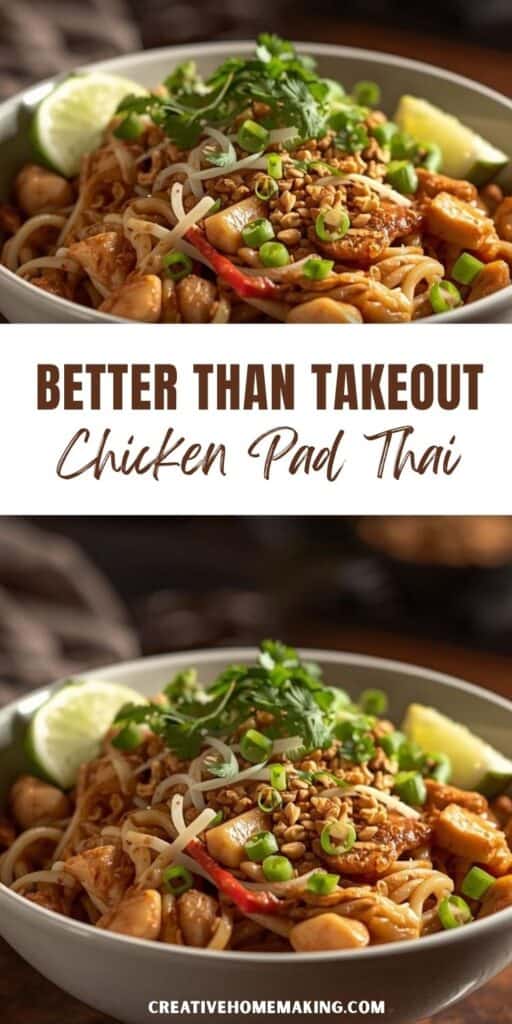
Add the bean sprouts and green onions to the pan. Toss for another 30 to 60 seconds just until the sprouts begin to wilt slightly.
Tips for Perfect Texture
- Noodles: Don’t over-soak. Noodles should be slightly underdone before stir-frying; they finish in the pan. Over-soaked noodles turn mushy.
- High heat & small batches: Use high heat and a roomy pan. Cook proteins and noodles in small batches to avoid steaming.
- Sauce thickness: If sauce is too thin, cook a bit longer to reduce. If too thick, add 1–2 tbsp water or lime juice.
- Crunch & balance: Add bean sprouts and peanuts at the end for crunch. Adjust salt (fish sauce) and sweetness (sugar) after tasting.
- Timing: Add delicate ingredients last. Eggs and sprouts should remain slightly soft and crisp, not dry or soggy.
Serving and Variations
Serve Pad Thai hot on warm plates so the noodles stay soft and the sauce clings to each bite. Offer lime wedges and crushed peanuts at the table so guests can adjust sourness and crunch to taste.
Garnishes and Toppings
Top your Pad Thai with crushed roasted peanuts for texture and a nutty flavor. Add fresh bean sprouts and chopped garlic chives for crispness and a mild onion-like aroma.
Sprinkle thinly sliced green onions and a few cilantro leaves for color and brightness.
Provide lime wedges so people can squeeze on as much acidity as they prefer.
Offer dried chili flakes or sliced fresh Thai chilies on the side for heat. If you want an extra layer, add a small spoon of pickled radish or fried shallots for tang or crunch.
Vegetarian and Gluten-Free Options
To make it vegetarian, swap chicken for firm tofu or extra vegetables like bell peppers, carrots, and snow peas. Use mushrooms or tempeh for a meaty texture and keep the scrambled egg if desired.
For gluten-free Pad Thai, choose rice noodles that are labeled gluten-free and replace regular soy sauce with tamari or coconut aminos.
Use fish sauce substitutes like a mix of tamari and a splash of lime if you need a fully plant-based sauce. Always check packaged sauces and noodles for hidden gluten.
Follow my Asian Bowls board on Pinterest.