
This post may contain affiliate links.
If your blueberry plants aren’t growing well, the problem is usually the soil.
Blueberries are very particular about where they grow—and if the soil isn’t right, they’ll struggle no matter how much you water or fertilize.
The good news is that once you understand what blueberries need, it’s easy to create the perfect soil for healthy plants and better harvests.
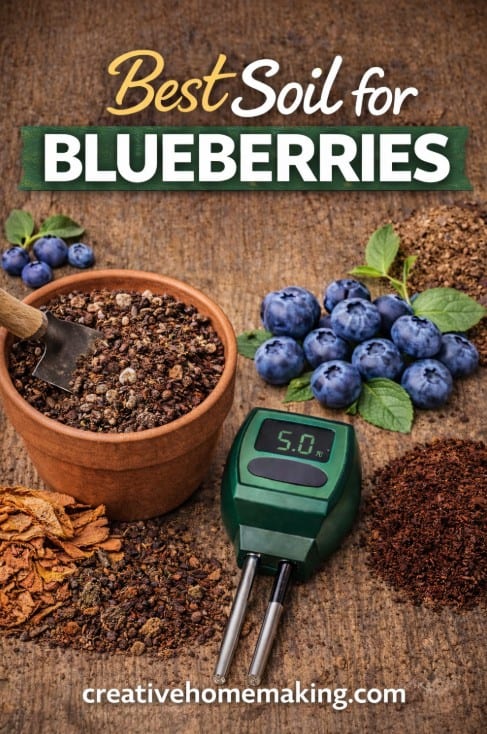
What Kind of Soil Do Blueberries Need?
Blueberries grow best in soil that is:
- Acidic (pH 4.5–5.5)
- Well-draining
- Rich in organic matter
This is different from most garden plants, which prefer a more neutral pH.
Want to try making your own jelly at home?
Get my free guide with 8 easy, beginner-friendly jelly recipes you can confidently make.
If your soil isn’t acidic enough, your plants may:
- Grow slowly
- Produce fewer berries
- Have yellowing leaves
The Best Soil Mix for Blueberries
If you’re planting blueberries at home, this simple mix works really well:
- 50% peat moss
- 25% pine bark
- 25% compost
This combination creates:
- The right acidity
- Good drainage
- Plenty of nutrients
You can also add a little sand if your soil tends to hold too much water.
Should You Use Garden Soil?
Regular garden soil usually isn’t ideal for blueberries.
It’s often:
- Too alkaline
- Too heavy (poor drainage)
Instead, it’s better to:
- Amend your soil
- Or grow blueberries in raised beds or containers
How to Test Your Soil pH
Before planting, it’s a good idea to test your soil to see where you’re starting.
Here’s how to test soil pH at home
Testing helps you:
- Know if your soil is acidic enough
- Avoid guessing
- Fix problems early
How to Make Soil More Acidic
If your soil isn’t in the right range, you can lower the pH over time.
Here are a few easy ways:
Add Sulfur
This is one of the most effective ways to acidify soil.
Use Peat Moss
Peat moss naturally lowers pH and improves soil texture.
Add Pine Needles or Bark
These help maintain acidity and improve drainage.
Use Compost Carefully
Compost is helpful, but make sure it doesn’t raise the pH too much.
The Easiest Way to Check Your Soil
The simplest way to test your soil is with a basic soil test kit.
They’re inexpensive and easy to use—perfect for home gardeners.
You can see my favorite soil pH test kits here
Growing Blueberries in Containers
If your soil isn’t ideal, growing blueberries in pots is a great option.
You can control everything, including:
- Soil mix
- pH levels
- Drainage
Use an acidic potting mix and test your soil occasionally to keep it in the right range.
Common Mistakes to Avoid
Not testing soil pH
This is the biggest mistake. Guessing usually leads to poor results.
Using regular potting soil
Most potting mixes aren’t acidic enough for blueberries.
Poor drainage
Blueberries don’t like soggy roots.
Not adjusting soil over time
Soil pH can change, so it’s important to check it regularly.
Getting the soil right is the key to growing healthy blueberry plants.
Focus on:
- Acidic soil
- Good drainage
- Organic matter
And don’t forget to test your soil so you know exactly what your plants need.
Learn how to test your soil pH here
See the best soil pH test kits here
FAQ
What is the best soil pH for blueberries?
Blueberries grow best in soil with a pH between 4.5 and 5.5.
Can I grow blueberries in regular potting soil?
Most regular potting soils aren’t acidic enough. It’s better to use a mix designed for acid-loving plants.
How long does it take to lower soil pH?
It can take several weeks to months, depending on the method you use.
Do blueberries grow better in pots or in the ground?
Both work well, but containers are easier if your native soil isn’t acidic.
Once you’ve picked your blueberries, don’t miss these easy blueberry recipes and growing tips to make the most of your harvest.
Follow my Grow Blueberries + Summer Recipes & Drinks board on Pinterest.