This post may contain affiliate links.
Companion planting is a simple way to help your blueberry plants grow stronger and produce more fruit.
The best companion plants for blueberries are those that thrive in acidic soil, just like blueberries do.
When you choose the right plants, you can improve soil health, attract pollinators, and even reduce pests naturally.
Companion planting can help your blueberry plants thrive, but proper care matters too—especially things like pruning and timing your harvest.
With a few smart additions to your garden, you can create the perfect environment for healthy blueberry bushes and better harvests.
Want to try making your own jelly at home?
Get my free guide with 8 easy, beginner-friendly jelly recipes you can confidently make.
Why Companion Planting Works for Blueberries
Blueberries have very specific growing needs—especially when it comes to soil.
They prefer:
- Acidic soil (pH 4.5–5.5)
- Consistent moisture
- Plenty of organic matter
If you’re not sure where your soil stands, here’s how to test your soil pH at home.
When you pair blueberries with plants that like the same conditions, everything works together more naturally.
Best Companion Plants for Blueberries
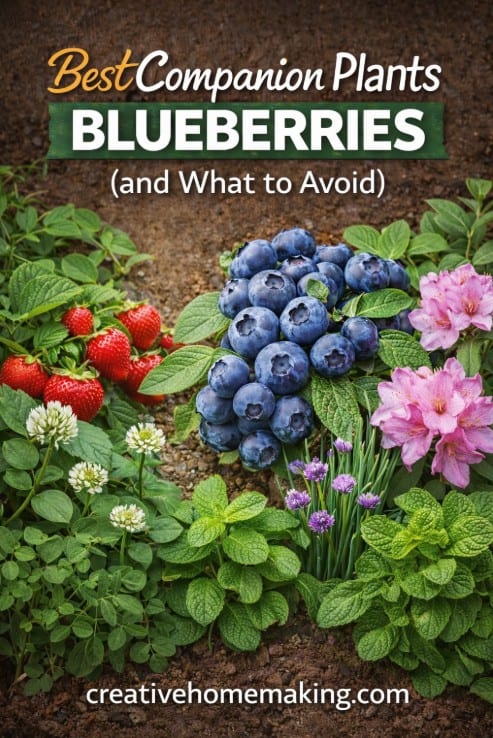
Strawberries
Strawberries are one of the best companions for blueberries.
- Thrive in similar acidic soil
- Act as a natural ground cover
- Help retain moisture and suppress weeds
They also create a beautiful (and edible) garden combination.
Rhododendrons and Azaleas
These flowering shrubs grow well in the same soil conditions as blueberries.
- Love acidic soil
- Attract pollinators
- Add color and visual interest
They’re a great choice if you want both function and beauty in your garden.
Herbs (Mint, Chives, Thyme)
Certain herbs can help protect your blueberry plants.
- Repel harmful insects
- Attract beneficial bugs
- Improve overall garden health
Plant them nearby, but give mint its own space since it can spread quickly.
Clover (Trefoil)
Clover is a helpful ground cover that can improve soil quality.
- Helps retain moisture
- Adds nutrients back into the soil
- Supports beneficial insects
It’s a low-maintenance option that works well around blueberry bushes.
What Blueberries Need to Thrive
Before choosing companion plants, it’s important to get the basics right.
Soil Requirements
Blueberries grow best in soil that is:
- Acidic (pH 4.5–5.5)
- Well-draining
- Rich in organic matter
Learn how to create the best soil for blueberries here.
If your soil isn’t acidic enough, you can amend it with:
- Sulfur
- Peat moss
- Pine bark or needles
Sunlight and Water
Blueberries need:
- 6–8 hours of sunlight daily
- Consistent moisture
Keep the soil evenly moist, especially during dry periods. Adding mulch helps retain moisture and keeps weeds under control.
Even with the right growing conditions, plants can sometimes struggle. If your blueberry bush isn’t doing well, there are simple ways to bring it back to life.
Choosing the Right Variety
Blueberries grow best in USDA zones 3–10, depending on the type:
- Highbush – best for cooler climates
- Lowbush – great for ground cover and cold regions
- Rabbiteye – ideal for warmer areas
Choosing the right variety for your climate makes a big difference in success.
Plants to Avoid Near Blueberries
Not all plants make good neighbors.
Avoid planting blueberries near:
Heavy feeders (like corn)
These compete for nutrients and can weaken your plants.
Plants that prefer alkaline soil
Many vegetables prefer neutral or alkaline soil, which conflicts with blueberries.
Aggressive growers
Plants that spread quickly can crowd out blueberry roots and compete for water.
The best companion plants for blueberries are those that share their love of acidic soil and help create a balanced garden environment.
Focus on:
- Acid-loving plants
- Ground covers for moisture
- Herbs that repel pests
And don’t forget—healthy soil is the foundation of everything.
Learn how to test your soil pH
See the best soil pH test kits
Once you’ve picked your blueberries, don’t miss these easy blueberry recipes and growing tips to make the most of your harvest.
Follow my companion planting board on Pinterest.